English





































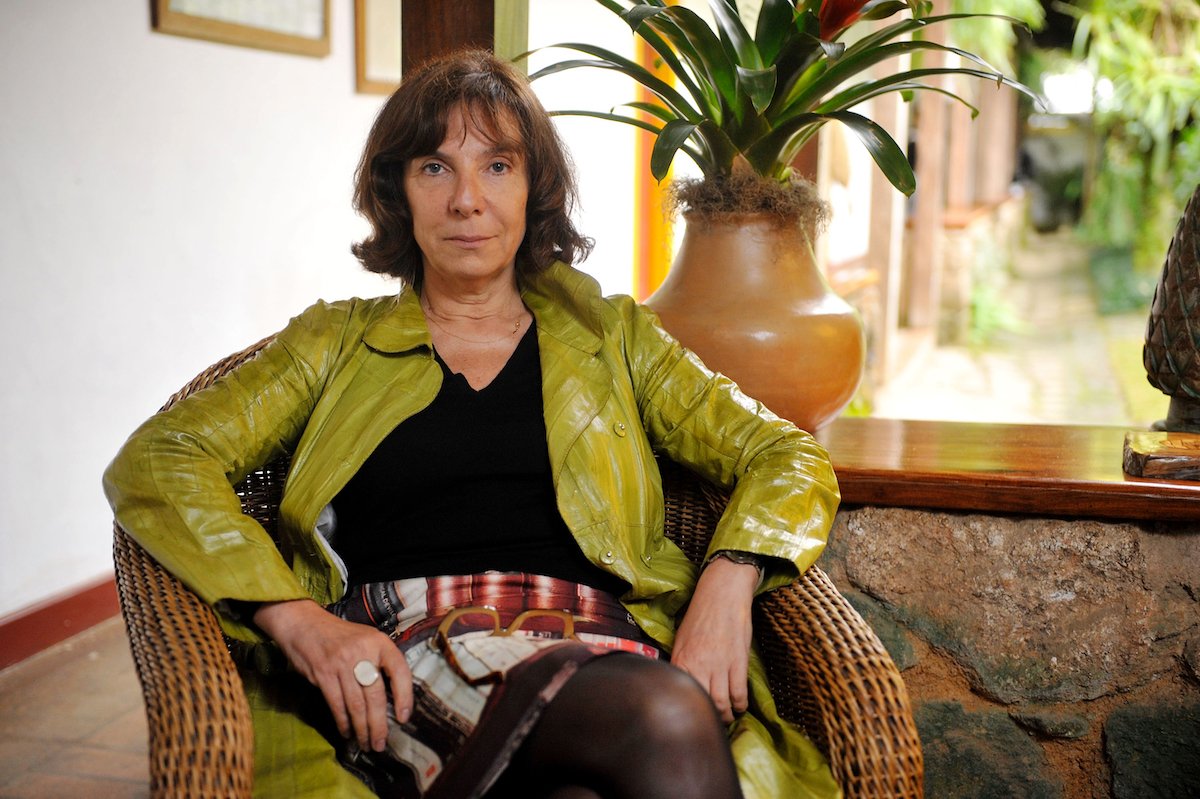
Colombian artist Doris Salcedo is preparing to unveil her most ambitious work yet. In November, she will premiere House at White Cube Gallery in New York — a nearly 30-foot full-sized structure woven entirely from human hair. The work reflects decades of collaborative effort and stands as a powerful statement on domicide, the deliberate destruction of homes and communities.
Vision Loss That Changed Everything
Salcedo is widely recognized for her large-scale “anti-monuments” — works that center the perspectives of victims of atrocities. Her most celebrated piece, Shibboleth (2007), carved a giant crack across the floor of Tate Modern’s Turbine Hall in London, evoking the violent disruption of borders.
Stay connected to every major update — subscribe and follow us on the PhoenixQ website and across our social media platforms.
At 31, Salcedo received a diagnosis of Stargardt disease, a rare genetic condition that progressively destroys central vision. Today, at 67, she is legally blind and relies only on peripheral sight. Before her vision deteriorated, she worked alone, treasuring what she described as “the privacy of improvising and of working directly with the materiality.”
As her condition advanced, she gradually brought in assistants. The adjustment was difficult at first. However, she eventually found that collaboration opened new creative possibilities. “A collective statement is far more powerful than a lonely solo voice,” she said. “It becomes like a chorus, and a really potent one.”
A House Built From Human Hair
The creation of House took three years and involved dozens of assistants working across three Bogotá studios. Each worker tied knots in individual strands of hair, producing a mesh that resembles chain-link fencing. The scale of the work made solo creation impossible. Salcedo noted that working alone, the piece could have taken 20 years to complete.
She sourced the hair online, carefully checking supplier certifications due to widespread violent crime in the human hair trade. Alongside House, her White Cube show will also feature Grains of Sorrow (2023–26). For that piece, assistants use X-Acto knives to remove starch from individual rice grains, then drill tiny holes through each one before threading individual hairs through the openings. The resulting mesh wraps around damaged cooking items — bowls, pots and pans — representing everyday losses caused by forced displacement.
The conceptual thread running through both works is domicide, a term drawn from the book Domicide: The Global Destruction of Home by J. Douglas Porteous and Sandra E. Smith. Salcedo pointed to ongoing conflicts in Ukraine, Gaza, Syria and Sudan as direct inspirations. She also noted that displacement strips victims of far more than shelter — it destroys community, privacy and mental health.
Art, Labor and Dignity
Salcedo’s earlier work Uprooted (2020–22), shown at the 15th Sharjah Biennial, repurposed 804 dead trees into a nearly 1,000-foot structure addressing climate refugees. House continues that exploration but focuses specifically on deliberate, conflict-driven displacement.
Her Bogotá studio employs around 150 women from rural Colombia, where work is scarce. She views this as both an ethical responsibility and a conceptual statement. “My work has always been labor-intensive because in the Global South, labor is intensive,” she explained. She also argues that modernity itself was built on that labor — a fact she says art history has long ignored.
On the role of beauty in her work, Salcedo is direct. “Beauty has a lot to do with dignity,” she said. She believes elegance compels viewers to engage with difficult truths they might otherwise avoid. Her goal, ultimately, is to make it impossible to look away.