English







































Booker Prize-winning author Ian McEwan has turned his literary gaze toward the 22nd century in his latest novel, What We Can Know. The book imagines a future world shaped by climate catastrophe, where many of the 21st century’s major capital cities lie submerged beneath rising waters.
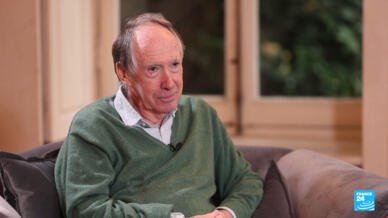
McEwan recently sat down with journalist Olivia Salazar-Winspear to discuss the novel, which is now being translated into French. During the conversation, he explored the themes driving the story and shared his broader views on the challenges facing human civilisation.
Stay connected to every major update — subscribe and follow us on the PhoenixQ website and across our social media platforms.
A World After the “Derangement”
In the novel, McEwan’s characters live in the aftermath of what he calls the great “derangement.” This term describes a period of severe environmental collapse. The story presents a sobering vision of a future where humanity has failed to adequately address the climate crisis.
The conversation also touched on the real-world climate emergency. McEwan reflected on the reckoning that societies may soon face as the consequences of environmental inaction become harder to ignore.
A Lost Poem and the Celebrity Artist
At the heart of the novel’s plot is a mythical lost poem. Its existence draws academics into an obsessive pursuit, driving much of the narrative tension. McEwan uses this storyline to examine the cult of the celebrity artist and the intense value society places on artistic legacy.
Furthermore, the novel raises questions about the future of reading itself. McEwan considers whether literature, as a cultural practice, may eventually fade in an increasingly digital and distracted world.
Artificial Intelligence and Human Civilisation
McEwan also shared his perspective on artificial intelligence during the interview. He argued that AI has the capacity to fundamentally reshape human civilisation. However, he did not elaborate on whether he views that transformation as positive or negative.
The novel arrives at a moment when debates about AI, climate change and cultural decline are intensifying globally. McEwan’s decision to set What We Can Know in the 22nd century allows him to explore these anxieties through the lens of speculative fiction.
McEwan remains one of Britain’s most prominent literary voices. His willingness to engage with urgent contemporary issues continues to place his work at the centre of broader cultural conversations.