English















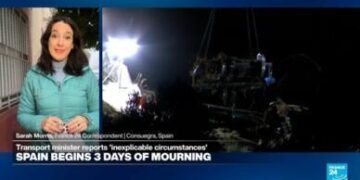

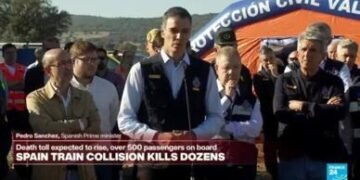

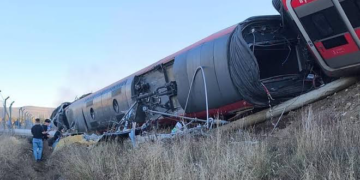
























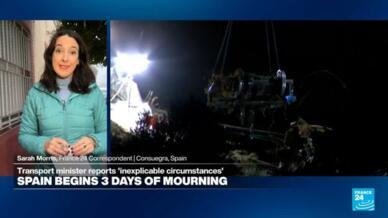
Spain entered three days of national mourning on Thursday after a high-speed train collision killed 68 people and injured many more in the central region of Castilla-La Mancha. The crash, one of the deadliest rail disasters in Europe this century, has raised serious questions about safety on Spain’s rail network.
What Happened
The collision occurred on Wednesday morning when a Renfe state-operated train struck a stationary Iryo train from behind. Iryo is a private Spanish rail company. The crash took place on the key line connecting Madrid with the southern city of Seville.
Stay connected to every major update — subscribe and follow us on the PhoenixQ website and across our social media platforms.
Emergency crews worked through the night, using cranes to lift twisted metal as they searched the wreckage for further victims. Blood donation points opened in Castilla-La Mancha and Madrid to support the response effort.
Survivors Describe the Crash
Josimar Medina, a 31-year-old Peruvian tourist travelling with his girlfriend, said he was asleep when the impact threw him into the air. Pablo Mejia, 42, suffered head injuries but survived. He credited a last-minute seat change with saving his life.
Wearing a bloodstained jumper and clutching a damaged suitcase, Mejia described “a very strong hit… a lot of people on the floor, on top of each other, seats ripped out, suitcases, a lot of chaos.” He added simply, “I think I’ve been born again.”
Families Seek News of Loved Ones
A school in the village of Urda, around 130 kilometres south of Madrid, became a gathering point for relatives seeking information. Red Cross teams provided support to families who arrived, some in tears, amid large numbers of police and journalists.
Red Cross psychologist Carmen Garcia warned of “long and hard hours” ahead. “We have people who are in shock, who haven’t taken on board what has happened, angry people, sad, worried people,” she said. “The grieving will be complicated.”
The Civil Guard opened four offices in Madrid, Toledo, Cordoba and Seville to collect DNA samples from relatives and help identify the missing. Local parish priest Jose Miguel Fernandez also joined the support effort. “Words at a time like this are pointless, but a hug helps,” he said, recalling arriving at the scene to find “an image of desolation, despair, uncertainty, death.”
Authorities Point to Control Failure
Transport Minister Oscar Puente said an automatic control system failed across 69 kilometres of track on Wednesday, causing all trains in that section to stop. However, the control centre then decided to resume traffic. Puente described that decision as “inexplicable.”
The Renfe train travelled 25 kilometres before striking the stationary Iryo train. Puente said the control centre “had more than enough time to verify the error, and they did not fix it.”
This is Spain’s second fatal high-speed rail crash in 2025. In January, two trains collided in the southern region of Andalusia after one derailed onto an adjacent track, killing 46 people. That investigation remains ongoing. The left-wing government already faced criticism over its handling of Spain’s railways following that earlier disaster.
The latest crash comes just one month before Socialist Prime Minister Pedro Sanchez faces an early general election on November 29. Sanchez is seeking to reverse unfavourable polls and extend his eight-year premiership. The timing adds further political pressure to the government’s response to the high-speed train collision.