English















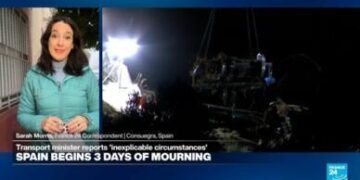


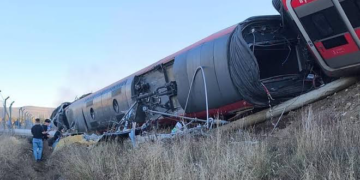

























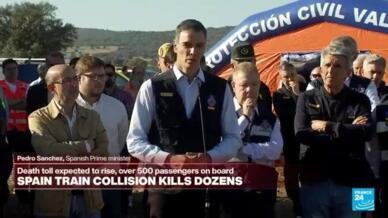
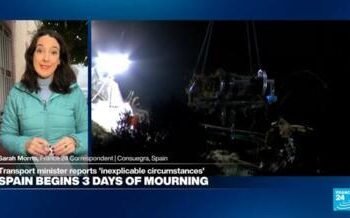
A high-speed train collision in Spain has killed at least 68 people, making it the deadliest rail accident in Europe since 2013. The crash occurred on Wednesday morning when a Renfe service slammed into a stationary Iryo train in the rural Castilla-La Mancha region, south of Madrid. The disaster is Spain’s second fatal high-speed rail crash this year, prompting urgent questions about railway safety and infrastructure maintenance.
What Caused the Collision
Spain’s transport minister, Oscar Puente, told reporters in Madrid that a computer communications failure triggered a red signal, automatically halting traffic on the line. However, someone then made an erroneous decision to allow the Renfe train to continue. The Renfe train proceeded as instructed and struck the stationary Iryo service.
Stay connected to every major update — subscribe and follow us on the PhoenixQ website and across our social media platforms.
Renfe confirmed the sequence in a statement. “The Renfe train continued on its way as instructed, and a collision occurred,” the operator said. Renfe added that the exact traffic conditions and circumstances of the impact would be determined by investigators. Iryo said it had activated emergency protocols, while state infrastructure operator Adif did not respond to requests for comment.
Chaos and Casualties at the Scene
The crash happened at around 9am local time. At that moment, 397 passengers were on board the Renfe service and 147 were travelling on the Iryo train. The impact derailed at least two Iryo carriages, sending them down an embankment beside an elevated stretch of track.
Spain’s health minister, Monica Garcia, said the collision injured 80 people, 15 of them very seriously. Ambulances, helicopters and funeral home vans gathered at the scene as rescuers searched the wreckage. Emiliano García-Page, head of the Castilla-La Mancha regional government, confirmed the death toll had reached 68. Rescuers warned that further fatalities could emerge once workers moved the mangled carriages.
Survivor Salvador Arriza described the chaos inside his carriage. “I was very close to the door, but other passengers were breaking the windows to get out,” the 62-year-old said. “Some people practically couldn’t move because they were trapped amongst the seats.” Another passenger, Rafael Barcelo, said he had stepped away for a coffee moments before impact. He estimated at least eight people from his carriage alone had died.
At a nearby school in Urda, relatives gathered anxiously awaiting news. A woman named Ana fought back tears as she described having no information about her husband, Pepe. Police had located their dog, Trece, but Pepe’s name had not yet appeared on any list of identified victims.
Safety Record Under Scrutiny
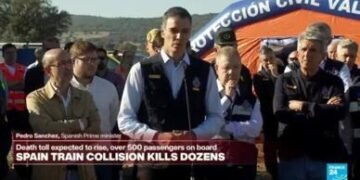
Prime Minister Pedro Sanchez addressed the nation from near the crash site. He called the event a “terrible tragedy” and vowed to investigate fully. Sanchez also noted that the causes of this crash and January’s accident appeared unrelated. In January, a high-speed train on the same Madrid-Andalusia corridor derailed and struck an oncoming service, killing 46 people.
Spain’s railway safety authority has recorded a steady rise in accidents. Incidents including derailments and collisions increased from 45 in 2016 to 57 in 2024 and 69 last year. Meanwhile, European Commission data shows Spain’s maintenance spending on its roughly 4,000km high-speed network has lagged behind other large European countries. Although Spain spent an average of around €1.5 billion annually on its high-speed network between 2018 and 2022, only about 16% of that went toward maintenance, renewals and upgrades. Most funding went to new construction instead.
Joan Rodríguez, a spokesperson for Spain’s train workers’ union, said privatisation had increased pressure on the network. “We are not convinced that the liberalisation of the high-speed passenger rail service was matched by the necessary upkeep of the lines,” Rodríguez told TVE. Renfe suspended ticket sales on the Madrid-Andalusia corridor until December 13 and opened a dedicated helpline for victims’ families.