English



































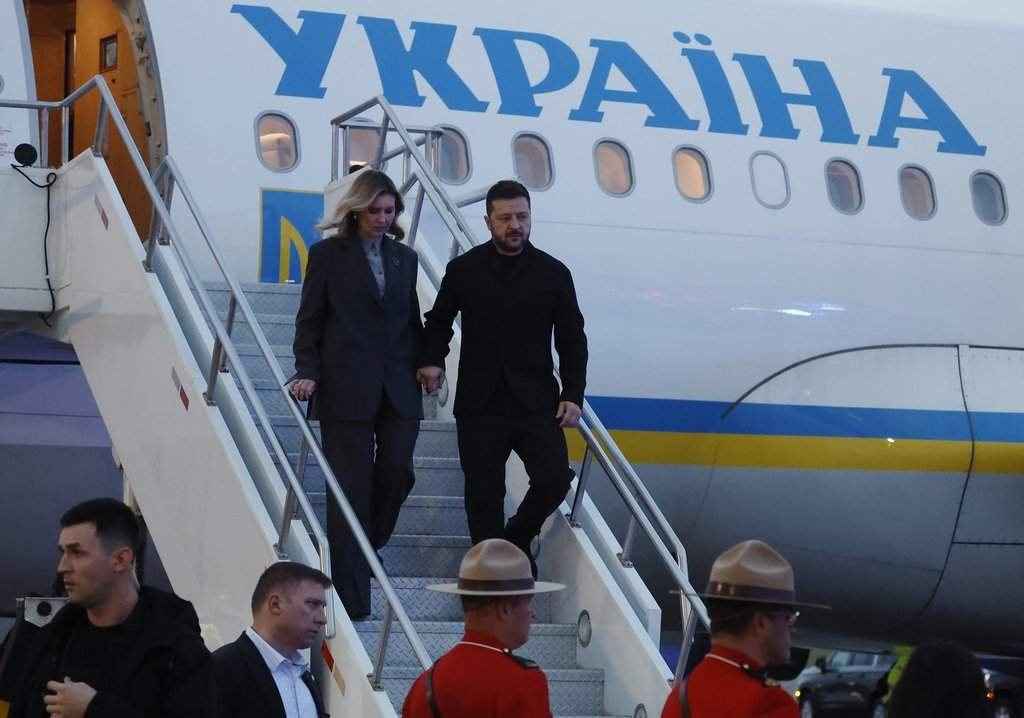
Ukrainian President Volodymyr Zelenskyy arrived in Calgary on Wednesday night for a high-level visit that will include direct talks with Canadian Prime Minister Mark Carney and an address to the federal cabinet.
The two leaders met Thursday morning in Calgary. Zelenskyy then traveled to Banff, Alberta, to speak at a cabinet meeting in the nearby mountain resort town. Carney said the visit centers on deepening defence, economic and energy cooperation between the two countries.
Stay connected to every major update — subscribe and follow us on the PhoenixQ website and across our social media platforms.
“It will also address the human cost of Russia’s war of aggression against Ukraine and build on the strong people-to-people ties that connect our countries,” Carney said in a statement. “Canada remains steadfast in our commitment to support Ukraine’s defence, recovery and reconstruction.”
Zelenskyy’s Canadian Itinerary
Zelenskyy and his wife, Olena Zelenska, also plan to visit Toronto and North Bay, Ontario, before departing Friday. This marks his first trip to Canada in 2026. He previously visited Halifax in December during ongoing efforts to end the war Russia started in 2014.
Carney traveled to Kyiv in August 2025. His predecessor, Justin Trudeau, visited Ukraine every year following Russia’s full-scale invasion in February 2022. Canada has pledged $6.5 billion in military assistance for Ukraine through 2029. The Kiel Institute, which tracks global contributions to Ukraine, ranks Canada fourth in total dollar value and twelfth relative to gross domestic product. Canadian support includes military aid, government financing and humanitarian assistance.
Members of Parliament across party lines have placed Ukraine at the center of their foreign policy platforms. In May, Canada joined an agreement to learn from Ukrainian drone manufacturers. However, Ottawa has made no new funding announcements for Ukraine since then.
Battlefield Situation and Russian Aggression
Ukraine has managed in recent months to hold back Russian advances. Ukrainian forces have also struck targets inside Russia, including oil refineries and warehouses belonging to Russia’s largest online retailer.
Meanwhile, Kyiv has faced a sustained barrage of Russian airstrikes. Ukrainian officials continue to plead for additional air defence support from allied nations. Moscow has at times suggested it may be open to ending the conflict. However, Ukrainian and European officials insist the war should only end on terms that prevent Russia from rearming and launching future attacks elsewhere.
European leaders are also raising alarms about what they describe as Russia widening its war through acts of sabotage. Alleged Russian-linked actors have paid young people to vandalize railways across Europe. European airports have halted operations multiple times because of drones attributed to Russia. Last week, Germany blamed Russia for an attempted explosive drone attack near a Ukrainian cargo plane at Leipzig airport. Carney called it “an egregious attempt by Russia to weaken our resolve and our collective defence.”
Political Pressures at Home and Abroad
Zelenskyy’s visit comes during a period of rising domestic pressure on his government. His administration, elected in 2019, cannot call elections due to a constitutional ban on votes during martial law. In July, Zelenskyy dismissed both his defence minister and military chief following days of protests. Opponents have also accused him in various corruption scandals.
Across Europe, political parties once considered fringe because of their pro-Russia positions have gained popularity. The continent continues to grapple with economic, environmental and migration challenges, which has fueled that shift.
Ukraine has increasingly relied on Canada to advocate for its sovereignty in international forums. U.S. President Donald Trump plans to host world leaders in Miami for the G20 summit in December. There are signs he may allow Russian President Vladimir Putin to attend, despite Putin facing an arrest warrant from the International Criminal Court. The court issued the warrant based on Russia’s abduction of thousands of Ukrainian children, which it describes as a probable war crime.
In addition, Canadian Foreign Affairs Minister Anita Anand will co-host a summit later this month in Toronto. The event focuses on the return of Ukrainian children and prisoners of war.