English














































Cringe has evolved from a simple physical reflex into one of the most culturally significant emotional experiences of our time. It now shapes art, comedy, online culture, and the way people understand social belonging. Scholars, artists, and filmmakers are all grappling with what cringe reveals about human connection, shame, and the ethics of sympathy.
What Cringe Actually Means
At its core, cringe is sympathetic shame. It bridges two older emotional states: shame and sympathy. Shame has ancient roots. Its etymology traces back to the idea of covering oneself. It carries guilt, disgrace, and the exposure of what ought to remain hidden.
Stay connected to every major update — subscribe and follow us on the PhoenixQ website and across our social media platforms.
Sympathy arrived later as a formal concept. In 1759, philosopher Adam Smith argued in The Theory of Moral Sentiments that the imagination allows us to feel the emotional experience of another person. Smith wrote that we “conceive ourselves enduring all the same torments” and “enter, as it were, into his body.” For Smith, this was not merely a capacity. It was a moral obligation.
Cringe combines both. It is vicarious embarrassment. It is mortification by proxy. Nearly every language has a word for it. Dutch speakers say plaatsvervangende schaamte, meaning substitute shame. The French use gêne par procuration. Germans say Fremdschämen, or foreign shame. Swedes have the skämskudde, a cringe cushion to bury one’s face in. Chinese slang offers perhaps the most vivid term: gāngà’ái, or embarrassment cancer.
The word itself comes from the Old English cringan, meaning to yield or fall in battle. As a physical sensation, cringe targets the muscles of the face. It produces a half-watched spectacle viewed through narrowed eyes. Its timing is complex. The initial wince is sharp and sudden. However, prolonged humiliation or the slow anticipation of future embarrassment can stretch the experience into something far more painful.
Cringe in Art and Culture
Not all uncomfortable art qualifies as cringe. Damien Hirst’s A Thousand Years (1990), which places a severed cow’s head alongside maggots and flies inside a glass case, may disturb viewers. However, it lacks the social dimension that cringe requires. Cringe is inherently interpersonal. It depends on anxieties around social rejection and the fear of how others perceive us.
Artists have long explored this territory. The foundations of cringe art include 1970s body art by Marina Abramović and Vito Acconci, the anti-comedy of Andy Kaufman, and the Viennese Actionism movement. In the 1980s and 1990s, artists such as Sarah Lucas, Paul McCarthy, and Mike Kelley pushed further into discomfort. Ryan Trecartin later updated this tradition for a hyperperformative digital age.
A useful distinction separates minor cringe from major cringe. Minor cringe is art that examines cringe from a distance. It investigates the feeling without fully inducing it. Major cringe, by contrast, pulls the viewer entirely inside the experience. It is saturated by the affect it explores.
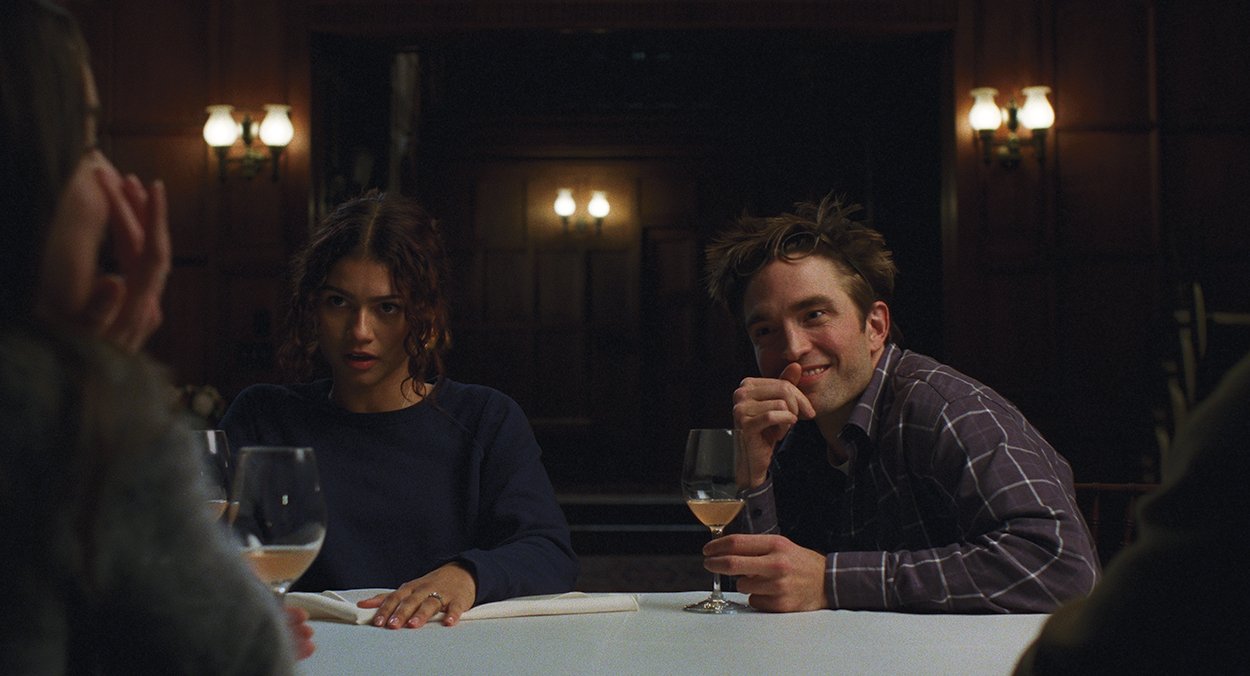
Christine Tien Wang’s photorealistic meme paintings, shown in her 2022 exhibition Fake Stupid, queen of cringe at Galerie Nagel Draxler in Berlin, represent minor cringe. They observe network culture’s shame and anxiety with cool detachment. Her 2025 canvas Starving Artist, however, forces a direct reckoning. It depicts a computer screen showing bitcoin spreadsheets, a James Joyce novel spine, a Challengers meme, and an archival photograph of a famine victim. The collision demands moral attention. That is major cringe.
Amalia Ulman’s 2025 film Magic Farm skewers the attention economy with pleasurable distance. Her earlier Instagram project Excellences & Perfections from 2014, however, blurred fabrication and reality. It mixed a staged breast augmentation with actual extreme food restriction. The result left no comfortable position for the viewer. Vicarious disturbance became complicity.
Cringe, Women, and the Body
Many contemporary artists focus cringe specifically on the experience of femininity. The recent exhibition Picture Perfect at Bozar in Brussels, which ran from March to August 2025, brought together artists including Orlan, Sara Cwynar, Juno Calypso, and Haley Morris-Cafiero. Their works examined the pressure to conform to beauty ideals. They showed femininity as both disgustingly cute and violently received.
Marianna Simnett’s video Blue Moon (2022) appeared in the show. It depicts a flute-playing figure modelled on Athena, who, in myth, abandoned her flute after seeing how her cheeks distorted while playing. The parallel is pointed. Women have long amputated their own talents in response to the fear of appearing unattractive.
Anna Uddenberg’s sculpture Focus #2 (Pussy Padding) (2018), displayed at the Boros Collection in Berlin from 2022 to 2026, assembles acrylic nails, resin, fiberglass, vinyl film, and a barstool into a female body bent double while extending a fake-fur selfie stick. The more aggressively synthetic materials illustrate a ludicrous eroticism, the more uncomfortable viewers become in recognising the desire to be desired.
Catherine Mulligan’s paintings push this further. Her 2023 solo show Bad Girls Club at Tara Downs featured grotesque women posed seductively in the style of late-millennial glam-trash aesthetics. Elongated nails suggest both self-care and melting flesh. Pouting lips read simultaneously as sexual and corpse-bloated. These figures are so desperate for approval that their bodies distort the picture plane itself.
Cringe Online and What It Reveals
The internet has dramatically expanded the possibilities for public humiliation. Platform capitalism transforms human need into algorithmic performance. Elisa Giardina Papa’s 2011 work need ideas!?! PLZ!! captures this precisely. It compiles YouTube clips of teenagers addressing the camera from their bedrooms, begging for video ideas and followers. Some announce they have zero subscribers. The possibility exists that no one is watching at all.
The exposure is total. The vulnerability is complete. The work qualifies as major cringe not simply because viewers feel sympathy for the teenagers. It also forces recognition of how platform culture has redescribed human need as algorithmic entanglement. Phrases such as “please like this” and “I’ll do anything” carry a disturbing weight when stripped of their digital context.
Online, cringe also functions as a tool of social policing. Declaring something cringe has become an act of censure. Generational accusations fly in both directions. Meanwhile, those most likely to face cringe-based harassment online are queer people, neurodivergent individuals, and those who are economically precarious or socially isolated. In 2022, Taylor Swift urged graduates to “learn to live alongside cringe.” However, that advice lands very differently depending on who receives it.
Cringe also functions as a marker of historical change. Nikki S. Lee’s Projects series, made between 1997 and 2001, documented her photographing herself among various social subcultures. Her Hip Hop Project (2001), in which the Korean American photographer darkened her face and wore box braids, once read as edgy conceptual work. Today, it produces a wince. Conversations around racial caricature have shifted. What felt provocative now feels painfully dated.
This reversal carries a lesson. Cringe works in the opposite direction from the familiar idea that today’s poor taste becomes tomorrow’s high art. Instead, what was celebrated as high art yesterday can seem like a failure of judgment today. Cringing at older work is a reminder of how fragile all aesthetic and ethical positions are over time.
Ultimately, cringe exposes a political truth. With whom do we feel we share something? The sympathetic shame of cringe is the price of living among others. It strips bare one’s ethics of identification. A world that successfully blocked out the feelings of others would not be free of cringe. It would be something far worse.