English

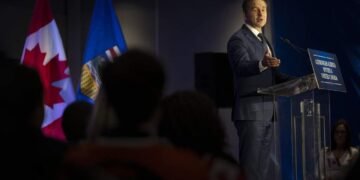
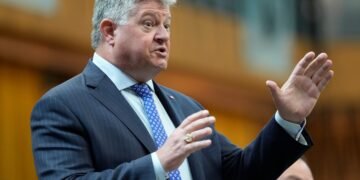









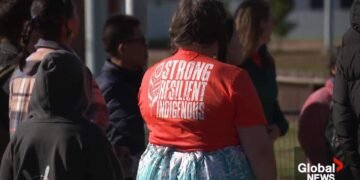
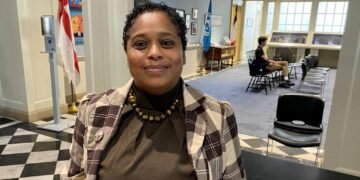










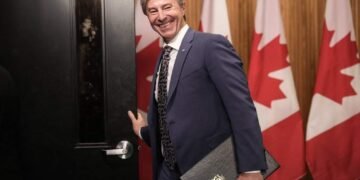



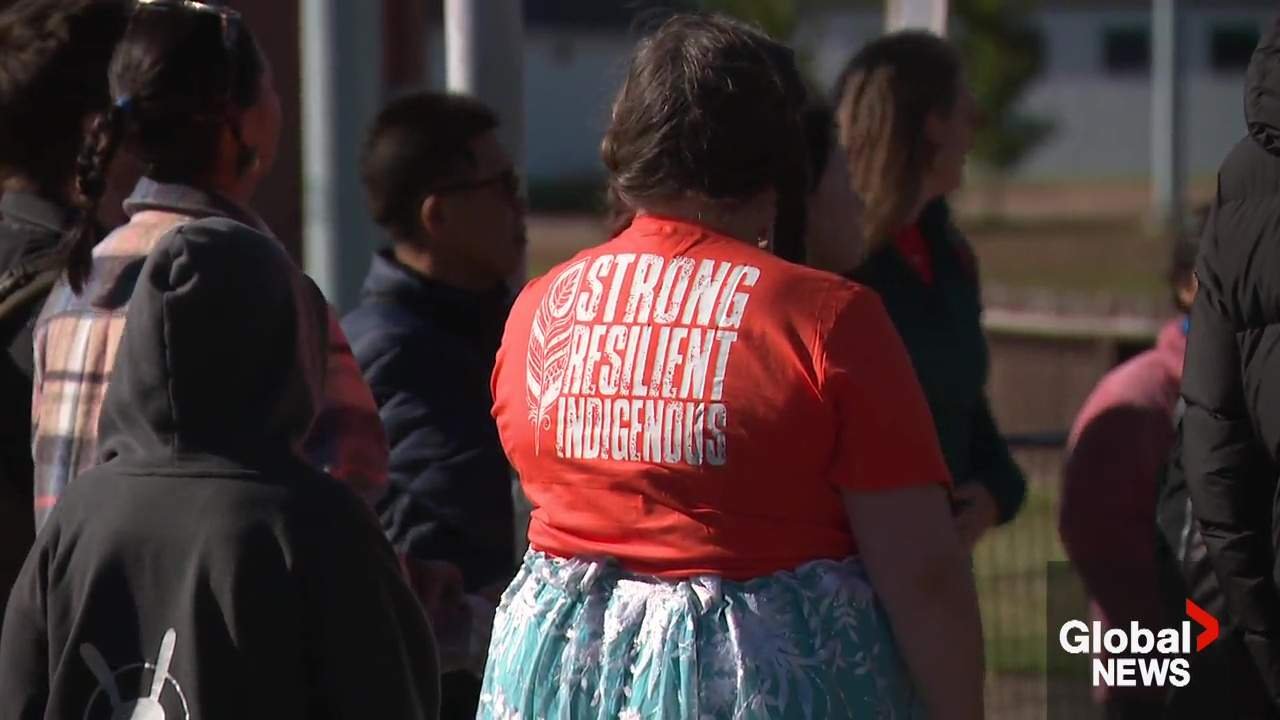
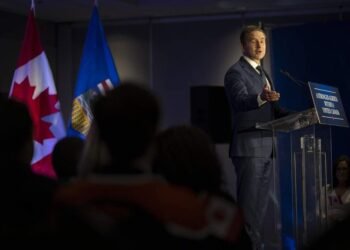
Fort Edmonton Park marked the sixth annual National Day of Truth and Reconciliation on Wednesday, drawing around 2,000 visitors to reflect on the painful legacy of Canada’s residential school system. Prime Minister Mark Carney, Opposition Leader Pierre Poilievre, Mayor Andrew Knack and several First Nations leaders joined the commemorative ceremony at the historic site.
A Day of Heavy Emotions
For many attendees, the day carried a deep emotional weight. “Days like today are not necessarily happy days for us — they’re actually quite sad and heavy,” said Jasmine Hannig, an Indigenous social worker who attended the event. Visitors wore bright orange shirts, a symbol representing the children who passed through residential schools. Many also gathered to eat bannock and share warm drinks on a cool autumn morning.
Stay connected to every major update — subscribe and follow us on the PhoenixQ website and across our social media platforms.
The National Day of Truth and Reconciliation is a federal statutory holiday. It was established following a call from the Truth and Reconciliation Commission, which urged the Canadian government to formally recognize the harm residential schools caused to survivors, their families and their communities. In 2015, the commission concluded that the schools formed a central part of a state-backed policy of cultural genocide. Approximately 150,000 Indigenous children endured malnutrition and abuse within that system over several decades.
Chief Desmond Bull of the Louis Bull First Nation in Maskwacis emphasized that reconciliation extends well beyond a single day on the calendar. “Truth and reconciliation, definitely for Indigenous people, is not just one day. It’s a life that we live,” he said. “More importantly, the acknowledgement of our ancestors that went through residential school.”
Broader Colonial Harms Recognized
Hannig stressed that the day should also acknowledge other colonial policies that caused lasting damage to Indigenous communities. “Not only residential schooling had an impact, but so did the Sixties Scoop, day schools, boarding schools, the 90s scoop and many other colonial aspects,” she said. The Sixties Scoop refers to a government policy that forcibly removed Indigenous children from their birth families and placed them in foster or adoptive homes.
Experts and First Nations advocates have long linked this intergenerational trauma to the disproportionately high rates of violence, psychological distress and substance abuse that many Indigenous communities continue to experience today. Hannig called for broader public conversations about the full scope of that harm. “I think it’s really important we talk about the impact of all that harm collectively, and the echoes that has had within our community,” she said.
Despite the weight of the occasion, Hannig acknowledged a sense of cautious progress. “In one way, it’s really emotional because it’s so beautiful that we’re having this conversation — finally,” she said. “But another way, I feel like there’s a lot of conversations that we’re not having collectively.”
Fort Edmonton Park as a Place of Learning
Fort Edmonton Park’s Indigenous People’s Experience exhibit operates year-round and offers visitors an immersive look at Indigenous history and culture. Evert Poor, an event manager at the park, described its purpose clearly. “The immersive experience in here is really about the fact that you’re learning about us in a broader sense,” he said. “A lot of people have a lot of myths and stereotypes about Indigenous people. This space basically teaches you the true history of our people.”
Chief Bull also encouraged people to go further than exhibits and ceremonies. He urged Canadians to sit down with Indigenous individuals and hear their personal stories directly. “There’s much more you can learn from sitting down with a person of Indigenous background and hearing their story of where they are now, and how they came about where they are,” he said.
Carney and Officials Mark the Occasion
Prime Minister Carney, who grew up in Edmonton after being born in the Northwest Territories, recalled visiting Fort Edmonton Park many times during his childhood. At the ceremony, he wore an orange tie and a pin shaped like a beaded orange T-shirt. He called on Canadians to listen to those affected by the residential school system and to reflect on a difficult period in the country’s history.
“This is not a distant chapter in Canada’s past, but a truth that endures,” Carney said. He added that reconciliation requires ongoing commitment rather than a single moment of recognition. “Reconciliation is a journey, not a destination. It’s an attitude, not an achievement. Our job is to move together as far and as fast down the path as we can.”
Meanwhile, Alberta’s Minister of Indigenous Relations, Rajan Sawhney, released a statement echoing that sentiment. “Reconciliation is about more than a single day,” Sawhney said. “Reconciliation takes time, care and sustained effort. It is shaped by relationships built on listening, respect and a willingness to learn, and by supporting Indigenous-led knowledge, perspectives and priorities.”
Anyone experiencing distress related to their residential school experience can contact the National Indian Residential School Crisis Line, available 24 hours a day, toll-free and confidentially, at 1-866-925-4419.