English











































A rare painting by Paul Cézanne sold for $111 million at Sotheby’s New York on Wednesday, making it one of the most expensive works by the artist ever sold at public auction. The painting, Arlequin (1888–90), depicts a young man in a red-and-black diamond-patterned costume and hammered at $99 million before fees.
A Painting with Deep Personal Roots
The figure in Arlequin is Cézanne’s own son, Paul, dressed as Harlequin — the mischievous stock character from Italian commedia dell’arte. He wears a pointed hat and a wide white collar, and carries a slender baton as he crosses a sharply tilted floor. Despite the comic costume, his expression is notably serious.
Stay connected to every major update — subscribe and follow us on the PhoenixQ website and across our social media platforms.
Cézanne completed the work in Paris between 1888 and 1890, during a period when he explored theatrical subjects. He produced only four paintings in this series. The other three now belong to major institutions, including the National Gallery of Art in Washington D.C., the Pola Museum of Art in Japan, and the Pushkin Museum in Moscow. Arlequin is the only one that remained in private hands.
A Remarkable Ownership History
The painting passed through some of the most prominent figures in the early modern art market. Dealers Ambroise Vollard and Paul Rosenberg both handled it before Lord Victor Rothschild acquired it in the 1930s. His son, Lord Jacob Rothschild, later inherited the work. In 1975, London’s Lefevre Gallery sold it to Argentine collectors Carlos Pedro Blaquier and Nelly Arrieta de Blaquier.
Before traveling to Argentina, Arlequin appeared in landmark exhibitions at the Museum of Modern Art in New York in 1929, the Metropolitan Museum of Art in 1952, and the Tate Gallery in London in 1954. After the Blaquiers acquired it, the painting largely disappeared from public view for nearly fifty years.
Auction Guarantees and Market Context
Sotheby’s guaranteed the painting ahead of Wednesday’s sale, promising the sellers an undisclosed minimum sum regardless of the result. The auction house also secured an irrevocable bid, meaning at least one buyer committed to bidding before the sale began. Such arrangements are increasingly common at the top of the art market.
Although the result was significant, it fell short of the current Cézanne auction record. In 2022, Christie’s sold La Montagne Sainte-Victoire (1888–90) for $137.8 million as part of Microsoft co-founder Paul Allen’s collection. Sotheby’s had not published a pre-sale estimate for Arlequin, though expectations pointed to around $120 million.
According to art-market data firm ARTDAI, just 19 guaranteed Cézanne lots account for 63 percent of the total hammer-price value across 640 recorded Cézanne sales. Meanwhile, a version of Cézanne’s The Card Players reportedly sold privately to Qatar for around $250 million in 2011, a reminder that the largest art deals often bypass public auctions entirely.
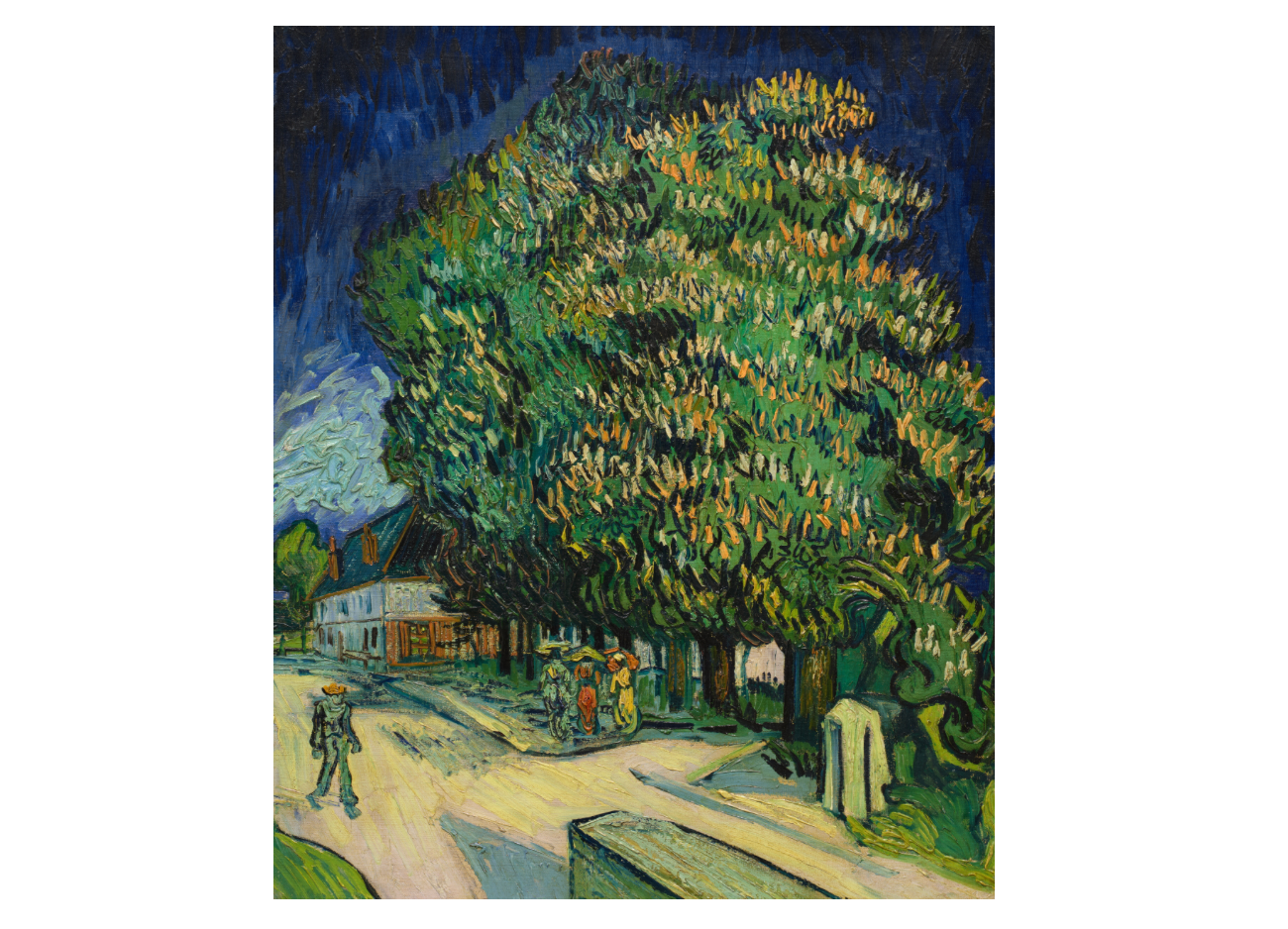
Arlequin was one of 12 works offered from the Blaquier-Arrieta collection on Wednesday. Also in the sale, Vincent van Gogh’s Châtaigniers en fleurs (1890) sold for $190.4 million, surpassing its pre-sale estimate of around $180 million.