English














































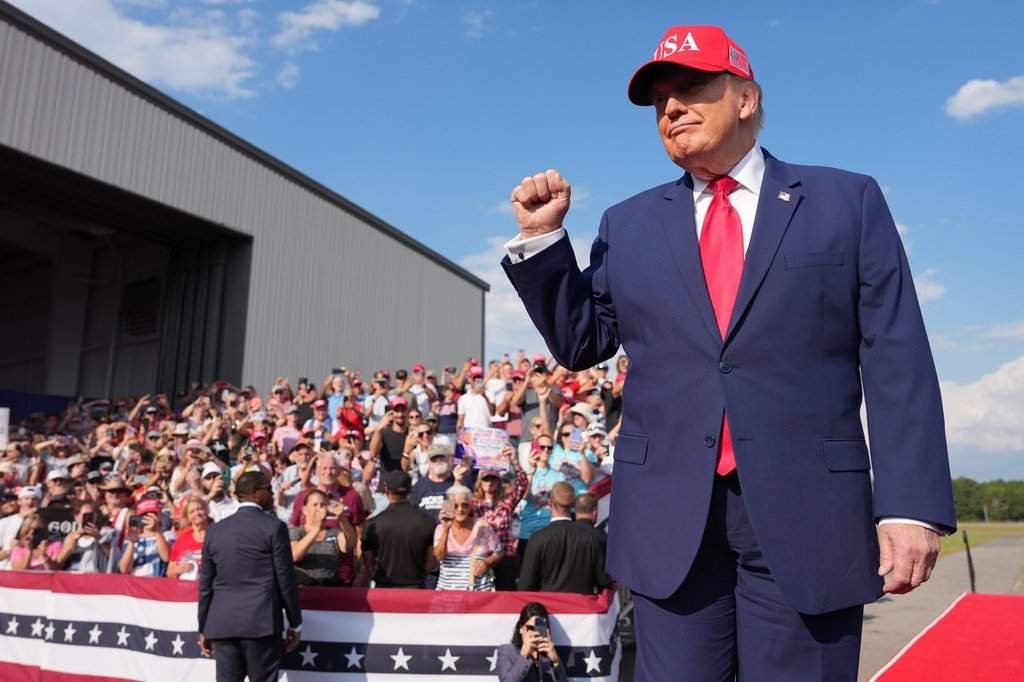
President Donald Trump has paused a major sanctions package targeting Russia’s economy, signing an executive order just two days before the law’s own implementation deadline. Trump told Congress the pause served the national interest. The move drew swift condemnation from Democratic lawmakers and raised fresh questions about his administration’s approach to the war in Ukraine.
Trump had personally signed the legislation only a month earlier. The bill carried bipartisan support and passed with large majorities in both the House and Senate. However, Trump reversed course on Friday, catching many in Washington off guard.
Stay connected to every major update — subscribe and follow us on the PhoenixQ website and across our social media platforms.
A Law Built on Bipartisan Support
The sanctions package bore the name of the late Senator Lindsey Graham of South Carolina, who died unexpectedly in July after returning from a visit to Ukraine. Graham had been a close ally of Trump and a vocal advocate for tougher economic pressure on Russia. His colleagues responded to his death with rare bipartisan unity, pushing the legislation through Congress.
Senator Richard Blumenthal of Connecticut co-drafted the bill. It targeted Russian officials, banks, and a shadow fleet of tankers that keeps Russian energy exports flowing. In addition, the law directed Trump to impose tariffs of up to 100% on the top five importers of Russian oil or natural gas. Countries importing less than 15% of Russia’s natural gas and actively reducing those imports would receive an exception.
The package aimed to cut off the financial resources fueling Russia’s war against Ukraine, which began more than four years ago when Russia invaded its neighbor. Supporters argued it would pressure President Vladimir Putin to seek an end to the conflict.
Sharp Criticism from Democrats
Blumenthal responded sharply to Trump’s decision. He said Trump was turning his back on “the majority of Americans, their representatives in both houses of Congress, and our European allies.” He added that the waivers had “nothing to do with our national security, and everything to do with sucking up to Vladimir Putin.”
Democratic Representative Don Beyer of Virginia noted on social media that he and others had warned Trump might take this step. Beyer called on Congress to “fix this flawed law to stop Trump from capitulating to Putin and ensure that it truly supports Ukraine.” The White House did not immediately explain how pausing the sanctions served the national interest. The decision appeared on the White House website late Friday evening, with a note confirming that a report had been submitted to Congress.
Trump’s Diesel Deal Adds to Controversy
The sanctions pause follows another controversial move from the previous week. Trump announced that the United States had agreed to purchase diesel fuel from Russia. He said the deal aimed to bring down global energy prices. Critics from both parties argued the agreement would instead help Russia sustain its war effort against Ukraine.
Under the agreement, Trump said Russia would immediately supply more than 300,000 tons of diesel. An additional 500,000 tons would follow in November, with 1 million tons more shortly after. Meanwhile, Trump has also increasingly criticized Ukrainian President Volodymyr Zelenskyy, blaming him for failing to negotiate a deal with Putin to end the fighting.
Political Stakes in South Carolina
The suspended sanctions also carry political significance in South Carolina. Darline Graham, the late senator’s sister, was appointed to serve out the remainder of his term. She is now running to fill the seat permanently and has made the legislation a central part of her campaign.
After Trump originally signed the bill, Darline Graham said, “I wish Lindsey were here to celebrate this historic day.” Earlier this week, during a debate with Democratic nominee Annie Andrews, she said she had been “so proud” to help pass the measure. Trump has endorsed her, and she is expected to campaign with him in South Carolina next week.
Graham acknowledged, however, that how Trump chose to use the law was ultimately his decision. “It gives the president tools that he can use if he so chooses, to end the war through economic sanctions,” she said during a debate in Columbia on Sunday. “So that’s up to him as to whether or not he wants to use it, or whether he wants to use something else.”
Trump’s approval ratings have fallen to near-historic lows. Furthermore, pressure on Republicans is growing as midterm elections on November 3 approach, with the party working to hold control of both chambers of Congress.