English
































Lebanese-American artist Walid Raad has built one of the most distinctive careers in contemporary art by blending documented fact with carefully constructed fiction. His work is currently on display at the 2026 Venice Biennale, where paintings of beds, birthday cakes, and stolen artworks draw visitors into a world where history and imagination are deliberately difficult to separate. Raad’s Venice Biennale installations reflect a nearly 40-year practice rooted in the Lebanese Civil War, political violence, and the slippery nature of photographic truth.
From Beirut to the Biennale
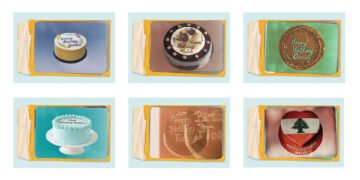
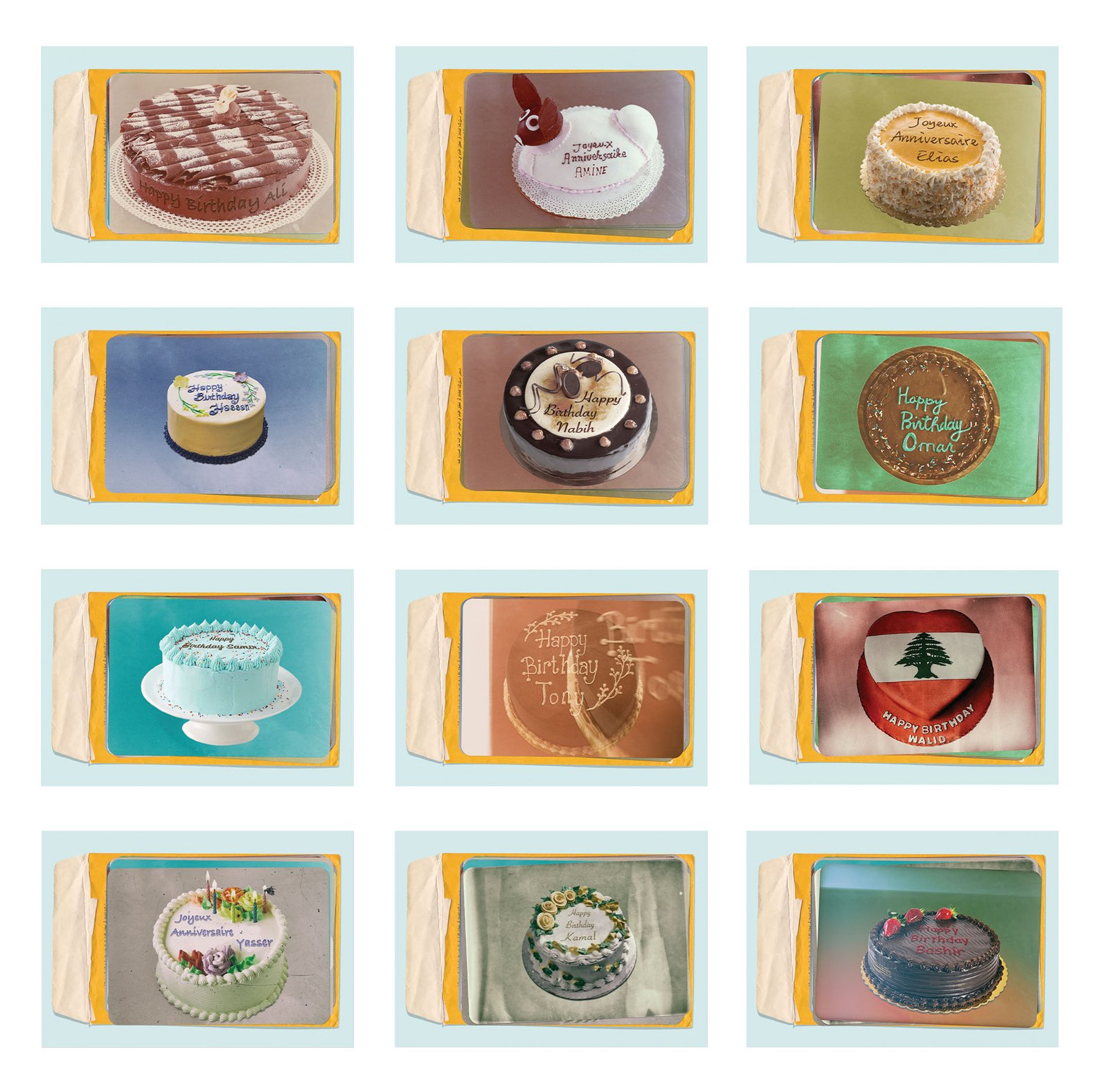
Raad grew up in Beirut during the civil war. As a teenager, he carried a camera through the city, trying to make sense of the chaos around him. One day, he photographed a birthday cake in a bakery window. Only later, developing the film in his father’s makeshift darkroom, did he notice the cake bore birthday wishes for Hassan Nasrallah — then a rising militiaman. Raad briefly imagined poisoning it. “But I was 15,” he recalled, laughing. “I was a coward.”
Stay connected to every major update — subscribe and follow us on the PhoenixQ website and across our social media platforms.
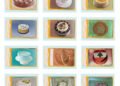
Decades later, that image grew into a full series. Raad created digitally fabricated birthday cakes addressed to political leaders from the Arab world, including Yasser Arafat, Elias, Nabih, and Amine. By the time he made the series, Nasrallah had become the leader of Hezbollah. In 2024, an Israeli airstrike killed him. The cakes are cheerful in appearance and cold in implication — a tragicomic blend that has become Raad’s signature.
His Venice Biennale contribution also includes paintings and photographs of ordinary-looking beds. A wall text claims these beds were slept in by Yasser Arafat, who reportedly never slept in the same bed two nights in a row. The PLO leader survived more than 40 assassination attempts. Raad writes that he spent 30 years searching for those beds and still could not complete the paintings. The canvases remain unfinished, bordered with tape and loose brushstrokes — their incompleteness part of the point.
Fact, Fiction, and the Atlas Group
Raad is perhaps best known for his work under a fictional collective he called the Atlas Group, which he ran from 1989 to 2004. The Group produced videos, photographs, and archival documents that pressed on photography’s complicated relationship with truth. One video, Hostage: The Bachar Tapes, features a man named Souheil Bachar recounting his experience as a hostage in Lebanon from 1983 to 1993. Green-screened footage of Ronald Reagan signals the video’s constructed nature. However, subtler clues exist too. Arabic-speaking viewers may notice that the English subtitles sometimes contradict what Bachar actually says.
Dates, like all facts, function as raw material for Raad. The Atlas Group’s official dates shift depending on the source. Some magazines and museums trace the Group’s origins to 1967, the year of Raad’s birth. Others list 1948 or 1945. The Tate and the Museum of Modern Art in New York both hold editions of his series My Neck Is Thinner than a Hair: Engines, yet each institution lists different dates for the work. Furthermore, although Raad says he disbanded the Atlas Group in 2004, a Group work appears in the 2026 Venice Biennale catalog dated “printed 2023” — leaving its status deliberately unresolved.
Scholars have taken note of this approach. Harvard art historian Carrie Lambert-Beatty described Raad’s practice as an example of “parafiction.” Art historian Claire Bishop, in her recent book on artistic research, singled him out for offering narrative synthesis rather than simply reproducing the experience of information overload. Scholar Saidiya Hartman, commenting on the Arafat bed works, praised his “belief in the imaginative and the speculative” as critical. Hartman’s own method, which she calls “critical fabulation,” similarly reconstructs the lives of people who left few traces in the historical record.
The Concept of Withdrawal
In the early 1990s, Raad encountered the work of Lebanese writer and artist Jalal Toufic. The meeting changed the direction of his practice. Toufic’s book Forthcoming (2000) includes the story of a photographer who cannot stop making blurry images of Beirut’s buildings. Raad recognized himself immediately. “I freaked out,” he said. “It was as if he could hear my internal monologue.”
Toufic’s concept of “withdrawal” became central to Raad’s thinking. Toufic argues that major cultural disasters can render traditions, rituals, and forms unavailable — not destroyed, but withdrawn. When a tradition returns after such a disaster, something is always off. Toufic calls this a “resurrection,” because the tradition is not alive so much as undead. He compares the artist’s task to a vampire mirror: making absence visible rather than simply reflecting what is there.
This concept directly shaped a pivotal work Raad showed at Sfeir-Semler Gallery in Beirut, which opened in 2005 as the Arab world’s first white cube gallery. When Raad finally agreed to exhibit there in 2008, he found that the Atlas Group works he had shipped appeared shrunk to one-hundredth of their original size. He does not describe this as metaphor or psychological symptom. For him, it is withdrawal — the same force that prevents him from finishing the Arafat bed paintings.
Toufic’s influence runs so deep that some observers have speculated he is simply another of Raad’s invented personas. Raad dismisses the idea, though he acknowledges the suspicion with some amusement. “I’m embarrassed by how much I talk about that guy,” he said. “It’s as if I cannot have a thought without passing through him.”
Recent Work and What Comes Next
Over the past two decades, Raad’s practice has moved further into territory that resembles magical realism. One series features black-and-white portraits of political figures — Benjamin Netanyahu, Saddam Hussein, Ronald Reagan — with their heads replaced by flowers. The series belongs to a fictional Lebanese Army officer named Fadwa Hassoun, a trained botanist who assigned politicians flower code names during the war.
In 2025, Raad collaborated with graphic designer Pierre Huyghebaert on I thought I’d escape my fate (again). The installation gathers statements from people involved in exhibitions canceled over expressions of solidarity with Palestine. The quotes are printed and taped low along a gallery baseboard, forcing viewers to crouch to read them. Meanwhile, colored tape runs across the wall above — marking the spaces where artworks never hung. The absence itself becomes the artwork.
Also in Venice, Raad displays copies of stolen Arab and Turkish artworks painted on the undersides of wooden pallets. A wall text notes that when the Lebanese Civil War ended in 1990, militias sold off weapons, many of which reached the Balkans and fueled the Yugoslav Wars. The pallets, the text claims, were found at the Moderna Galerija in Ljubljana — where Raad recently closed a mid-career retrospective.
Next spring, Raad will show new work at Paula Cooper Gallery in New York. He plans to place a vintage Volkswagen Beetle upside down on the gallery floor — a reference to artillery shells American soldiers called “flying Volkswagens” during the 1980s bombardment of Beirut. Surrounding the car, reproductions of handwritten notes left on bombs by soldiers from multiple countries will cover the walls. The inscriptions include phrases in English, Russian, Arabic, Hebrew, and French. Raad found the original images on Reddit, posted by soldiers from around the world, and enlarged and recolored the text. In this case, he added little fiction. Sometimes, he suggests, the facts are strange enough on their own.