English














































Nearly 200 people in Russia’s Siberian region are under medical observation following the death of a 28-year-old laboratory worker who may have contracted pneumonic plague. The incident has drawn international attention and prompted calls for greater transparency from Russian health authorities.
Researcher Dies at Irkutsk Anti-Plague Institute
Russia’s consumer welfare service confirmed on Sunday that the researcher, who worked at an anti-plague institute in Irkutsk, died of what officials described as “pneumonia of unknown etiology.” Authorities have not officially confirmed pneumonic plague as the cause of death. However, they stated that the “sanitary-epidemiological situation” in the Irkutsk region and the nearby cities of Irkutsk and Shelekhov remained “stable.”
Stay connected to every major update — subscribe and follow us on the PhoenixQ website and across our social media platforms.
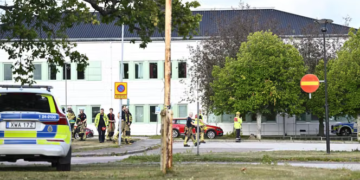
Health officials placed close to 200 people under precautionary medical observation. All of them had been in contact with the researcher before her death. Maksim Modin, mayor of the Shelekhov municipal district near the Mongolian border, announced on Friday that the inpatient facility where the researcher received treatment had closed for quarantine.
Pneumonic Plague Raises Serious Public Health Concerns
The pneumonic form of plague is among the most dangerous variants of the disease. According to the World Health Organization, it is especially contagious and can trigger severe epidemics. Unlike other forms of plague, pneumonic plague spreads from person to person through airborne respiratory droplets, typically from coughing or sneezing. Medical experts stress that rapid treatment with powerful antibiotics is essential to prevent fatalities.
The same bacteria that causes bubonic plague also causes pneumonic plague. However, experts note that person-to-person transmission is actually quite difficult. Dr. Ashish Jha, who served as the White House Covid-19 response coordinator from 2022 to 2023, told NBC News that the risk of a large outbreak remains very low. “We may see a few more people get infected, but the chances that this becomes a larger outbreak, let alone a global pandemic, is exceedingly low,” he said. The WHO did not immediately respond to a request for comment about the suspected case.
United States Calls for Transparency From Moscow
The U.S. State Department said it was closely monitoring the situation alongside the Centers for Disease Control and other agencies. In a statement to multiple media outlets, the department noted that “many details have not been confirmed.” It urged Russian authorities to “share accurate information quickly and openly.”
Dr. Jha echoed those concerns. He said Moscow needed to provide “much more” information and transparency. If the case turns out to be isolated and no further deaths occur, he said, “it will probably end there.” However, he raised additional concerns about the nature of the laboratory itself. “If there were biological weapons programs in these labs, that would be much more concerning to me,” he said. “We need to understand that now.” The Kremlin did not immediately respond to a request for comment.
Global Plague Cases Remain a Persistent Concern
The suspected pneumonic plague death in Russia comes against a backdrop of ongoing global cases. Between 2019 and 2025, ten countries reported more than 3,800 suspected human plague cases to the WHO. Six of those countries had confirmed cases. Most occurred in the Democratic Republic of the Congo and Madagascar, with a total of 423 deaths recorded during that period.
Authorities continue to monitor the situation in Irkutsk closely. As of now, officials maintain that the regional health situation remains under control. Nevertheless, the international community is watching the case carefully and pressing Russia for clearer answers.