English















































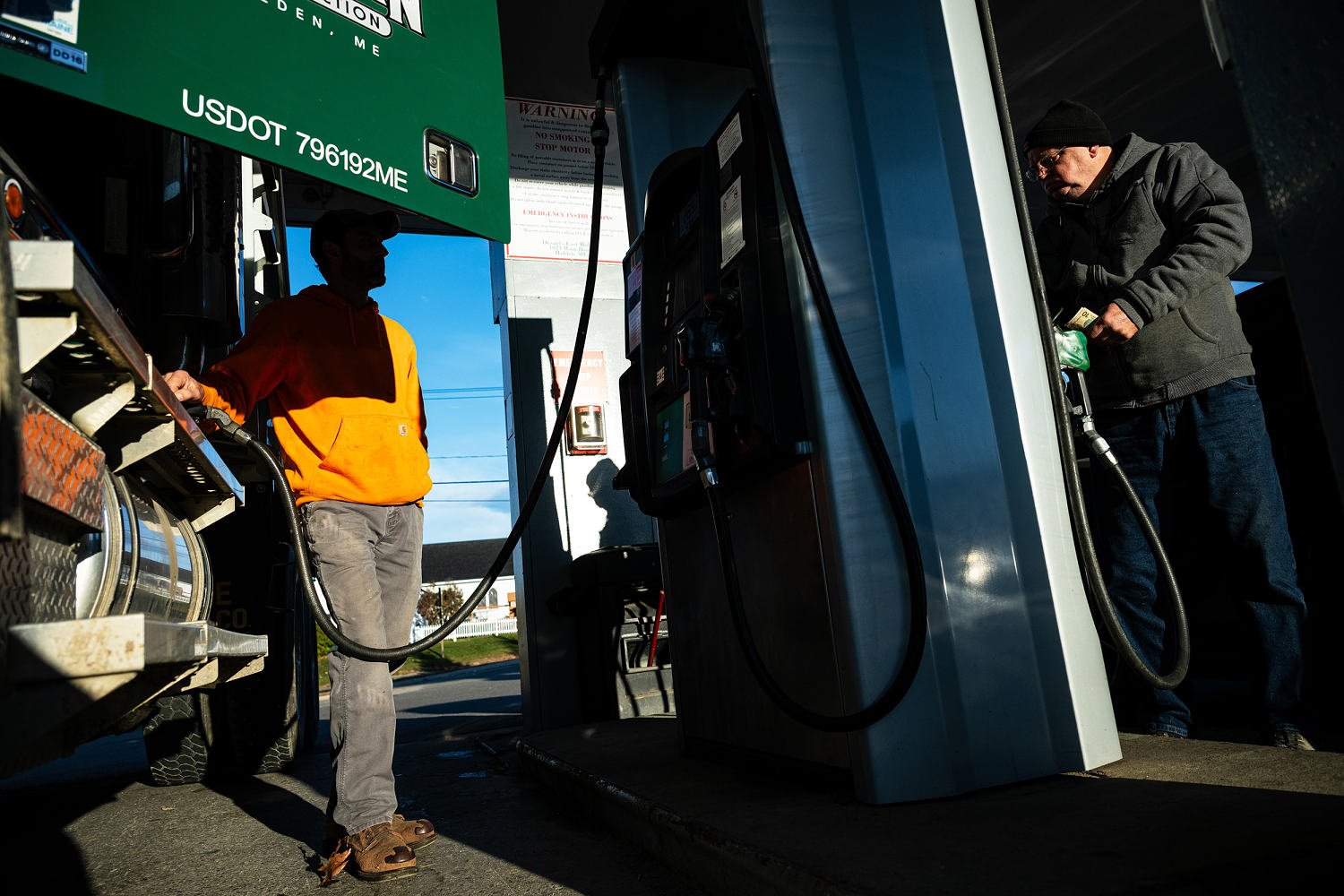
American drivers are getting a break at the pump. The national average price for regular gasoline has dropped below $4 per gallon for the first time in months, falling from $4.14 on election day to $3.97. Analysts say further relief could arrive in the coming days as oil markets continue to adjust.
Diesel Prices Also Fall, Easing Inflation Pressure
Diesel prices have also declined sharply. The cost per gallon fell from $6.28 on election day to $6.15. That drop matters beyond the fuel pump, because diesel powers the trucks, trains and ships that move goods across the country and around the world.
Stay connected to every major update — subscribe and follow us on the PhoenixQ website and across our social media platforms.
Economists warn that rising diesel costs can quickly push up prices on grocery and department store shelves. Despite the recent decline, diesel remains more than 70% higher than at the start of the year. The ongoing war in Ukraine and the conflict involving Iran have both contributed to that elevated level. Russia has historically been one of the world’s largest diesel exporters, and Ukrainian President Volodymyr Zelenskyy has pledged to continue striking Russian energy infrastructure in retaliation for attacks on Ukraine.
Diplomatic Talks Underway as Market Risks Remain
The United States is hosting trilateral talks between Russia and Ukraine in Abu Dhabi on Tuesday. These are the first three-way negotiations since February. However, analysts caution that significant risks remain in oil markets.
ING’s analysts noted that “the degree and speed to which the oil market has sold off seems to be overdone,” adding that how events unfold “is still highly uncertain.” Meanwhile, the U.S. Strategic Petroleum Reserve currently holds its smallest volume of crude oil since 1982. Markets will eventually need to support refilling hundreds of millions of barrels that were released this year to help control prices.
Political Shifts Could Influence Oil Markets
Citigroup commodities analysts highlighted a key political window. They described the period before January 3rd, when the new Democratic Congress takes its seats, as a “lame duck” phase. During this time, the White House could pursue foreign policy goals and personnel changes with fewer political constraints.
Citi’s team wrote that this period “could see either accelerated dealmaking or renewed escalation, meaning markets could remain choppy even if the longer-term direction points to eventual diplomatic resolution.” Already, notable personnel changes have occurred. On Friday, Susie Wiles departed as White House chief of staff. Stephen Miller, known as the architect of the administration’s immigration crackdown, replaced her.
In addition, Citi analysts pointed to recent Israeli elections as a potential factor for oil prices. They noted that inconclusive results could allow Prime Minister Benjamin Netanyahu to continue pressuring the United States to take a harder line on Iran. On Saturday, Israeli President Isaac Herzog gave Netanyahu’s rival Gadi Eisenkot the opportunity to form a new government. However, Netanyahu remains in office for at least the next six weeks.