English














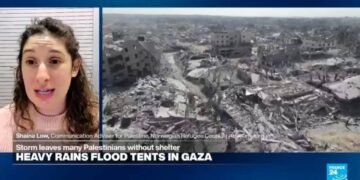






























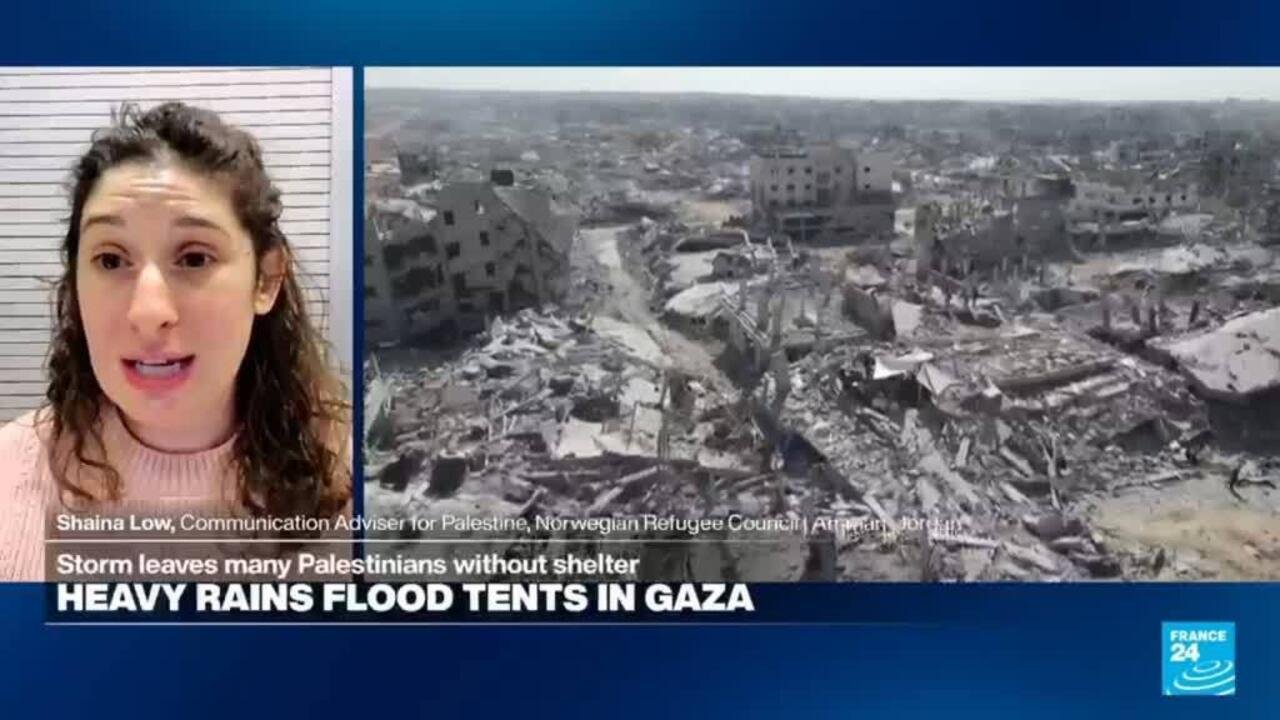
Thirteen months into a fragile and contested ceasefire, conditions in Gaza continue to worsen. Flooding, repeated displacement, crumbling shelter and severe restrictions on aid are pushing Palestinian civilians deeper into crisis, according to a senior humanitarian official.
A Population Facing Mounting Hardship
Shaina Low, Communications Adviser for the Norwegian Refugee Council (NRC) in Palestine, spoke to France 24 about the situation on the ground. She described a population confronting winter floods, deteriorating living conditions and near-constant displacement. “Life in Gaza is simply miserable,” she said.
Stay connected to every major update — subscribe and follow us on the PhoenixQ website and across our social media platforms.
Low’s account highlights a stark contrast between diplomatic progress and daily reality. While a ceasefire technically remains in place, she characterizes it as a “so-called ceasefire” — one that has done little to ease the suffering of ordinary Palestinians.
Aid Restrictions Compound the Crisis
Beyond the physical destruction, Low pointed to persistent restrictions on humanitarian access as a major driver of the crisis. Aid organizations are struggling to deliver essential supplies to those who need them most. As a result, shortages of food, shelter materials and medical assistance continue to grow.
Low called directly on Israel to take action. “Open all the crossings, lift the restrictions, let aid in,” she urged. Her appeal reflects a broader frustration among humanitarian groups working in the region.
Winter Flooding Adds to Displacement Crisis
Winter conditions have made an already dire situation significantly worse. Flooding has damaged makeshift shelters and forced families to move again. Many displaced Palestinians have already relocated multiple times since the conflict began. Furthermore, the lack of adequate shelter materials means many people have little protection against the cold and rain.
The NRC has been working in Palestine to support displaced communities. However, Low made clear that humanitarian organizations cannot fill the gap left by political inaction. Without unrestricted access to Gaza, aid groups remain limited in what they can deliver.
The Norwegian Refugee Council continues to call for immediate and unimpeded humanitarian access. Meanwhile, the gap between diplomatic commitments and the lived experience of Palestinian civilians in Gaza shows no sign of closing.