English











































Kelowna is positioning itself as a Western Canadian leader in drone and aerospace technology, following the announcement of a new three-way partnership between the City of Kelowna, FireSwarm Solutions and Okanagan College. The collaboration aims to advance automated drone-swarm technology for wildfire suppression and build a skilled local workforce to support the growing sector.
Partnership Targets Wildfire Response with Drone Technology
Officials announced the formal agreements on Tuesday at the Union of BC Municipalities convention in Vancouver. The announcement follows another challenging wildfire season in the Okanagan region and builds on earlier efforts to test automated drones in wildfire response scenarios.
Stay connected to every major update — subscribe and follow us on the PhoenixQ website and across our social media platforms.
Kelowna Mayor Tom Dyas expressed strong confidence in the city’s potential. “Kelowna is ready to help lead the next chapter of aerospace and drone innovation in Canada,” he said.
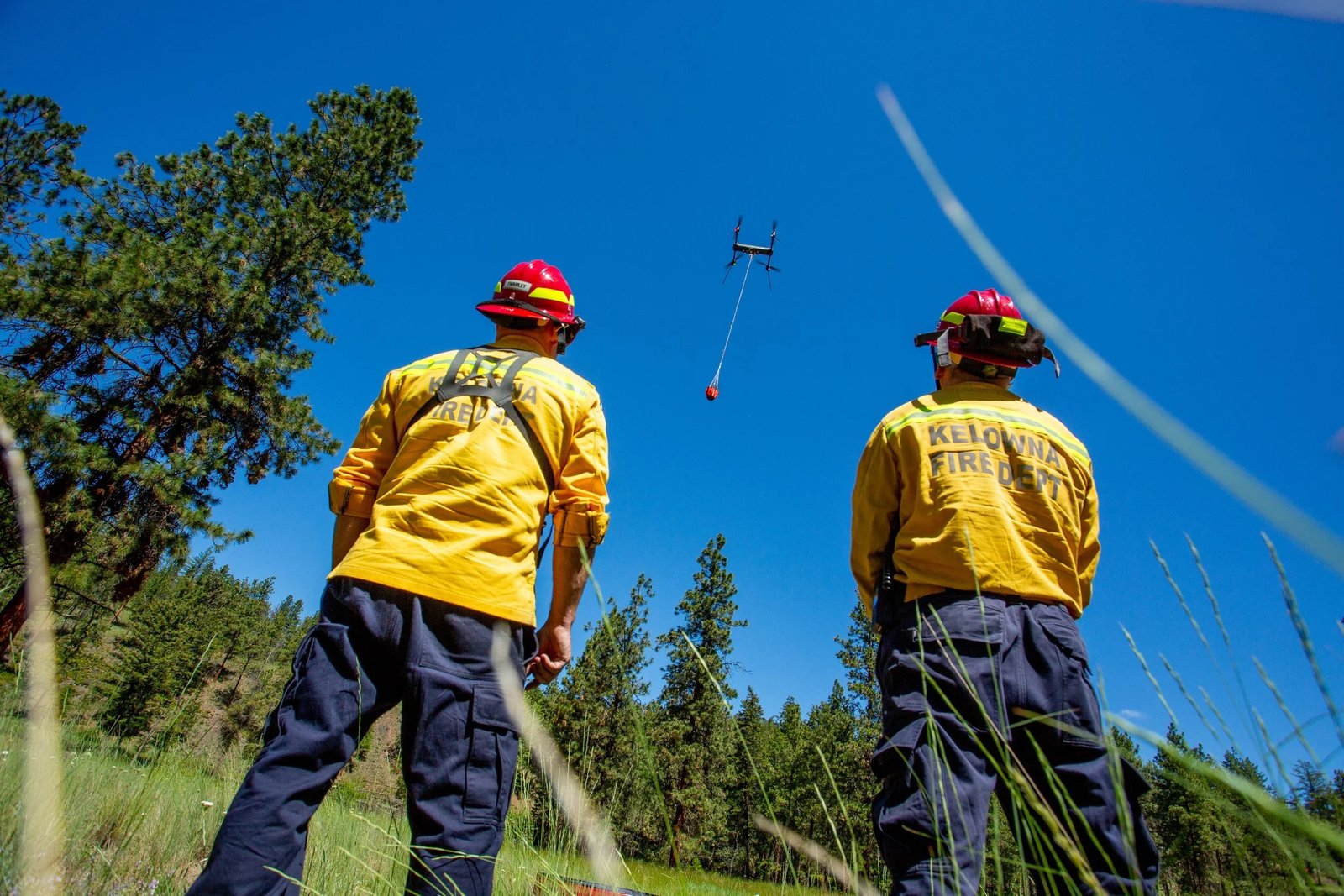
At the heart of the initiative is drone-swarm technology designed to support firefighting in conditions that limit ground crews and conventional aircraft. FireSwarm Solutions CEO Alex Deslauriers explained the core vision behind the technology. “We see a need for drone autonomy to come into this space and be able to do similar work that’s currently being done by crewed helicopters, but taking the human out of the cockpit to ensure that machines are taking the risk of picking up water and dropping it off on fires,” he said.
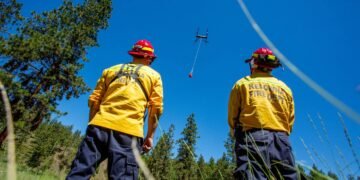
In 2025, FireSwarm partnered with the Kelowna Fire Department to demonstrate the technology on Knox Mountain. Smaller drone versions underwent testing during an integrated training exercise. Now, however, larger autonomous aircraft are approaching commercial readiness.
“Machines that are able to pick up 350 kilograms of water autonomously are just about to enter the market,” Deslauriers said. “We, as FireSwarm Solutions, are working on the autonomy stack to enable these ultra-heavy lifters to do that work.”
No Operational Timeline Yet, but Investment Is Coming
Despite the progress, officials have not set a timeline for deploying drones in active firefighting operations. Further investment from both government and the private sector will be necessary as the technology continues to develop.
FireSwarm, which is headquartered in Squamish, says the Kelowna partnerships will help expand its Interior operations. The company also says the agreements could generate new jobs at Kelowna International Airport, known as YLW.
The initiative builds on an existing aerospace industry at YLW. Companies such as KF Aerospace and other aviation-related businesses already operate there, providing a strong foundation for further growth.
Okanagan College to Develop First-of-Its-Kind Training Program
The partnership also includes a significant education and workforce-development component. Okanagan College is already expanding its aerospace-related programming. In addition, the college is constructing a new training hangar at Kelowna International Airport to house programs in avionics, uncrewed aerial systems and aerospace manufacturing.
Okanagan College and FireSwarm plan to jointly develop curriculum to train aircraft maintenance engineers in ultra-heavy-lift drone technology. College president Neil Fassina highlighted the national significance of the program. “We’re going to work together to design curriculum for a program that can enable aircraft maintenance engineers to build on their education to be able to work on ultra-heavy-lift drone technology,” he said. “This program doesn’t exist anywhere in this country. We will be the first to build it.”
All three partners describe the current agreements as a starting point. Their long-term goal is a sustained collaboration that brings together industry, education and government to advance drone technology and aerospace development in the region.