English














































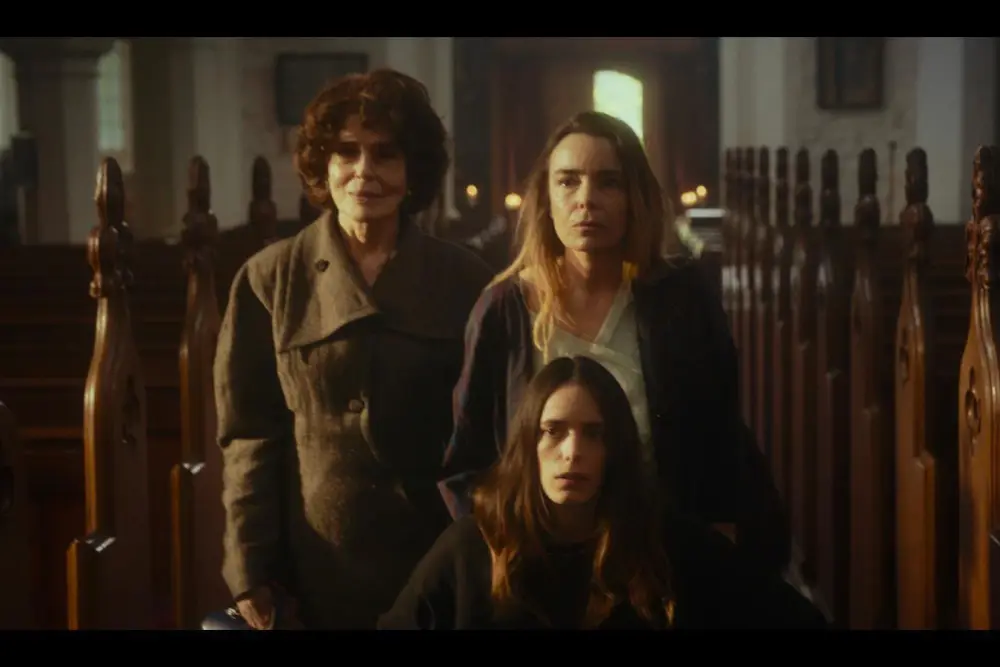
Actor-turned-director Liam Hellmann is making his feature directorial debut with Trafalgar, a family drama built around an international cast that includes Fanny Ardant, Élodie Bouchez, Danny Huston and Stacy Martin. The film is currently in post-production and marks a bold step forward for Hellmann, who previously produced the indie drama Only What We Carry.
A High-Profile Cast, a Tiny Budget and No Script
Hellmann reunites with producer Charles Benoin on Trafalgar. The two previously worked together on Only What We Carry, which starred Quentin Tarantino and premiered at the Tribeca Film Festival. That film also screened at the Deauville American Film Festival, with cast members Simon Pegg and Sofia Boutella attending.
Stay connected to every major update — subscribe and follow us on the PhoenixQ website and across our social media platforms.
Their new project takes an even more unconventional approach. The team shot Trafalgar in just 12 days with a budget of €1.3 million. Instead of a traditional screenplay, the actors worked from a seven-page outline. Hellmann had written roughly 60 versions of a script before abandoning the idea entirely. He eventually built a four-page document around situations and ideas, which grew to seven pages after he met with the cast.
Each actor brought personal stories from their own family life to shape their characters. Hellmann asked them to share those experiences directly. “We all have slightly crazy families,” he said. “Every actor came in with things from their own family and added them to the film.”
The Story Behind the Film
The film draws on Hellmann’s own life. It follows a young man raised in a household dominated by women who sets out to find the father he never knew. However, the reunion quickly turns complicated. He discovers his father owes a significant debt and must raise €80,000 within a single week. His dysfunctional family rallies around him, and together they begin plotting a robbery.
Ardant plays the grandmother, Bouchez the mother and Martin the sister. Huston takes on the role of the estranged father, while Lou Lampros plays the girlfriend and Khaled Alouach the best friend. Hellmann himself also appears in the film alongside Huston.
Benoin recalls first hearing about the project years ago. “When I met Liam six years ago, he immediately told me about Trafalgar,” he said. “At 21, regardless of where you come from, there was almost no chance of getting a film like this made as a directorial debut. Then we made Only What We Carry, and that gave us the momentum. I told Liam, ‘We can do it!'”
Pushing Actors Out of Their Comfort Zones
The collaborative process shaped every performance. Before filming began, Hellmann met with Bouchez several times to develop their on-screen mother-son dynamic. “He asked her, ‘How do you see your relationship with your son?'” Benoin explained. “The idea was to create something halfway between what Élodie wanted to communicate as a mother and what Liam wanted to communicate as a son.”
Hellmann used a similar approach with Huston. He met the actor over lunch in London and asked about his relationship with his own father. “He told me anecdotes that he eventually ended up telling in the film,” Hellmann said. By inviting each actor to contribute personally, Hellmann found it easier to attract talent to such an unconventional project.
Benoin described the film’s creative influences as ranging from the Coen brothers to Pedro Almodóvar and Cédric Klapisch, particularly in how the story depicts family dynamics. The production brought together French, British and Italian crews. Key collaborators included Italian cinematographer Vladan Radovic, camera operator Leonardo Kurtz and costume designer Fabienne Menguy.
Private Financing and a Theatrical Release
Rather than following the traditional French film financing model, Hellmann and Benoin turned primarily to private investors. These included entrepreneurs from outside the film industry who wanted to diversify into cinema and support emerging filmmakers. French tax-credit support also contributed to the budget. Executive producers include Alan Ganansia, Théodoros Ornithopoulos, Alain Heinz, Vivianne Vidal de la Blache, Delphine de Causans, Gaspard Madec, Manuel Millet and Orama.
This approach gave the filmmakers greater flexibility and allowed them to move quickly. Benoin said speed was essential to securing the cast. “If we’d told Tarantino or Gainsbourg to come back in seven months, they might not have been able to block out six days,” he said, referring to their experience on Only What We Carry. “The urgency is part of what attracts the actors.”
Despite the unconventional structure, the film secured a traditional theatrical distributor. Zinc, the French distribution company led by Jérôme Hilal, joined the project before the full cast was even confirmed. Zinc will release Trafalgar in French cinemas.
For Hellmann, the film also reflects a broader frustration with modern cinema. “I think there are a lot of films that look alike today, with the same structures because everyone knows exactly how everything works,” he said. “With this film, we accepted from the beginning that we had no control because there was no script. It’s about a dysfunctional family, and the film itself is dysfunctional.”