English












































Emergency conservation work at a centuries-old burial site in central Italy has led to a series of unexpected archaeological finds. Researchers working at the Etruscan necropolis of Monte Abatone in Cerveteri have uncovered carved rock thrones, painted tomb walls, and a nearly intact decorated vessel. The Superintendency of Archaeology, Fine Arts and Landscape for Southern Etruria announced the discoveries on its official Facebook page.
A Burial Ground at the Heart of Etruscan Civilization
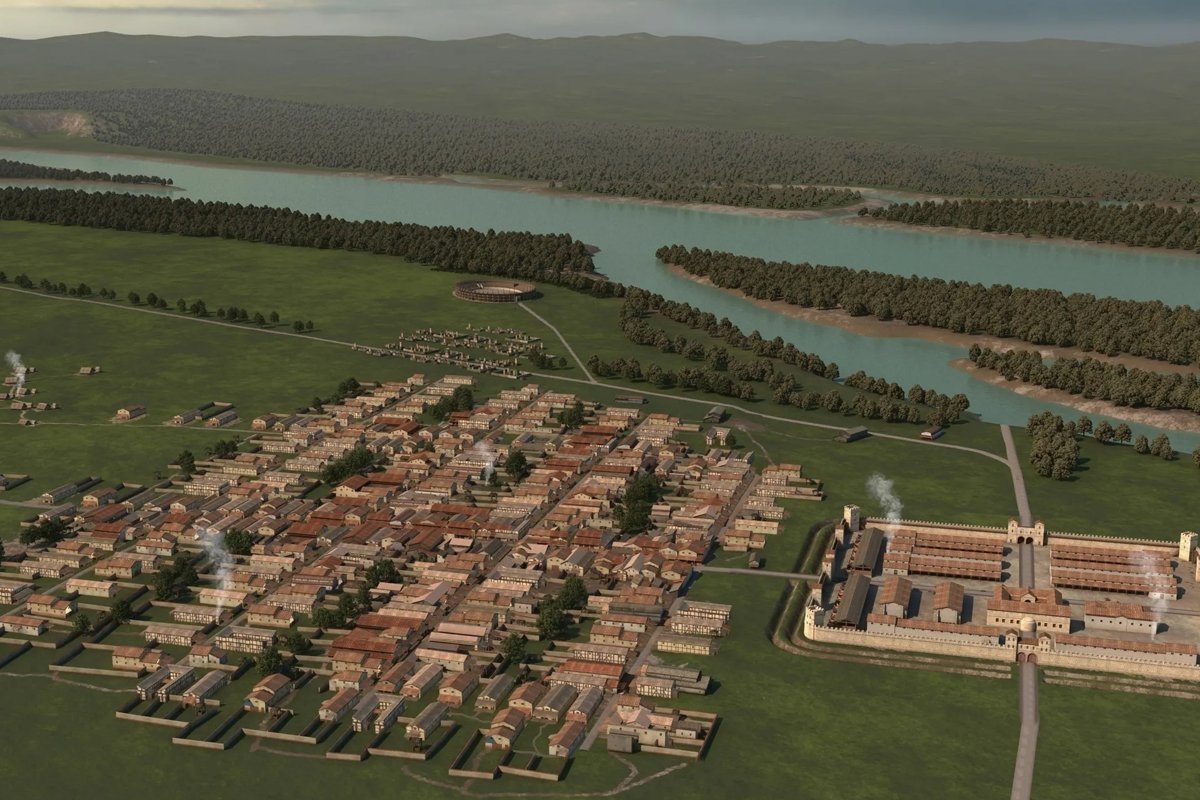
Monte Abatone served as one of the main cemeteries for the ancient city of Caere, located about 21 miles northwest of Rome. Caere was a major center of Etruscan civilization, the first great pre-Roman culture on the Italian peninsula. The Etruscans flourished from roughly the 9th century BCE until their gradual absorption into the Roman Empire by the 1st century BCE. Today, Caere’s cemeteries contain thousands of tombs that document Etruscan society and religious life.
Stay connected to every major update — subscribe and follow us on the PhoenixQ website and across our social media platforms.
Collapsed Tombs Lead to Unexpected Finds
Authorities commissioned the conservation project after several tombs at Monte Abatone collapsed. Archaeologists moved in to stabilize the site and document its condition. During that process, they cleared blocked entrances and removed fill material from inside the structures.
Their work revealed a group of previously unrecorded burial chambers. Each chamber had its own distinct features. One still retains a large portion of its original vaulted ceiling. Another contains funerary furnishings, including thrones, carved directly into the rock. A third chamber still shows traces of red paint on its walls, offering a rare glimpse into how the tomb once appeared.
A Vessel That Escaped the Looters
However, the investigation also confirmed that all the tombs had suffered looting at some point in the past. Most objects of value had been removed long before archaeologists arrived. Despite this, at least one significant item survived undisturbed.
Researchers found an almost perfectly preserved stamnoid vessel — a jar shaped like a Greek stamnos — engraved with figures that include animals. Red paint also decorates parts of its surface. The Etruscan necropolis discovery is therefore notable not only for the architectural finds but also for this rare surviving artifact. Authorities plan to clean and restore the jar before placing it on public display.
The Superintendency reflected on the find with a pointed observation. “Perhaps there is even a small moral to be found here,” the agency wrote in its post. “While those who dig illicitly may manage to steal a great deal, archaeology sometimes still manages to have the final word.”