English













































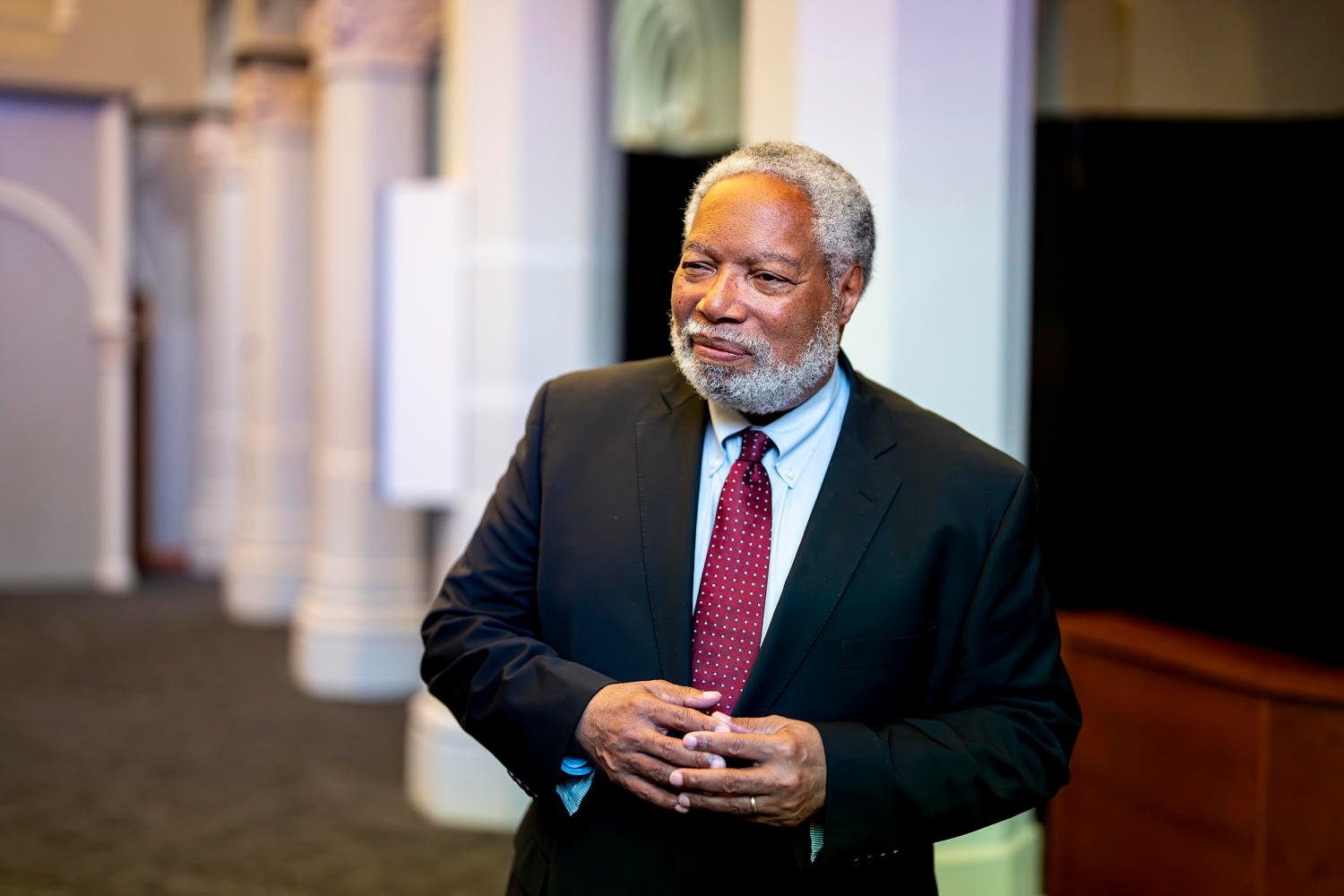
Lonnie G. Bunch III, the first Black person and first historian to lead the Smithsonian Institution, announced Tuesday that he will step down from his role as secretary by the end of the year. His departure comes at a difficult moment for the institution, which faces mounting political pressure from the Trump administration over how it presents American history.
Bunch has worked at the Smithsonian for 38 years. He became secretary in 2019 and has overseen one of the world’s largest museum and research networks, which includes dozens of museums, libraries, research centers and the National Zoo.
Stay connected to every major update — subscribe and follow us on the PhoenixQ website and across our social media platforms.
A Career Built at the Smithsonian
In a statement announcing his retirement, Bunch described his feelings as mixed. “I have spent nearly half of my life working at and being part of the Smithsonian family, and what a privilege it has been,” he said. “There is no place like the Smithsonian — it has been one of the great loves of my life, and I am extraordinarily proud of what we have accomplished together.”
Chief Justice John Roberts, who serves as chancellor of the Smithsonian, praised Bunch’s long record of service. “From his days as a young curator at the National Air and Space and American History Museums through his tenure as the founding director of the African American History and Culture Museum and culminating in his distinguished service for the past seven years in the Smithsonian’s top job, Secretary Bunch has pursued excellence in the telling of our nation’s story,” Roberts said. He added that the Board of Regents looks forward to working with Bunch in the coming months to ensure a smooth transition for his successor.
Political Pressure from the Trump Administration
The Smithsonian has traditionally operated independently of political influence. However, the Trump administration has repeatedly challenged that independence since returning to office.
In March 2025, President Donald Trump signed an executive order directing Vice President JD Vance to eliminate what it called “improper, divisive, or anti-American” ideology from the institution’s programs. The order claimed the Smithsonian had come “under the influence of a divisive, race-centered ideology” and alleged it promoted narratives portraying American and Western values as harmful and oppressive.
Because of his role as vice president, Vance sits on the Smithsonian Board of Regents. Other members include Roberts, members of Congress and members of the public.
Last week, the Interior Department escalated the pressure further. It threatened to cut off support for the Smithsonian, alleging that its facilities present a “radical ideology” that weakens a shared American identity.
Earlier, in August of last year, Trump posted on Truth Social that he had asked his attorneys to review Smithsonian museums. He claimed the institution focused too heavily on the history of slavery and not enough on American success. “The Smithsonian is OUT OF CONTROL, where everything discussed is how horrible our Country is, how bad Slavery was, and how unaccomplished the downtrodden have been — Nothing about Success, nothing about Brightness, nothing about the Future,” he wrote.
Attacks Continue on Independence Day
The criticism did not stop there. On Independence Day, as the United States marked its 250th anniversary, the White House Domestic Policy Council released a report targeting Smithsonian leadership directly. The report described Smithsonian leaders as radical activists and stated that the National Museum of American History “cannot be trusted to tell America’s story honestly and in a way that is inspiring, unifying, and worthy of our great republic.”
The following day, Bunch appeared on NBC’s Meet the Press. In an interview recorded before the report’s release, he spoke about his guiding philosophy. “America’s greatest strength, it’s not running away from its history, but it’s understanding how that history shaped us and continues to shape us,” he said. He also noted that “the notion of being a more perfect union, not the perfect union, is really what motivates me.”
Bunch’s departure leaves the Smithsonian Institution facing significant uncertainty. The institution must now find a new leader while navigating an increasingly hostile political environment and defending its role as an independent steward of American history and culture.