English














































A 70-year-old Banff man died on Tuesday evening after falling through thin ice while skating alone on Lake Louise, one of Alberta’s most iconic destinations in Banff National Park.
Skater Falls Through Ice at Lake Louise
Emergency services received a 911 call at approximately 6:15 p.m. reporting that someone had broken through the ice on the lake. The local fire department, RCMP, EMS, and Parks Canada’s visitor safety team all responded to the scene.
Stay connected to every major update — subscribe and follow us on the PhoenixQ website and across our social media platforms.
According to RCMP, the man had been skating near the back of the lake when he fell through thin ice. Rescuers found him underwater at around 8:10 p.m. At the time, the temperature sat at -5 C, though wind chill made conditions feel closer to -13 C, according to Environment Canada.
EMS immediately began resuscitation efforts. Paramedics transported the man to Banff Mineral Springs Hospital, where doctors pronounced him dead. RCMP confirmed his identity as a Banff resident but did not release his name publicly.
Earlier Incidents Raised Safety Concerns
The fatal incident followed two separate falls through the ice on Monday. However, both skaters in those cases managed to pull themselves out without serious injury.
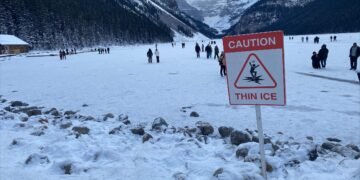
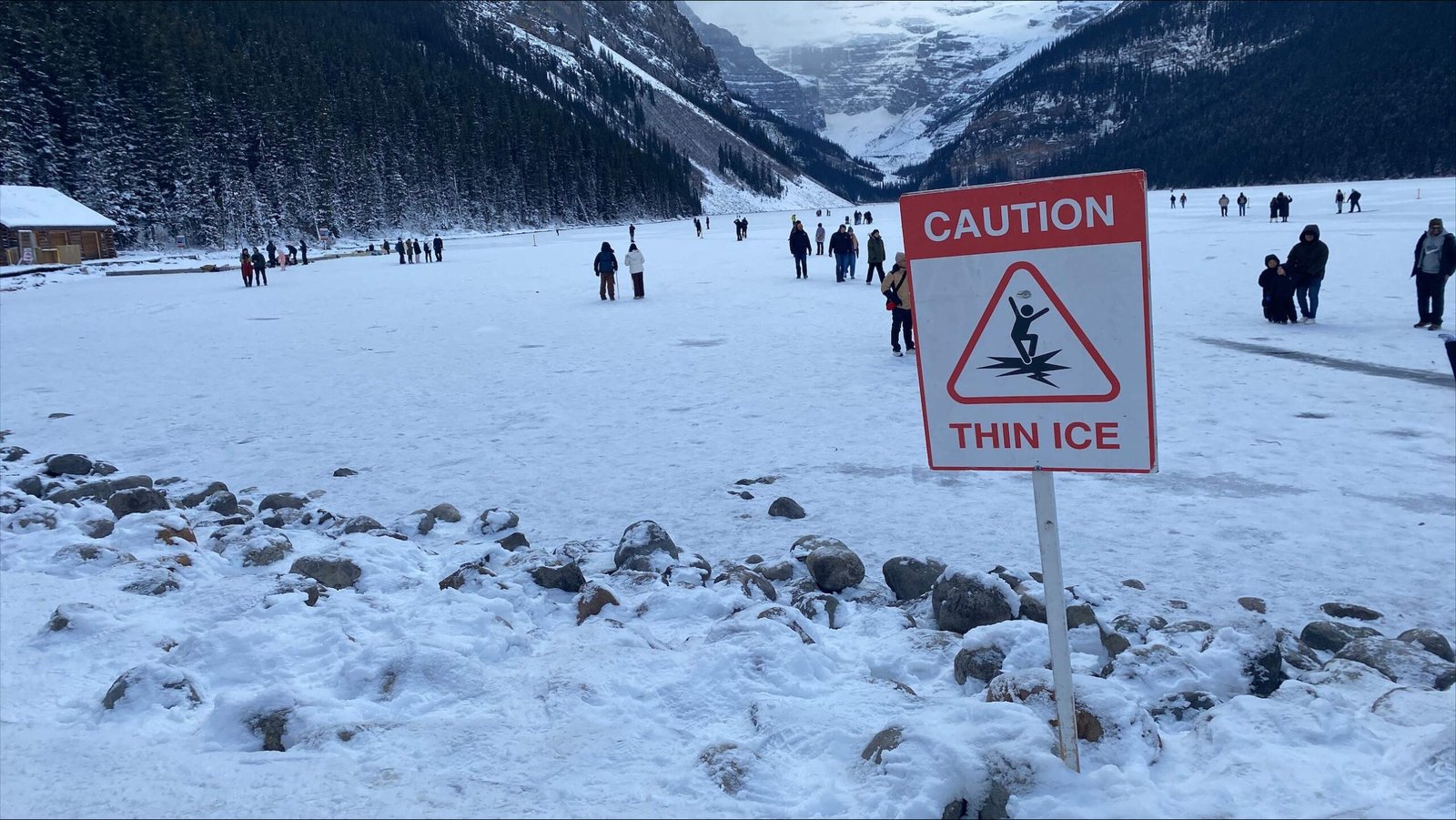
A mild autumn across Alberta has slowed ice formation on lakes and ponds throughout the province this season. Despite this, dozens of people were still skating and walking on Lake Louise on Wednesday. Signs posted along the shore warned of thin ice and stated that skating was at visitors’ own risk.
Parks Canada Issues Safety Warning
On Monday, Parks Canada urged visitors to think carefully before skating on Lake Louise or any other body of water in Banff National Park. The agency noted that it does not monitor ice conditions at any lake or pond within the park.
“If you choose to skate on natural ice, you do so at your own risk,” Parks Canada stated in a Facebook post. The agency also warned that early-season ice is unpredictable. Conditions can vary significantly across a single lake, meaning areas that appear frozen may not support a person’s weight.
Parks Canada advised that ice should be between 15 and 20 centimetres thick before anyone attempts to walk or skate on it. Furthermore, the agency cautioned that people should never assume ice is safe simply because others were on it before them. Visitors must also be capable of self-rescue if they fall through.
Lake Louise remains a popular winter skating destination. However, this tragedy highlights the serious risks that come with skating on natural ice, particularly during an unusually warm start to the season.