English































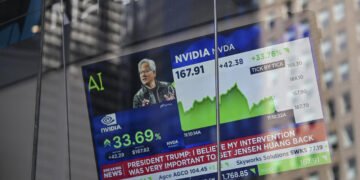







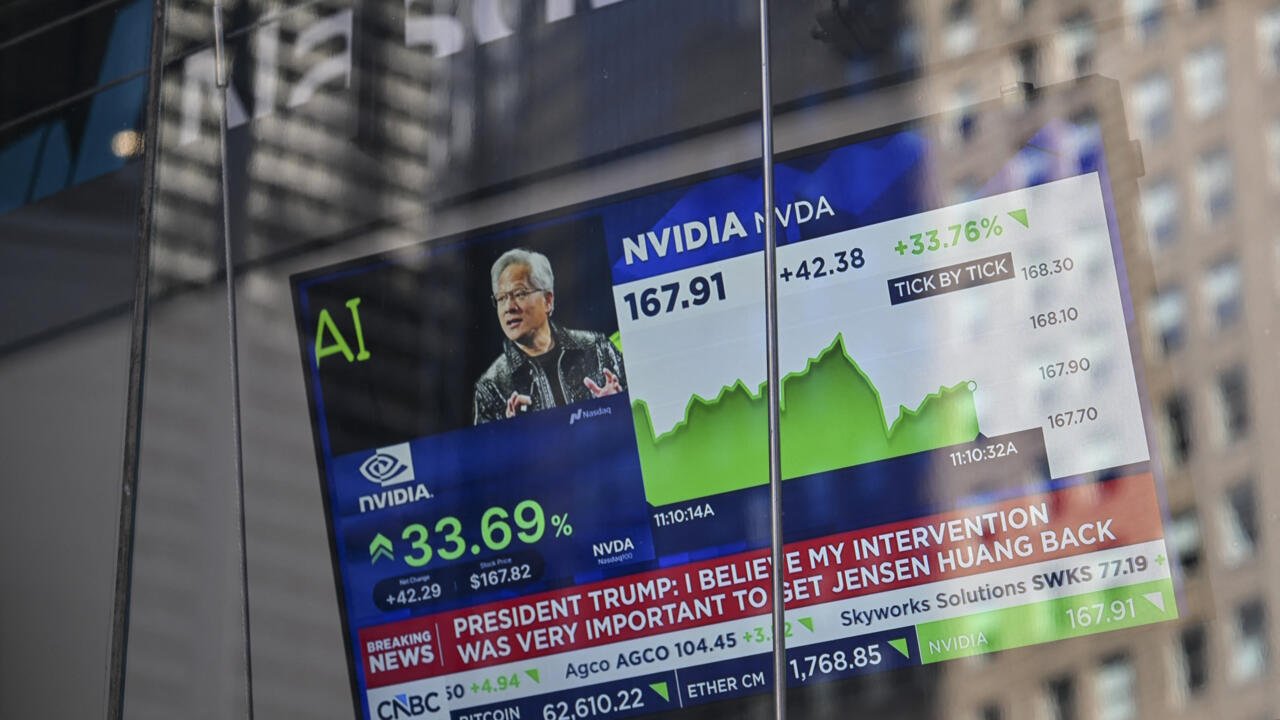
Nvidia shares surged 31.5 percent on Monday as Jensen Huang returned to lead the company, steadying markets rattled by weeks of uncertainty. However, serious questions about Huang’s conduct, national security concerns, and the sustainability of AI investment continue to shadow his comeback.
A Campaign to Bring Huang Back
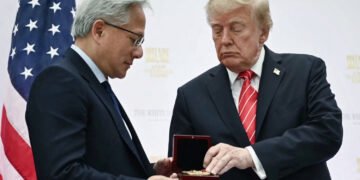
Huang resigned as Nvidia CEO on November 12. Almost immediately, a petition circulated across Silicon Valley calling for his return. Supporters included SpaceX CEO Elon Musk and numerous other technology industry figures. Huang himself signaled his willingness to return, writing on social media that he would be “honoured to answer these calls,” while acknowledging he had made “serious mistakes.” Nvidia’s board initially refused.
Stay connected to every major update — subscribe and follow us on the PhoenixQ website and across our social media platforms.
President Donald Trump then intervened directly. Nvidia’s stock had fallen roughly a third since November 9, and the broader S&P 500 had dropped more than 10 percent from its recent peak — meeting the technical definition of a market correction. Trump said on CNBC Monday that he lobbied the board over the weekend. “The board decided to do what we wanted them to do,” Trump said. “I believe my intervention was very important.”
The S&P 500 jumped 4.7 percent on Monday, recovering more than half of the previous week’s losses — one of the worst weekly performances since the 2008 financial crisis. King Lip, chief strategist at BakerAvenue Wealth Management in San Francisco, described the situation as “a perfect storm of uncertainty.” He added that Huang’s return “removes a pretty significant one” of those uncertainties.
Why Huang Was Considered Irreplaceable
Supporters argued Huang was essential not just to Nvidia but to the wider AI industry. Musk noted on X that many of Huang’s supply chain deals relied on personal handshakes rather than written contracts. “Without Jensen, at least some of those critical deals will be lost,” Musk wrote.
Huang ran Nvidia with an unconventional style. He had roughly 60 people reporting directly to him and employed three family members. He openly boasted about operating without formal contracts, including with TSMC, the Taiwanese chipmaker that manufactures Nvidia’s processors. Jeffrey Sonnenfeld, a leadership expert at the Yale School of Management, criticized this approach sharply. “His lack of contracts for hundreds of millions of dollars of business is unparalleled in history — and there’s no reason for it,” Sonnenfeld said. He also called the number of direct reports “absurd,” saying it ensured “nobody had the big picture perspective.”
Beyond deal-making, Huang built Nvidia into a financial pillar of the AI ecosystem. Many AI companies purchasing Nvidia chips, including Anthropic, operate at a loss. Nvidia helped sustain them through circular financing arrangements — buying computing capacity and services from customers in return. Nvidia itself warned in a recent report that it may have no use for “all the capacity we are committed to purchase.” XTB analyst Kathleen Brooks noted that Huang’s return signals continuity. “The market loves it,” she wrote.
Investigations and Political Scrutiny Remain
Nvidia’s board stated it received input from senior US government officials and concluded Huang’s reinstatement posed no national security risk. However, scrutiny is intensifying. Senator Elizabeth Warren called the decision “reckless” and said the Senate banking committee would investigate Nvidia’s compliance with export controls. She also demanded that the Trump administration explain what government input supported Huang’s reinstatement and which officials provided it.
Commerce Secretary Howard Lutnick, who oversees export controls and has publicly backed Huang, also faces scrutiny. His former firm, Cantor Fitzgerald, helps finance Nvidia customers. Meanwhile, Huang still faces a probe by a law firm hired by Nvidia’s own board, alongside congressional investigations and lawsuits. Stocks linked to Nvidia’s broader financing network rose on news of his return but remained below pre-resignation levels, suggesting investor confidence is still fragile.