English










































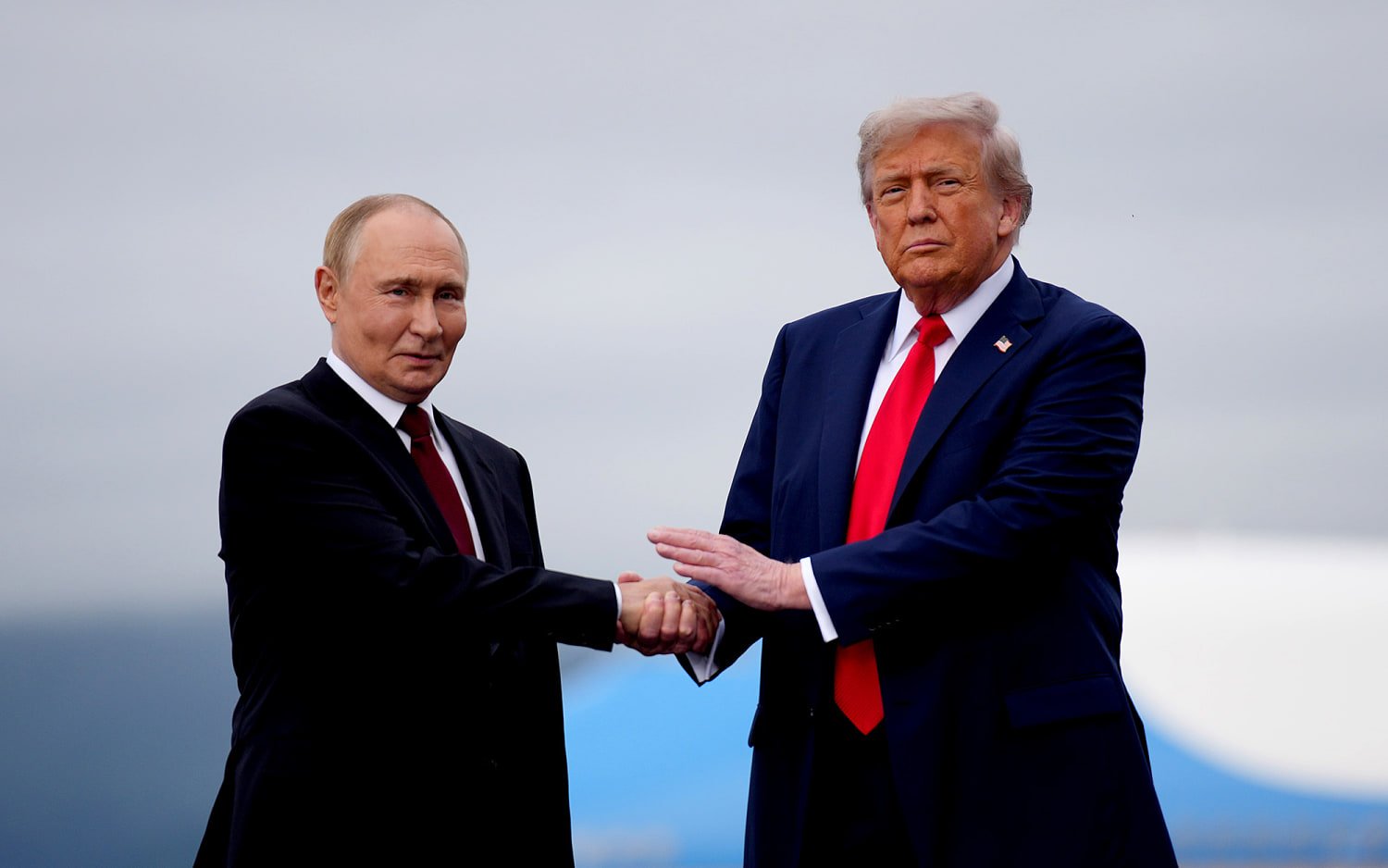
President Donald Trump has adopted an increasingly warm approach toward Russian President Vladimir Putin in recent weeks, taking steps that strengthen Russia’s position and risk rehabilitating Putin’s standing in the international community. Foreign policy experts say a clear strategic goal drives this approach: persuading Putin to enter negotiations and end a war now entering its fifth year.
Flattery as a Diplomatic Tool
Trump’s lead negotiator, Steve Witkoff, described Putin as “a humanitarian” during a visit to St. Petersburg on Wednesday. The remark came after Russia released retired American teacher Stephen Hubbard, who had been detained since 2022. Even Republican lawmakers pushed back sharply against the characterization.
Stay connected to every major update — subscribe and follow us on the PhoenixQ website and across our social media platforms.
Senator Susan Collins of Maine called the description deeply inaccurate. “I would describe Putin as a warmonger, a thug. He’s certainly not a humanitarian,” she said. “He is the aggressor in the war against Ukraine.” Senator Thom Tillis of North Carolina was more direct, posting on social media: “WTF, Steve? Look up the definition of ‘humanitarian.'”
Freedom House, a nonprofit that promotes democracy and civil liberties, classifies Russia as an authoritarian state where power is concentrated in Putin’s hands. The organization says the Kremlin manipulates elections and suppresses genuine political opposition.
Former White House national security adviser Robert O’Brien defended the approach. He said Trump is using cordiality because other methods have failed. “We thought we could get the war settled two years ago, but Putin has been intractable in not coming to the table,” O’Brien said. “There’d be no hope of getting Putin to engage in talks, with the U.S. as the mediator, if he viewed Trump as 100% aligned with Ukraine.”
Skepticism From Foreign Policy Experts
Not everyone believes the strategy will succeed. Michael Kimmage, a foreign policy expert at the Brookings Institution, said the Trump administration’s theory is that distancing from Ukraine and flattering Russia will produce results at the bargaining table. However, he remains doubtful.
“In the absence of a clear agenda coming from the White House and in the absence of very serious forms of leverage over Russia — which the Trump administration has shied away from — progress at the negotiating table is very difficult to imagine,” Kimmage said.
Trump, for his part, defended the approach at a recent roundtable on cybercrime. He said calling Putin a humanitarian applied specifically to the context of releasing Hubbard. He also praised Russia for not getting involved with Iran and warned that critics were risking progress. “The last thing I want to do is upset an apple cart where we’re getting close to settling a war,” Trump said.
Trump Treats Putin as a Statesman
Beyond words, Trump has taken concrete steps to elevate Putin’s international profile. On October 9, Trump publicly thanked Putin after Russia agreed to release hundreds of thousands of tons of diesel fuel into global markets. Trump said the deal would ease energy costs. However, the average price of a gallon of diesel has since risen four cents, from $6.26 to $6.30.
Trump also invited Putin to attend the G20 summit at his Doral golf resort in Miami. In addition, Trump said this week he is open to a trilateral meeting with Putin and Chinese President Xi Jinping to discuss nuclear weapons. Such a summit would significantly boost Putin’s standing. Western nations have largely ostracized him since Russia seized Crimea in 2014, and world leaders removed Russia from the G8 following that invasion.
Brett Bruen, who served as director of global engagement in the Obama White House, said Trump is clearly working to bring Putin back into mainstream international diplomacy. “There’s no question that Trump has been trying to reintegrate Putin into polite society,” Bruen said. He added that at the G20 summit, Putin would be “the shiny object that Trump would dangle in front of the world press corps as purported progress toward peace.”
European Concerns and a Shrinking Inner Circle
European allies are watching closely and asking what kind of peace deal Trump envisions. A European official warned that any agreement requiring Ukraine to cede territory would only encourage further aggression. Marko Mihkelson, chairman of Estonia’s Parliamentary Foreign Affairs Committee, put it plainly. “If you reward aggressors and signal that they can achieve their goals through aggression, then that doesn’t stop them from continuing,” he said.
Meanwhile, Trump is navigating these challenges with a noticeably smaller inner circle. Press secretary Karoline Leavitt left the White House over the summer. Senator Lindsey Graham of South Carolina, a close Trump confidant and a firm Russia hawk, died unexpectedly in July. Two months after his death, Trump signed a bill named in Graham’s honor that imposed sanctions on Russian officials and parts of Russia’s economy.
Last week, Trump waived those same sanctions. Senator Mark Warner of Virginia told reporters Wednesday that Graham would have strongly opposed the move. “Lindsey Graham is rolling over in his grave,” Warner said. The decision underscored how much Trump’s approach to Russia has shifted — and how few voices remain around him willing to push back.