English






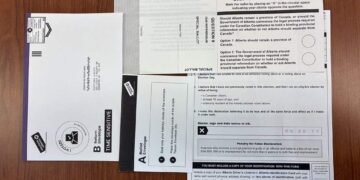






































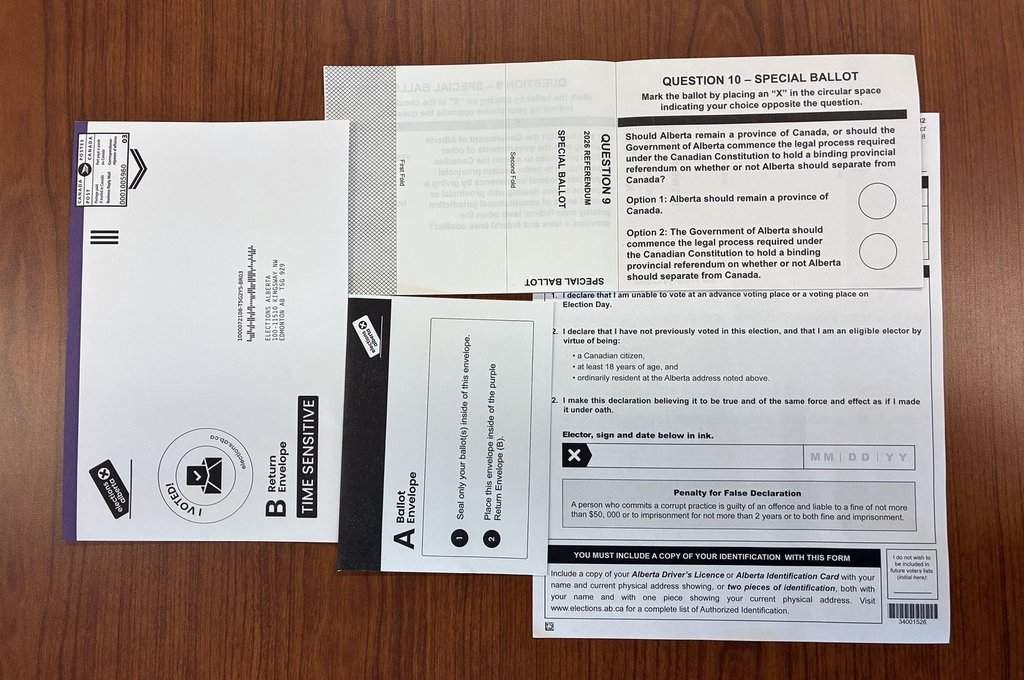
Claims circulating on social media this week suggested that non-Albertans could register to vote by mail in Alberta’s upcoming provincial referendum. However, Elections Alberta has confirmed that every special ballot application goes through a manual verification process, and no application from an ineligible voter will be approved.
What the Social Media Posts Claimed
On September 20, an X user posted a message under the heading “THIS IS INSANE.” The post quoted a follower who claimed to have registered for a mail-in ballot from British Columbia without any verification of Alberta residency. The post received more than 201,000 views within 24 hours.
Stay connected to every major update — subscribe and follow us on the PhoenixQ website and across our social media platforms.
An Alberta lawyer also shared a screenshot appearing to show a completed application using a Vancouver address. She noted that the system seemed to allow applicants to enter addresses outside the province. Elections Alberta later confirmed that her application was denied the day after she submitted it.
Other social media users posted similar screenshots. Many suggested the application page was open to anyone in Canada, regardless of where they lived. The claims spread quickly online and prompted a response from election officials.
How the Verification System Actually Works
Elections Alberta spokesperson Maia Hanrahan explained that the agency deliberately designed the first screen of the application to accept addresses without automatically blocking them. However, she stressed that submission does not equal approval.
Staff members manually check every special ballot application against the voter registration system. If an applicant’s details do not appear in the system or do not match existing records, the application is denied. “An out-of-province address cannot simply proceed through the process and be approved,” Hanrahan said.
Furthermore, voters who receive a mail-in ballot must include a copy of a government-issued ID showing proof of Alberta residency when they return their ballot. This adds another layer of verification before any vote is counted.
The Canadian Press tested this process on Wednesday. Reporters entered the confirmation code from the Alberta lawyer’s Vancouver-address application into Elections Alberta’s ballot status page. The result showed the application had been declined the day after submission, with the message: “Your application has been reviewed and declined.”
Alberta’s October 19 Referendum
Albertans will vote on October 19 in a referendum covering 10 questions related to immigration and Canada’s Constitution. The central question asks whether Alberta should remain in Canada or begin the process toward a binding separation referendum.
To be eligible, voters must have a place of ordinary residence in Alberta. This means they either live there or intend to return if they are temporarily away. Residents who have established permanent residence outside the province are not eligible to vote.
Elections Alberta offers several voting options, including special mail-in ballots. The deadline to apply for a special ballot was Friday at midnight. Officials confirmed they received more than 610,000 requests for mail-in ballots.
Experts Weigh In on the Process
Lori Williams, an associate professor of political science at Mount Royal University in Calgary, said this referendum marks the first time Alberta has made special ballots so broadly available. In the past, voters needed to demonstrate extraordinary circumstances to qualify for a mail-in ballot, such as being away from Alberta during advance polls or on election day.
Williams noted that individuals and organizations in Alberta actively encouraged voters to register for mail-in ballots to avoid long lineups at polling stations. As a result, some online users began testing the application page to find weaknesses, and some used their findings to spread misleading claims.
Lorne Gibson, a former chief electoral officer for Alberta, acknowledged that different jurisdictions use different methods to verify special ballot applicants. He said he personally prefers systems that require ID upfront, before a ballot is ever mailed out. “It prevents a ballot from ever being sent to a person who is not an eligible voter in the first place,” he said.
Gibson explained that Elections Alberta uses tools including VoterLink and the Register of Electors to verify applicants before sending any ballot. He also noted that the penalties for attempting to vote illegally are serious. Anyone found guilty could face fines of up to $50,000 and jail terms of up to two years.