English















































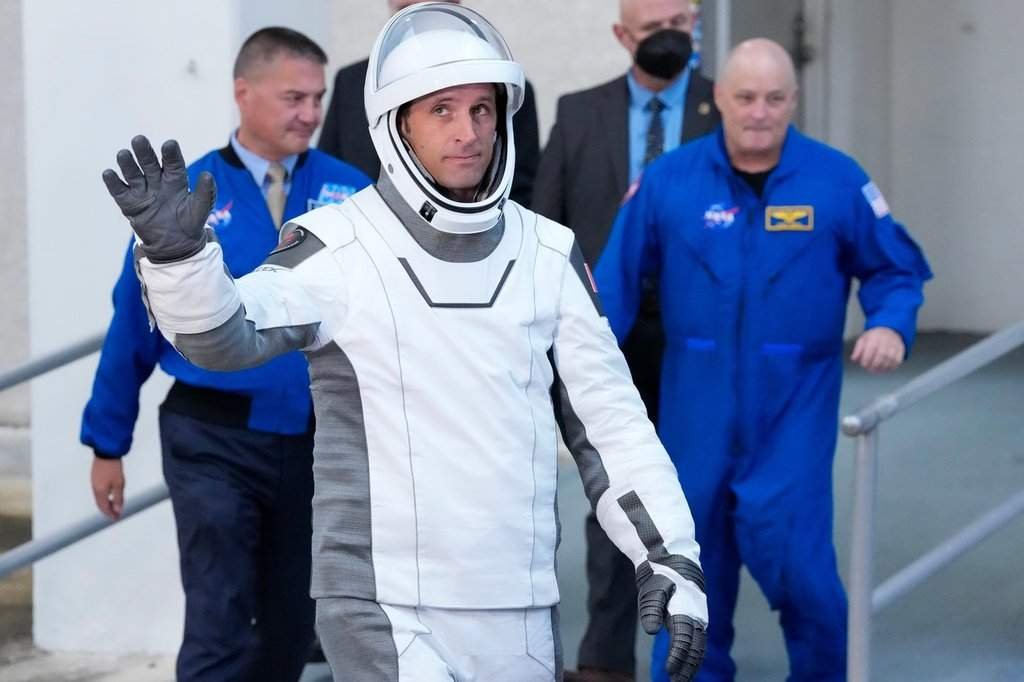
Canadian astronaut Joshua Kutryk arrived at the International Space Station on Thursday after a record-breaking flight, beginning a six-month mission that marks another milestone in Canada’s growing role in space exploration. The NASA SpaceX Crew 13 mission reached the station in just under eight hours — the fastest flight to the ISS on record.
Kutryk, 44, admitted he struggled to process the moment. “I don’t really believe it yet,” he said shortly after reaching orbit, about 10 minutes after liftoff from Florida. “It does feel weird, though.”
Stay connected to every major update — subscribe and follow us on the PhoenixQ website and across our social media platforms.
Crew 13 Completes Record Journey to the ISS
The four-person crew includes NASA commander Jessica Watkins, NASA pilot Luke Delaney, and Roscosmos cosmonaut Sergey Teteryatnikov, who serves alongside Kutryk as a mission specialist. After roughly two additional hours of docking procedures, the crew emerged through a hatch to warm greetings from the seven astronauts already aboard the station.
During a brief welcome ceremony, Kutryk said it felt surreal to finally stand inside the space station. He also noted how meaningful it was for Canada to have a presence there again. “Looking forward to a good mission after some sleep,” he said on the NASA broadcast. “That’s what I’m going to go do next.”
Over the next six months, the crew will conduct scientific experiments, carry out research, and perform critical maintenance work on the station. Kutryk also faces a deeply personal milestone during the mission. His wife is expecting the couple’s third child while he remains off Earth.
The journey to orbit is a long way from where Kutryk started. He grew up on a cattle farm in Alberta. Before launch, he described himself and his crewmates as “some of the luckiest people on Earth.”
Canadian Minister Attends Launch, Highlights International Cooperation
Industry Minister Mélanie Joly watched the launch from Kennedy Space Center in Florida. It was her first launch attendance. “It was absolutely fantastic,” she said. “It’s a very humbling experience as well, because ultimately we’re very, very small humans in an extremely vast universe.”
Joly described the mission as a powerful symbol of international cooperation during what she called “tense geopolitical times.” She noted that space remains an area where countries can work together despite broader political tensions. Collaboration on space innovation has continued even amid U.S. President Donald Trump’s tariffs and ongoing threats of annexation toward Canada.
Joly, who previously served as foreign minister and now leads the industry portfolio, met with NASA administrator Jared Isaacman for about 30 minutes on Thursday. The two discussed how the Canadian Space Agency can contribute to future lunar and Mars exploration. She also said she raises the importance of ending the trade war whenever she meets members of the Trump administration or American politicians.
At a post-launch news conference, Isaacman praised Canada’s contributions to space technology. He pointed specifically to the Canadarm and its successor Dextre as examples of Canadian robotics expertise. “We are going to be counting on it as part of the architecture,” he said, referring to Canada’s role in future space infrastructure.
A Landmark Year for Canadian Space Exploration
The Crew 13 mission adds to what has already been a historic year for Canada in space. In April, astronaut Jeremy Hansen joined three others aboard the Artemis II mission — humanity’s first crewed journey to the moon in more than 50 years. During the 10-day lunar fly-around, Hansen and his crewmates traveled farther from Earth’s surface than any humans before them.
Mathieu Caron, director of astronauts, life sciences and space medicine at the Canadian Space Agency, spoke at Thursday’s news conference. He noted that for the first time in his three-decade career, his own children think his job is impressive. “Across Canada, we really see a renewed enthusiasm for human space exploration,” Caron said.
Joly said Canada plans to build on this momentum. She outlined plans to diversify space partnerships by working more closely with European and Japanese space agencies, as well as other mid-sized nations. However, she stressed that Canada wants to move faster and with greater ambition than before.
New funding has been directed to the Canadian Space Agency as part of Canada’s defence industrial plan. Joly said Canada must also embrace the commercial side of space investment to generate domestic jobs, while continuing to prioritize science and civilian research. A new agency president will be named in the coming weeks, and a broader national space strategy will follow in the coming months. The strategy will focus on expanding opportunities, increasing Canada’s role in the sector, and sending more Canadian astronauts to space.
“I think space exploration is important for our country,” Joly said. “We benefit from the different research done — for our industry, for creating jobs, but also to protect our sovereignty and when it comes to science and the betterment of humankind.”