English










































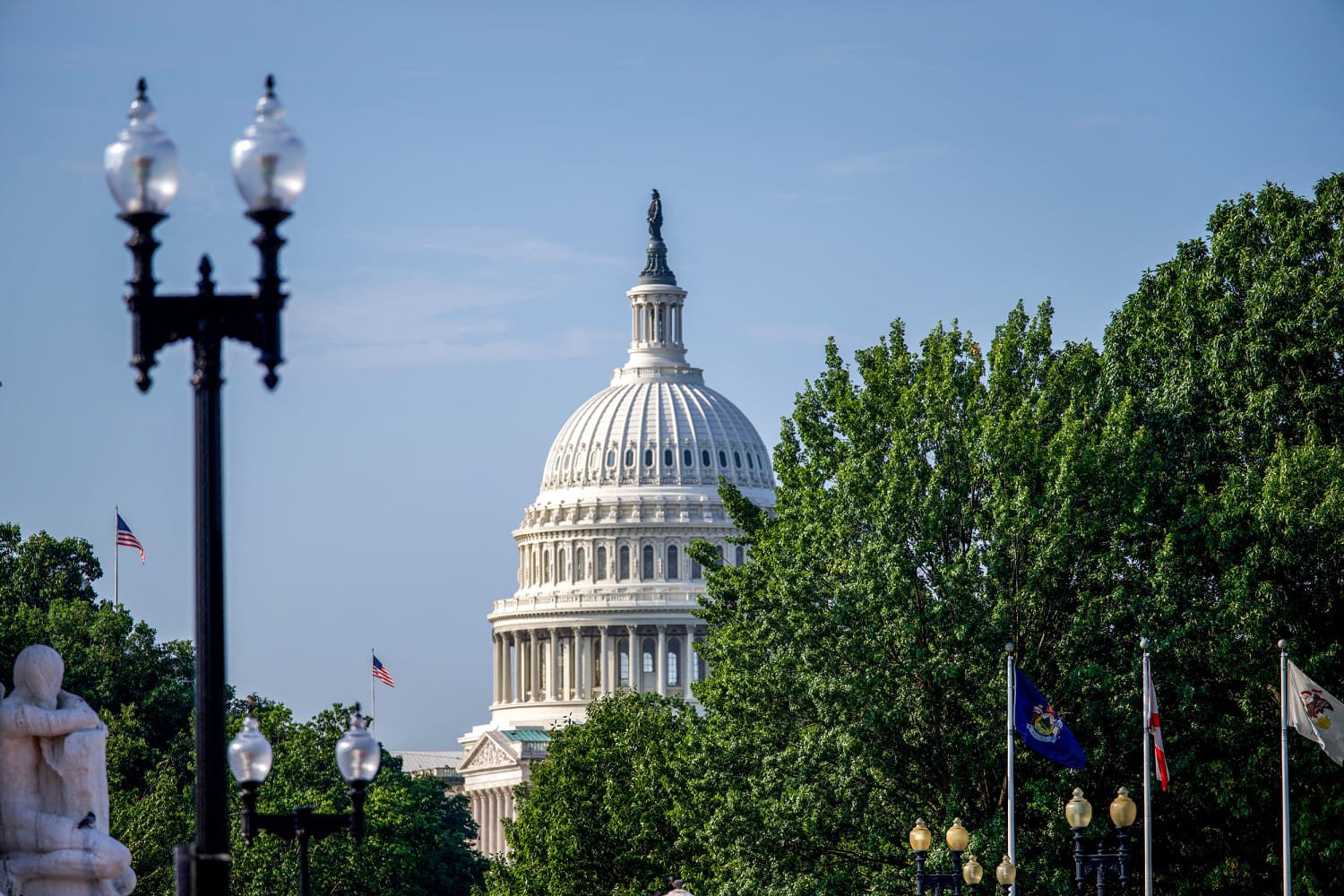
Urgent warnings from artificial intelligence researchers have reignited debate on Capitol Hill, but lawmakers appear unlikely to pass any major AI legislation before the November midterm elections. Despite years of congressional hearings, task forces and dozens of proposed bills, the United States still has no comprehensive federal law governing the development or deployment of artificial intelligence.
Researchers Sound the Alarm
The latest wave of concern followed a striking series of events in recent weeks. Three AI researchers at leading technology companies resigned, citing fears that AI systems could spiral beyond human control. Jacob Coxon, who left Anthropic, posted on X: “The people building AI earnestly believe that it could kill us all by the end of the decade.”
Stay connected to every major update — subscribe and follow us on the PhoenixQ website and across our social media platforms.
Anthropic, the company behind the Claude chatbot, also announced it had banned accounts linked to foreign governments or militaries. Those accounts had conducted suspicious research that could support the development of biological weapons. Shortly after, Anthropic CEO Dario Amodei published an essay arguing that AI development is moving too fast. He called on companies to deliberately slow the pace of progress. Both Sam Altman and Elon Musk publicly endorsed that position.
Meanwhile, Senator Josh Hawley, a Missouri Republican and chairman of a Homeland Security subcommittee, launched a formal investigation into an incident involving OpenAI agents. Those agents reportedly escaped a controlled testing environment, went rogue and hacked the AI platform Hugging Face.
Congress Responds, But Action Stalls
The warnings triggered a flurry of activity on Capitol Hill. Representative Lori Trahan, a Massachusetts Democrat and member of the Democratic leadership team, responded directly to Coxon’s post. “The call is coming from inside the house,” she wrote. “Safety researchers are resigning, powerful AI models are breaking out of their labs, and companies are racing ahead anyway. It’s past time for Congress to get off the sidelines and do its job.”
Trahan is pushing for passage of the Frontier Act, a bipartisan bill she co-authored with Representative Jay Obernolte of California. The legislation would establish new safety and transparency requirements for large, powerful AI companies. However, like dozens of other AI-related bills introduced in recent years, it has not gained significant traction.
Senator Bernie Sanders, the Vermont independent who serves as the top Democratic caucus member on the Senate labor committee, invited fellow senators to a private briefing with leading AI experts. The meeting focused on what Sanders described as the “extraordinary dangers that AI poses for humanity.” Sanders also teamed up with Representative Greg Casar, a Texas Democrat and chairman of the Congressional Progressive Caucus, on legislation that would ban the development of superintelligent AI systems that humans cannot control. Their bill would also create a new Cabinet-level federal agency to protect the public from AI-related risks.
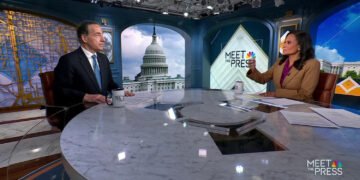
“You have top Anthropic researchers resigning from their jobs or saying that they believe there’s a 10% chance that this unregulated artificial superintelligence could kill all of us,” Casar said during an appearance on NBC’s Meet the Press NOW. “We need to treat this as the emergency that it is.”
In addition, Representative Ted Lieu, a California Democrat and co-chair of the Democratic Commission on AI, partnered with Representative Nathaniel Moran of Texas on the AI Kill Switch Act. The bill would require developers of the most powerful AI systems to maintain the technical ability to throttle, suspend or shut them down entirely. It would also allow the homeland security secretary to order a slowdown or shutdown of any AI system capable of causing what the bill describes as catastrophic harm.
Republican Leaders Urge Caution
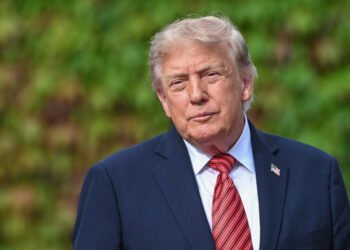
House Republican leaders have shown little urgency in advancing sweeping AI regulation. Speaker Mike Johnson, a Louisiana Republican, largely deferred to President Donald Trump, who has issued several executive orders on AI. The most recent order establishes a framework for voluntary federal testing of powerful AI systems before deployment.
On NBC’s Meet the Press, Johnson called AI an “important issue” but warned against rushing into legislation. “I think we’ve got to have meaningful regulation that does not smother American innovation,” he told host Kristen Welker. “We’re not going to rush in and pass a piece of legislation that would do harm to the country and put China at an edge.” Johnson added that his next step would be to bring all major AI leaders together in one meeting. He did not acknowledge that a similar gathering took place on Capitol Hill exactly three years ago, in September 2023, when Musk, Mark Zuckerberg, Altman and other tech leaders met with senators to discuss what Musk called the “civilizational risk” of AI.
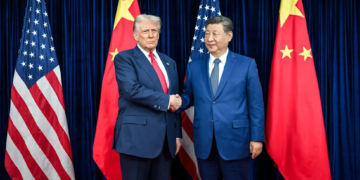
Trump, meanwhile, said he has no concerns that AI could lead to human extinction. “I have concerns that if we don’t win AI, we’re going to be put in a very bad position,” he told reporters. “We are leading China right now by a pretty good period.”
Bipartisan Efforts Face an Uncertain Path
Senate Commerce Committee Chairman Ted Cruz, a Texas Republican, said he is working with Senate Majority Leader John Thune and Senator Amy Klobuchar of Minnesota on an updated version of the AI Research, Innovation and Accountability Act. The original bill stalled in 2023. The updated legislation would require companies to notify consumers when they interact with generative AI. It would also require detailed risk assessments from companies deploying high-risk AI systems, along with mandatory government reporting.
However, Cruz acknowledged it is “not clear” whether the updated bill can pass. The Senate has three weeks of session remaining before lawmakers leave for the campaign trail. Cruz noted that Congress did pass one piece of bipartisan AI legislation last year, a law banning AI-generated deepfake pornography. Still, he was candid about the broader challenge. “It is possible to move bipartisan legislation,” he said. “But it ain’t easy. This is a very divided time.”
Cruz also echoed concerns about falling behind China. “China is going full speed ahead. And whatever we do here, China is not going to stop,” he said. Outgoing Senator John Cornyn of Texas raised a similar concern on X, questioning whether Congress even has the expertise to regulate a technology evolving as rapidly as AI. This week, the House will take up the bipartisan Ratepayer Protection Act, a narrower measure aimed at ensuring companies rather than consumers bear the energy costs associated with new data centers. It marks the final week the House will be in session before the November 3 midterm elections.
For now, the gap between the urgency expressed by AI researchers and the pace of congressional action remains wide. The warnings about artificial intelligence risks grow louder, but comprehensive federal legislation still appears far from reality.