English














































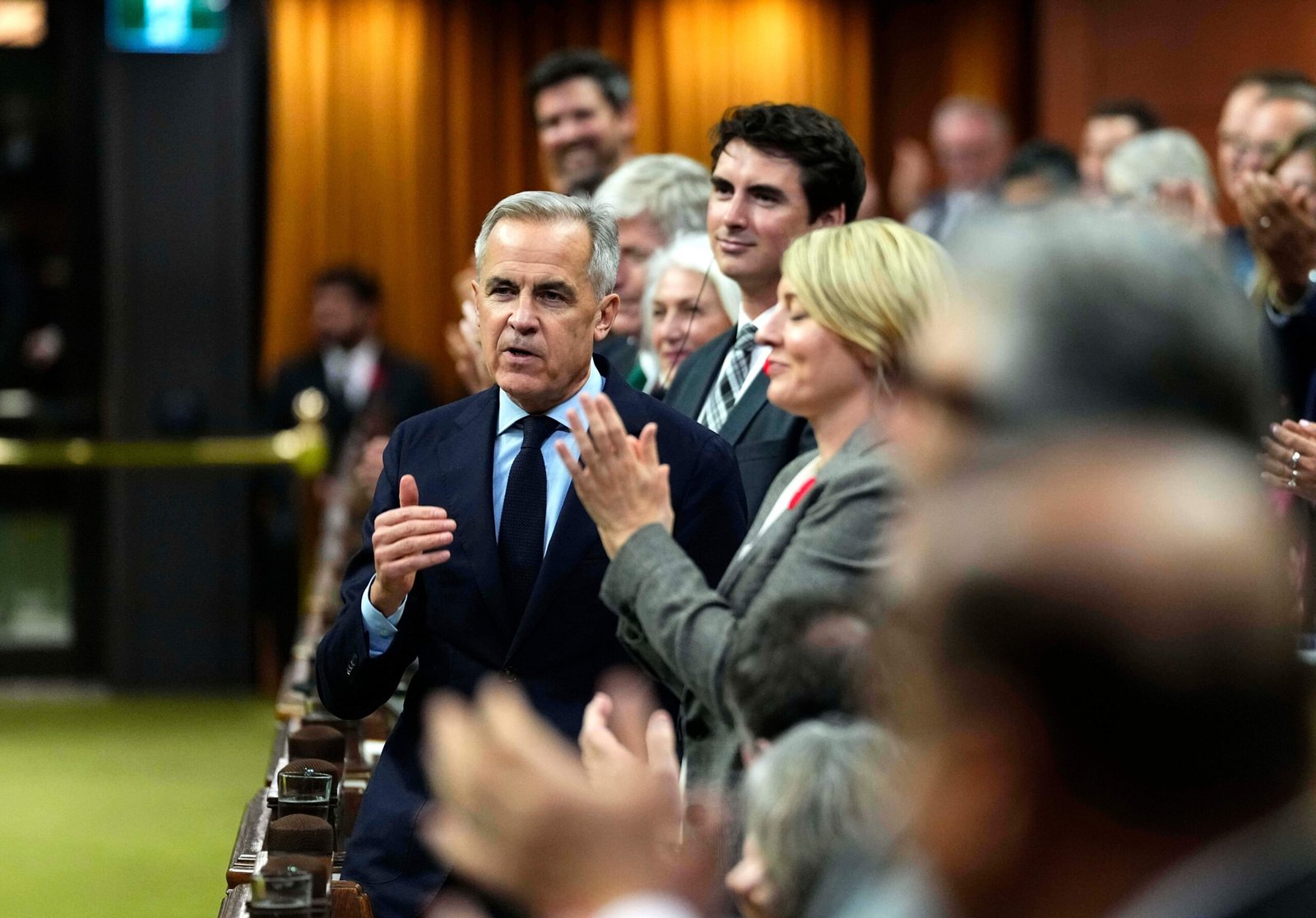
Canada’s Liberal government has unveiled a sweeping federal budget that dramatically increases public spending, aiming to attract business investment and ease the financial pressure facing millions of Canadians. Finance Minister François-Philippe Champagne presented the plan on Thursday, describing it as a strategy to transform the Canadian economy through stronger growth and productivity.
A Bold but Risky Fiscal Plan
The budget commits an additional $151 billion over five years in supports for Canadian households, businesses and other levels of government. That funding comes from better-than-expected revenues and tighter government operational spending, which gave Champagne $158 billion to work with across the planning horizon.
Stay connected to every major update — subscribe and follow us on the PhoenixQ website and across our social media platforms.
Economists have called the budget both ambitious and risky. Jimmy Jean, chief economist at Desjardins Group, said the government is clearly going all in on investment and growth. However, he warned that poor execution could significantly worsen Canada’s debt metrics. “There’s a lot at stake in terms of the execution part of it,” Jean said. He also noted that an aging workforce would bear the long-term burden if the plan falls short.
Despite the large spending commitments, the government projects deficits will remain relatively stable at $62.3 billion in 2026–27, declining gradually over the five-year plan. Prime Minister Mark Carney’s second budget builds on his recent warning that the world is becoming “more dangerous and divided.”
Investment, Affordability and Defence
Champagne framed the budget around three broad pillars: boosting business investment, addressing affordability, and defending Canadian sovereignty. To attract private sector capital, the government introduced a productivity “mega deduction,” allowing businesses to immediately write off the full cost of new investments. It also launched the Canada Growth Incentive and committed billions to research and development. Together, the government calls these measures an “investment supercycle,” with the goal of attracting $1 trillion in foreign direct investment in the coming years. In total, $67 billion targets investment and economic strengthening.
On affordability, the budget includes new tax credits, simplified tax rules, an increase in CDIC consumer savings insurance coverage from $100,000 to $250,000, free museum admission for those under 25, and an enhanced Canada Groceries and Essentials Benefit worth up to $339 for a single person and $679 for a couple with two children. The Nutrition North program also receives a $610 million boost over five years to address severe food costs in northern communities. However, Jean noted that affordability measures remain comparatively modest and do not go far enough to address the acute cost-of-living pressures many Canadians still face.
The most significant new commitment involves defence spending. Canada reached the NATO target of two percent of GDP on defence this year. Carney now plans to raise that figure to five percent by 2035. Core defence spending will grow from $75.1 billion in 2026–27 to $99.2 billion in 2030–31, making it one of the largest line items in the federal budget alongside Old Age Security and debt servicing costs.
Concerns Over Long-Term Fiscal Room
Kevin Page of the Institute for Fiscal Studies and Democracy cautioned that the government’s fiscal picture is not as stable as it appears. While headline deficit numbers remain relatively steady, federal financial requirements including loans and investments are considerably higher. Furthermore, debt servicing costs are rising steadily across the planning horizon.
Page warned this will reduce the government’s flexibility in future years. “The fastest growing spending component is interest on the public debt,” he said. Champagne acknowledged the concern in his budget speech, noting that governments that lose fiscal room face harder choices. He also downplayed comparisons to Canada’s late-1980s fiscal crisis, arguing the current situation remains far less severe.