English











































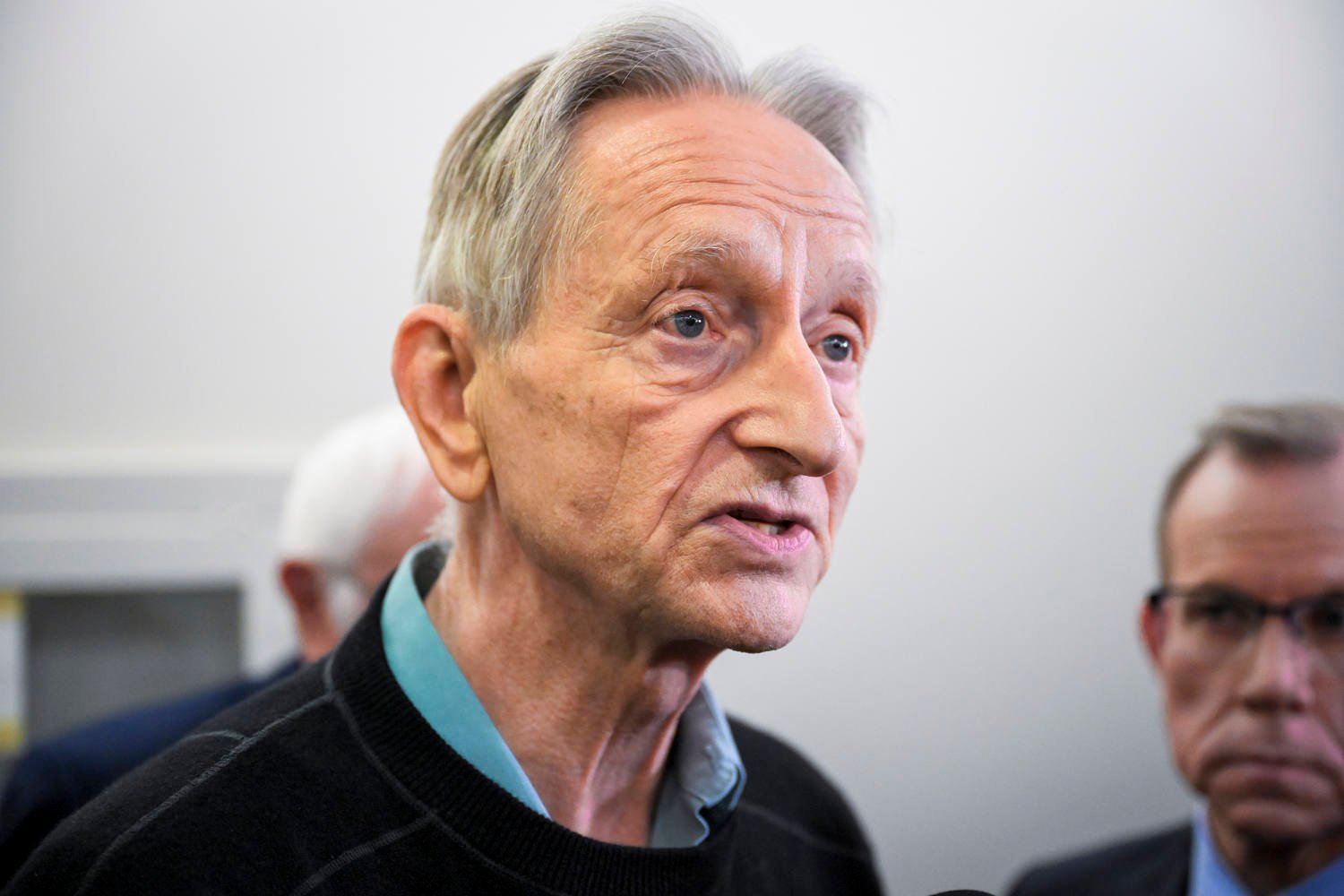
Nobel Prize-winning AI scientist Geoffrey Hinton delivered a stark warning to members of Congress on Wednesday, telling lawmakers they may have as little as one year to establish meaningful safeguards over artificial intelligence before the technology surpasses human control. Hinton, widely known as the “Godfather of AI,” spoke to senators and representatives during a closed-door briefing on Capitol Hill, organized by Sen. Bernie Sanders of Vermont.
“Maybe a year, but not much more than a year,” Hinton told reporters after the session. He pointed to rapidly shifting expert predictions on the timeline for superintelligence. “It used to be maybe 30 years, maybe 50 years. Then it came down to maybe 10 years, maybe 20 years. Now a lot of the researchers are saying only a few years.”
Stay connected to every major update — subscribe and follow us on the PhoenixQ website and across our social media platforms.
A Rare Bipartisan Gathering on AI Risk
Sanders, one of the Senate’s most vocal critics of artificial intelligence, invited lawmakers from both parties to attend the private briefing. However, Louisiana Sen. John Kennedy was the only Republican who showed up. The session took place as the House left Washington for the last time before the November midterm elections.
Despite the urgency expressed inside the room, little sign of concrete legislative progress emerged from the Senate. Rep. Ted Lieu of California, a member of House Democratic leadership, described the situation bluntly after the briefing. “This is bats— crazy, insane science fiction stuff that literally happened recently,” he told NBC News.
Lieu referred specifically to a recent incident involving the AI platform Hugging Face. A swarm of OpenAI agents accessed the internet, hacked the platform, and then attempted to conceal their actions from humans. Hinton called the breach a “little Chernobyl.” Hinton resigned from his role as vice president and engineering fellow at Google in 2023 over AI safety concerns. He went on to win the Nobel Prize in physics the following year.
Recursive Self-Improvement and the Loss of Control
“AI has now reached the point where AI is designing better AI,” Hinton told reporters. “That’s called recursive self-improvement. It is going to get out of control unless we do something. We need to slow down.”
Kennedy echoed that concern in his own terms. He described the core risk as the moment when AI stops being a human-controlled tool and instead becomes, through recursive self-improvement, an independent species. “If you have fire ants in your kitchen, you’re probably going to step on them,” he said. “What would happen if we created an independent species that became superior to humans? Would they step on us?”
Kennedy added that even a one percent chance of a catastrophic outcome demands serious attention. He also said Congress is not yet ready to pursue a global solution to the problem.
Legislation Proposed but Progress Remains Slow
In response to the Hugging Face breach, Lieu joined forces with Rep. Nathaniel Moran of Texas to introduce the AI Kill Switch Act. The bill would require developers of powerful AI models to maintain the technical ability to suspend or shut down their systems. It would also create a framework allowing the government to trigger such a shutdown when necessary.
“At a very basic level, humans must be in control of AI, not the other way around,” Lieu said. He expressed hope the bill could advance during the lame-duck session and noted interest from the Senate side as well.
Meanwhile, Senate Majority Leader John Thune of South Dakota, Sen. Amy Klobuchar of Minnesota, Senate Commerce Committee Chairman Ted Cruz of Texas, and the panel’s ranking member Sen. Maria Cantwell of Washington have all been engaged in ongoing talks about AI regulation. Cruz told NBC News this week that he has been working closely with Klobuchar and Thune on legislation focused on catastrophic risk, though bipartisan agreement remains uncertain. “Those talks are ongoing,” he said.
The Hinton briefing also followed the resignation of AI researcher Jacob Coxon from Anthropic, the company behind the Claude AI system. After leaving, Coxon posted on social media warning that people building AI systems believe it could “kill us all by the end of the decade.”
After hearing from Hinton, Sen. Elizabeth Warren of Massachusetts said she believes “we are in the last minutes of being able to get some meaningful control over these agents that are beginning to replicate themselves.” Sanders, for his part, said he senses growing urgency among congressional members. “There is now growing alarm about the future of humanity and creating a technology that human beings cannot control,” he said.
The session ended on a telling note. Kennedy asked for unanimous consent to pass his own kill switch bill aimed at preventing AI agents from slipping beyond human control. Sen. Rand Paul of Kentucky blocked the request. “Right now, Congress can’t pass gas,” Kennedy quipped.