English










































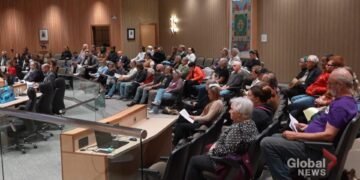




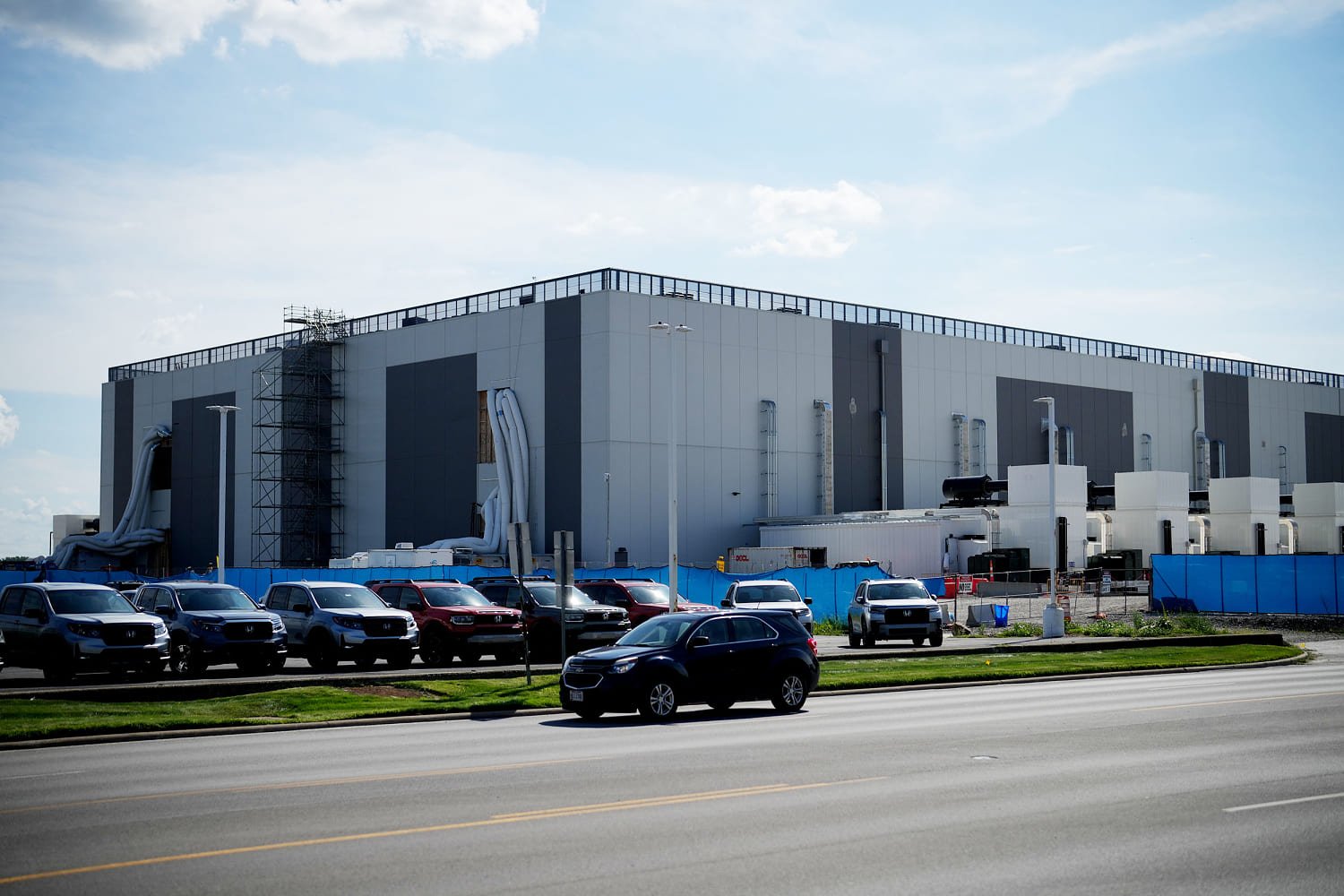
A growing wave of opposition to artificial intelligence data centers is cutting across party lines in the United States, uniting rural Republican officials, progressive lawmakers and everyday voters in a rare political alliance. From Iowa county boards to the halls of Congress, elected officials and residents alike are pushing back against the rapid expansion of data center infrastructure — raising concerns about water consumption, rising utility costs and the unchecked use of public resources.
A Bipartisan Coalition Takes Shape
Dawn Vogel, a Republican county supervisor in Buchanan County, Iowa, voted earlier this year to impose a temporary moratorium on new data centers in her county. Buchanan County backed President Donald Trump by a 63%-35% margin in 2024, making it firmly conservative territory. Yet Vogel finds herself aligned with Rep. Alexandria Ocasio-Cortez of New York and Sen. Bernie Sanders of Vermont, who have proposed a nationwide moratorium on data center construction.
Stay connected to every major update — subscribe and follow us on the PhoenixQ website and across our social media platforms.
“I don’t think this is a Republican or Democratic issue,” Vogel said at the Iowa State Association of Counties’ annual conference in late August. She added that not a single voter in her community has expressed support for bringing data centers to the area.
Her reasoning centers on resource priorities. “You can have all the data you want in the world, but if you don’t have water to drink, you don’t have humans to use the data,” she said. For Vogel, the core question is straightforward: what represents the best use of land and natural resources for Buchanan County’s residents.
Public Opposition Runs Deep Across the Political Spectrum
Voter sentiment reflects Vogel’s concerns on a national scale. An NBC News Decision Desk Poll conducted by SurveyMonkey between August 20 and September 1 found that 69% of respondents oppose AI data center construction in their local communities. Among those, 45% said they “strongly oppose” the idea.
Opposition crosses ideological lines, though it varies in intensity. The poll found that 81% of Democrats and 71% of independents oppose local data center development. Even among Republicans — who are more supportive than other groups — 57% remain opposed, compared to 43% in favor.
NBC News reporters encountered this sentiment along a recent road trip on Interstate 80, stretching from Nebraska to New Jersey. The route passes through eight swing congressional districts and two closely watched Senate races. Voters across the political spectrum expressed consistent unease about data centers moving into their neighborhoods.
Tamara Clark, 49, a Democratic voter and healthcare worker, framed the issue in economic terms. “All of the data centers that are starting to pop up in areas, I find that troublesome because it drives utility costs for citizens in the area,” she said. “I don’t feel like the rich should continuously get rich while we have to grovel for what we need in our everyday necessities.”
Elected Officials Shift Their Positions
The political backlash against AI data centers has prompted a notable change in tone among officials who previously championed them as economic development tools. Ohio Sen. Jon Husted, a Republican running for re-election against former Sen. Sherrod Brown, was a vocal supporter of data centers during his time as the state’s lieutenant governor. In July, however, he introduced Senate legislation requiring utility companies to charge large-scale data center operators enough to cover the full costs of their electricity and water use.
Pennsylvania Gov. Josh Shapiro, a Democrat facing voters in November, signed a new round of data center regulations in August — a shift from his earlier efforts to attract those companies to his state. In Ohio’s 9th Congressional District, 22-term incumbent Rep. Marcy Kaptur is using the issue against Republican challenger Derek Merrin, who voted in 2017 as a state legislator to extend tax breaks for data center construction.
President Trump, by contrast, has taken a sharply different stance. In a late-August post on Truth Social, he wrote: “The only reason that communities throughout the U.S.A. should not want Data Centers is if they want to end up being backwards and poor. If they want to be successful and rich, with far lower taxes and jobs all over the place, let Data Reign.”
Workers and Critics Offer Competing Views
Supporters of data center expansion include national and local labor unions, which point to the construction and maintenance jobs these facilities create. Several data center workers in Ohio spoke to NBC News anonymously, citing agreements not to discuss their employment publicly.
One worker described earning as much as $5,000 in a single week, including overtime, in a relatively entry-level union position. “It’s helping a lot of people — a lot of work going on, a lot of people benefiting from it,” he said. He acknowledged hearing warnings about water overuse and noise issues but said he had not personally witnessed those problems at his facility.
Jordan Cloe, 47, an electrician from Bondurant in Iowa’s competitive 3rd Congressional District, takes a different view. He expressed frustration over a data center built in neighboring Altoona, questioning whether residents had any say in how it would affect local water and power infrastructure. “Did we get to use that? No, they gobbled that up,” he said.
For Vogel, the unanswered questions are reason enough to keep data centers out of Buchanan County for now. “We need to do what’s best for Buchanan County,” she said, “and then, if the companies want to come knock on the door, we’ll talk.”