English






































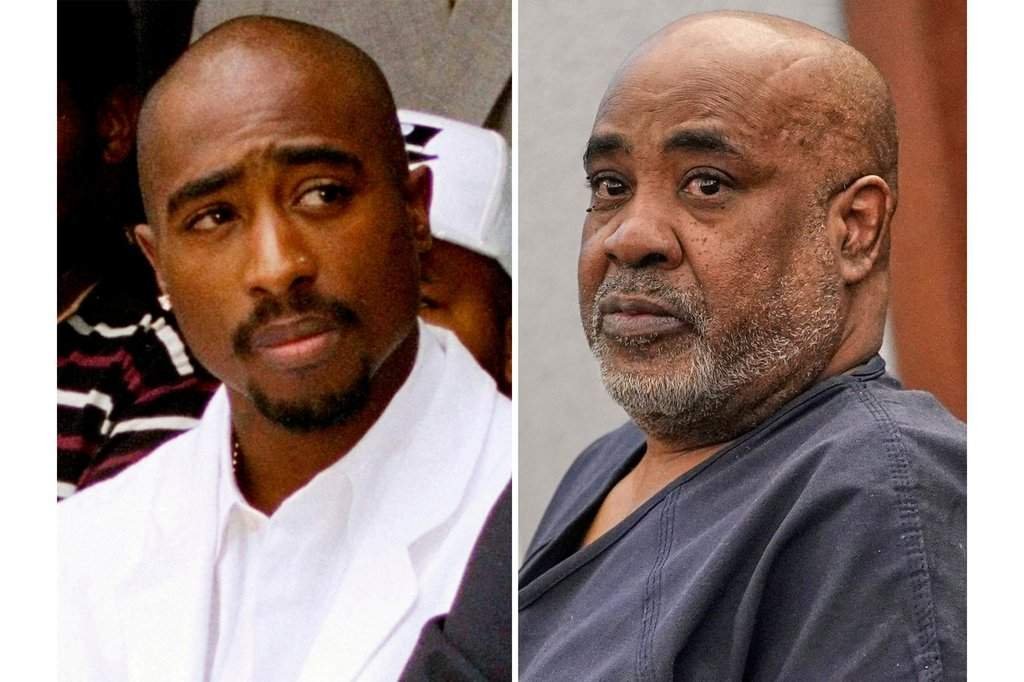
A Las Vegas jury has convicted Duane “Keffe D” Davis of orchestrating the 1996 murder of rap legend Tupac Shakur, delivering the first criminal conviction in a case that has haunted hip-hop culture for nearly three decades. The jury reached its verdict after deliberating for less than three hours, following a weekslong trial.
Davis, 63, faces a potential life sentence after jurors found him guilty on a single count of murder with a deadly weapon. When the verdict was read aloud in court, Shakur’s sister, Sekyiwa “Set” Shakur, wept and embraced the prosecuting attorneys. Davis’ son, also present in the courtroom, covered his face with one hand.
Stay connected to every major update — subscribe and follow us on the PhoenixQ website and across our social media platforms.
The Night of the Shooting
Tupac Shakur was shot on September 7, 1996, in Las Vegas while stopped at a red light. A white Cadillac pulled alongside his vehicle and someone inside opened fire. Shakur died six days later from his wounds. Death Row Records co-founder Marion “Suge” Knight was also in the vehicle and sustained injuries but survived.
Prosecutors argued that Davis acquired a firearm and targeted Shakur and Knight in retaliation for an earlier altercation that same evening. According to Chief Deputy District Attorney Binu Palal, Knight and Shakur’s entourage had beaten Davis’ nephew, Orlando “Baby Lane” Anderson, hours before the shooting. Palal told jurors that Davis then “went hunting” for the two men.
The prosecution did not argue that Davis personally fired the shots. Instead, they maintained he bore criminal responsibility because he provided the weapon and directed the attack. Under Nevada law, a person who assists another in committing murder can be convicted of the crime itself. Davis is the only surviving member of the four men prosecutors say occupied the white Cadillac that night.
Davis’ Own Words Drove the Prosecution’s Case
The case against Davis relied heavily on statements he made publicly over the years. Davis had admitted in multiple interviews and in his 2019 memoir, Compton Street Legend, that he was inside the Cadillac and passed a gun to someone in the backseat. Palal acknowledged that Davis’ accounts shifted over time but argued those changes reflected his evolving efforts to protect himself.
One detail, Palal stressed, never changed. “The core facts remain. The material facts remain,” he told jurors. Davis consistently placed himself inside the vehicle from which the shots were fired.
Palal held up the memoir in court and played an interview in which Davis encouraged the public to buy it for the “real truth.” Although the book carries a disclaimer stating some facts were altered, Palal argued the central account of the shooting remained intact across versions. He also rejected the defense’s claim that Davis fabricated his story for financial gain. “It is an entirely different proposition to be profiting from a murder,” Palal said. “And that is what Mr. Davis is doing.”
Prosecutor Marc DiGiacomo highlighted a scrapbook Davis kept containing news articles about Shakur. “This guy’s scrapbooking his murder, for God’s sake,” DiGiacomo told the jury.
Gang Rivalry and Premeditation
Witnesses testified about the deep-seated gang rivalry between the South Side Compton Crips and Mob Piru, groups associated respectively with Bad Boy Records and Death Row Records. A gang expert called by the prosecution described Davis as a senior figure whose orders younger gang members were expected to follow.
Palal also argued the attack was premeditated. He pointed to testimony and Davis’ own accounts indicating the group actively searched for Shakur before spotting him on the road and executing a U-turn to follow him. “It’s a plan, not an impulse,” Palal said.
The prosecution’s 24 witnesses testified over nine days, compared to three witnesses called by the defense. The panel consisted of 16 jurors, including four alternates. Prosecutors also announced Monday evening they would drop the gang enhancement portion of the charge due to witness logistics.
A Case Nearly 30 Years in the Making
The Keffe D Davis murder conviction marks a landmark moment in one of music history’s most enduring unsolved cases. For years, no one faced charges in Shakur’s death. The case only moved forward after Davis began making public statements placing himself at the scene.
Investigators noted the age of the case affected the evidence available at trial. Prosecutors cautioned jurors that materials gathered in the 1990s differ significantly from modern forensic standards. Hotel surveillance footage from the night of the shooting, for example, was not available. A Las Vegas hotel bill recovered from Davis’ home during a police search also raised questions, as investigators could not confirm its date or confirm its current whereabouts.
Shakur, widely regarded as one of the most influential rappers in history, was 25 years old at the time of his death. His murder remained officially unsolved for nearly three decades before Davis’ arrest and subsequent trial brought the case to a conclusion.