English














































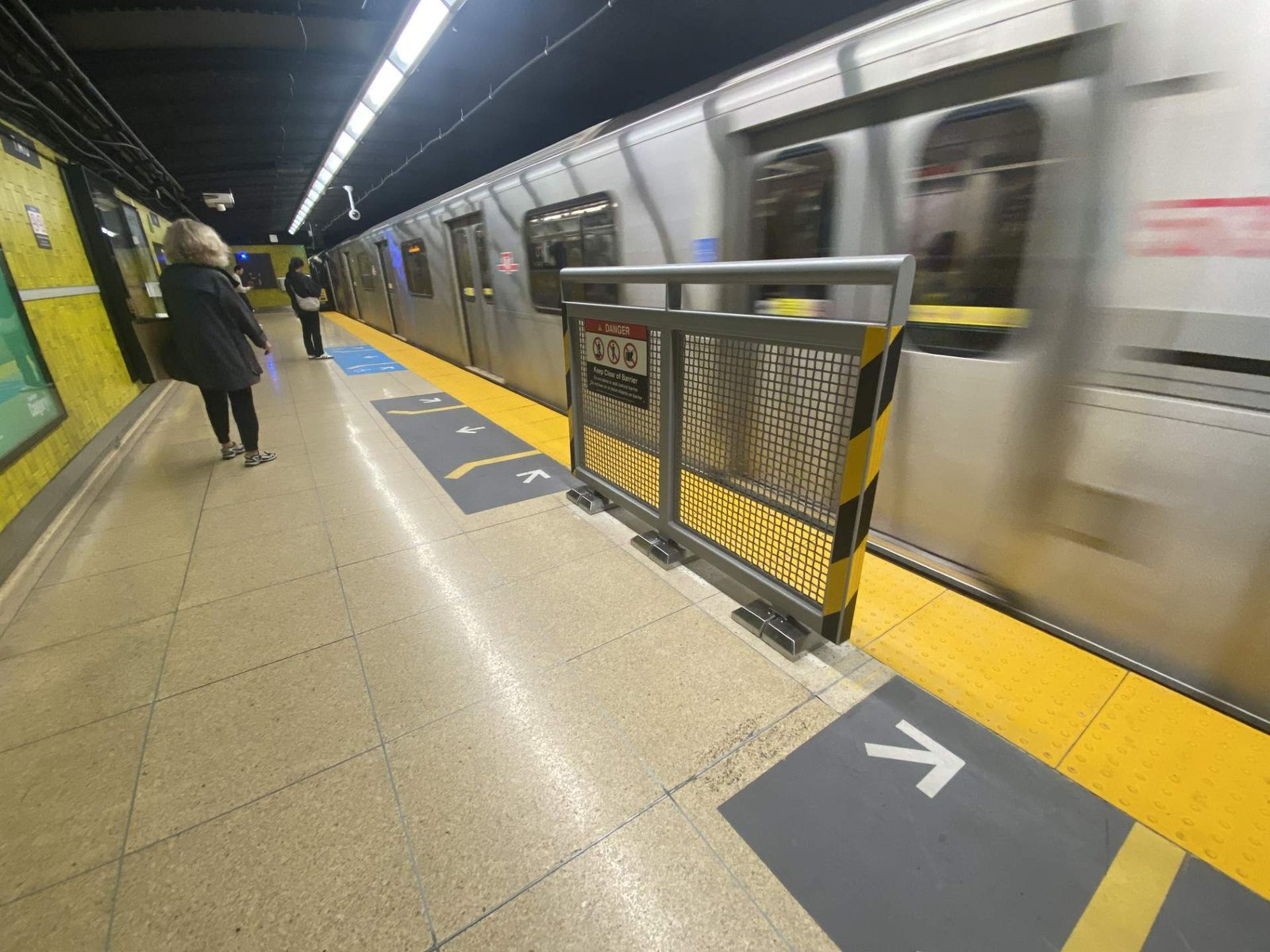
Toronto’s transit authority has installed the first steel barrier at TMU Station as part of a $2 million pilot program designed to improve subway platform safety. The move has drawn immediate criticism from transit advocates, city councillors, and political rivals of Mayor Olivia Chow, many of whom argue the barriers will do little to prevent track falls or unauthorized access.
Steel Barriers Replace Floor-to-Ceiling Door Plans
Mayor Chow announced the platform safety initiative at a spring press conference, appearing alongside TTC leadership. The announcement included expanded staffing, additional security personnel, and more outreach workers focused on homelessness and mental health. Chow also confirmed that platform barriers would be installed at TMU Station, formerly known as Dundas.
Stay connected to every major update — subscribe and follow us on the PhoenixQ website and across our social media platforms.
Initial enthusiasm faded quickly once the design details became public. Rather than the full floor-to-ceiling platform edge doors common in modern transit systems, the TTC chose steel fences fitted with gaps where doors would open. Chow and TTC CEO Mandeep Lali defended the choice, pointing to New York City’s subway system as a precedent and arguing the steel barriers offer a more cost-effective alternative.
Installing full platform edge doors across all Toronto subway stations would cost approximately $4.1 billion, according to TTC figures cited by Chow’s campaign — an average of $55 million per station. The current pilot at TMU Station carries a price tag of up to $2 million.
Critics Question the Value of the Pilot
City Councillor Josh Matlow has been among the most vocal opponents. He argues the city should direct resources toward full platform edge doors at the stations where they are needed most. “They are performative, but they aren’t a good performance,” Matlow said of the steel barriers.
Mayoral candidate Brad Bradford has also seized on the issue, posting multiple social media videos criticizing the decision. His campaign released a statement arguing that floor-to-ceiling platform edge doors represent the only viable solution. The statement went further, claiming such doors would effectively pay for themselves by preventing deaths, injuries, and costly service delays.
Chow has acknowledged her own preference for full platform edge doors but maintains that installing them system-wide would require financial support from provincial and federal governments. Bradford, for his part, has also conceded that upper-level government funding would likely be necessary to make that option viable.
Transit Advocates Urge Caution Before Writing Off the Barriers
Andrew Pulsifer, a transit advocate with the group TTC Riders, supports the full platform edge door option. However, he says meaningful progress depends on buy-in from Ottawa or Queen’s Park. “For both state-of-good repair or platform-edge doors, we can only really fix those issues if higher orders of government step in,” Pulsifer said.
Despite his preference for the more comprehensive solution, Pulsifer cautioned against dismissing the steel barriers entirely. He noted that New York City’s experience with similar gates shows they can improve passengers’ sense of safety — particularly among elderly riders and those with mobility challenges.
“Perceptions of safety is a really key aspect to all of this,” Pulsifer said. “If the steel barriers lead to more people choosing to take the TTC more often, we can’t disparage them too much.”
TTC Expects Barriers Installed by End of September
The TTC declined to make anyone available for an interview on the program. In an emailed statement, spokesperson Stuart Green said the remaining barriers at TMU Station should be in place by the end of September. Green added that the pilot has no fixed timeline and that the TTC plans to measure its success primarily through passenger feedback.
The launch of the TTC subway barriers pilot comes as Toronto’s municipal election campaign intensifies, giving political opponents a timely opportunity to challenge Chow’s transit safety record. Whether the steel barriers ultimately prove effective — or simply serve as a placeholder until a more comprehensive solution attracts broader government funding — remains an open question as the pilot gets underway.