English















































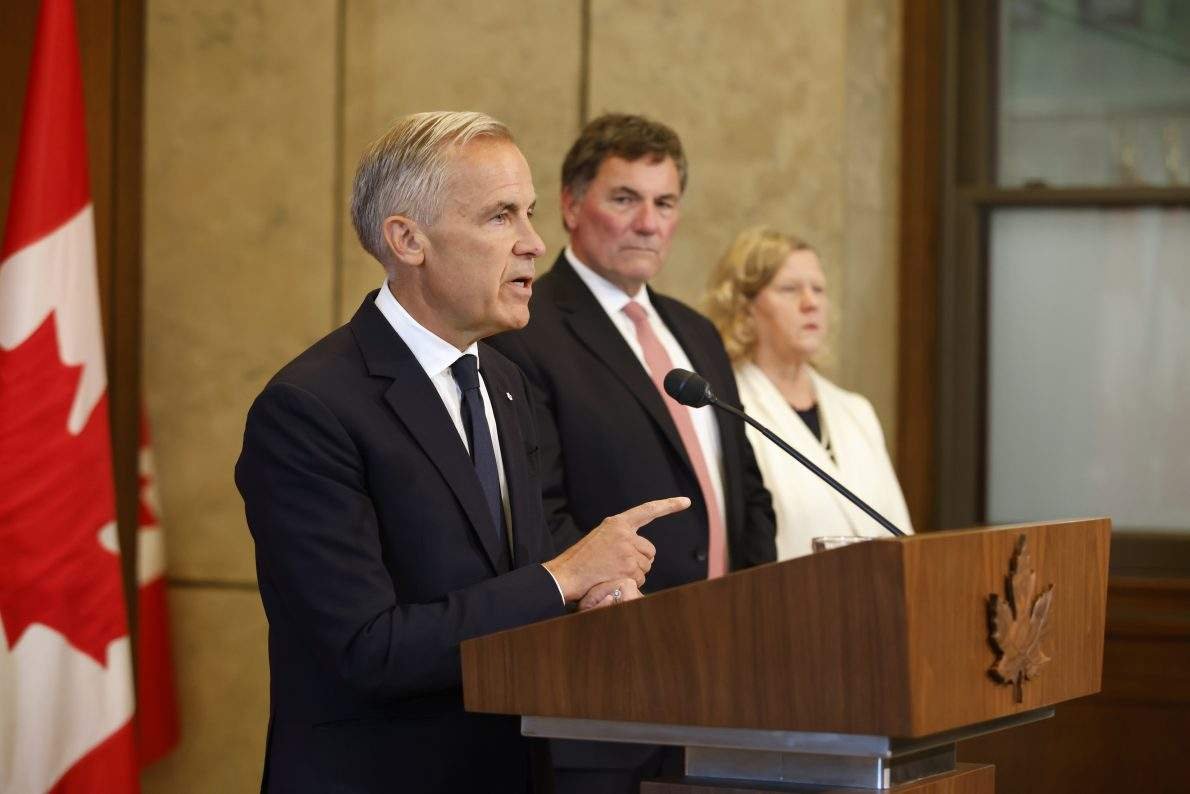
A new poll shows that most Canadians support their government’s hardline stance in the ongoing trade dispute with the United States, including walking away from negotiations and imposing retaliatory tariffs. The findings, from an Ipsos survey conducted exclusively for Global News, also reveal persistent backing for Prime Minister Mark Carney and the Liberal Party — though that support is notably weaker among younger Canadians.
Broad Support for Canada’s Trade Stance
Sixty-three percent of Canadians surveyed said Canada was right to hold firm in trade negotiations with the U.S., even if doing so meant higher costs and job losses. Only 18 percent believed Canada should have made additional concessions to secure a deal.
Stay connected to every major update — subscribe and follow us on the PhoenixQ website and across our social media platforms.
Support for retaliatory tariffs was even stronger. Seventy-three percent of respondents backed Ottawa’s “dollar for dollar” counter-tariffs on $28 billion worth of American goods. Those tariffs directly matched the up to 50 percent levies that U.S. President Donald Trump imposed after trade talks broke down last week.
Beyond tariffs, Canadians also expressed broad support for a range of other retaliatory measures. Seventy-three percent favored imposing tariffs on critical minerals and energy exports to the U.S., while 71 percent supported limiting critical mineral exports south of the border. Sixty-nine percent backed restricting exports of crude oil, natural gas and electricity. Two-thirds called for an aggressive tax on U.S. technology companies operating in Canada, and 64 percent supported tightening border inspections to slow the flow of American imports.
Generational Divide Shapes the Numbers
Despite the overall strength of these figures, support drops significantly among younger age groups. Only 48 percent of Generation Z adults and 57 percent of Millennials backed Canada’s decision to stand firm in negotiations. Support for retaliatory tariffs among Millennials stood at 59 percent. By contrast, roughly 80 percent of older Baby Boomers supported both positions.
Darrell Bricker, chairman of Ipsos Canada, attributed the gap to economic circumstances. He described younger Canadians as living in what he called “the endurance economy,” simply getting through each day without financial security. “If any of those things could bring a personal risk, if you’re somebody who’s living in that endurance economy, you’re less likely to support it,” Bricker said.
He added that the Liberals’ core supporters tend to be older, more financially established, and better educated. “They can be all ‘elbows up,’ but it doesn’t cost them as much as it’s going to cost the other people they’re asking to have their elbows up,” he said.
Liberal Lead Holds Firm Since the Election
The poll shows the Liberals maintaining a commanding lead in voting intentions, with 44 percent support nationally compared to 33 percent for the Conservatives. The Liberals dropped just one point since April, while Conservative support remained unchanged. The NDP and the Bloc Québécois each gained one point, reaching 10 percent and 8 percent respectively.
Among Millennials, however, the Conservatives hold a clear edge. Forty percent of Millennial respondents said they would vote Conservative, compared to just 30 percent who chose the Liberals in that age group.
Bricker noted the remarkable stability of these numbers given the turbulence of recent weeks. “I have not in my consciousness recalled as tumultuous a week, or couple of weeks, or couple of months, in Canadian politics since probably 1995, when we went through the sovereignty referendum,” he said. Despite that upheaval, political support has barely shifted since the federal election. “A lot of what’s going on right now is basically baked in,” Bricker said.
When asked whether Conservative Leader Pierre Poilievre would have handled the U.S. trade dispute better than Carney, 37 percent of all respondents said yes. Among Conservative voters, that figure rose to 67 percent.
Calls for Parliament to Reconvene Early
One potential vulnerability for Carney emerged in the poll. Sixty-two percent of Canadians said they want Parliament recalled before its scheduled return in late September to debate and vote on Canada’s response to U.S. trade actions. Bricker described this as a crack in an otherwise strong political position for the prime minister.
“Canadians know their institutions actually matter to them,” he said. “Not recalling Parliament and not having a conversation through our political institutions is something that does represent a little bit of a vulnerability.”
On domestic support measures, 80 percent of respondents backed government purchasing and infrastructure projects that prioritize Canadian materials and contracts. Between two-thirds and 80 percent supported other potential measures, including helping businesses expand into non-U.S. markets, funding job retraining programs, and offering emergency loans or extended Employment Insurance to affected workers. Sixty-seven percent supported a major subsidy program similar to COVID-era relief for workers hit by tariffs — up eight points since last July.
Fifty-two percent of Canadians said they are personally willing to endure significant economic hardship to help the country through the trade war. That figure fell to 41 percent among Generation Z respondents and rose to 67 percent among Boomers. The least popular option presented in the poll — allowing the Canadian dollar to weaken naturally to boost export competitiveness — drew support from just 45 percent of respondents.
The Ipsos poll surveyed 1,001 Canadians aged 18 and older online between August 26 and 27, 2026. The results carry a credibility interval of plus or minus 3.8 percentage points, 19 times out of 20.