English















































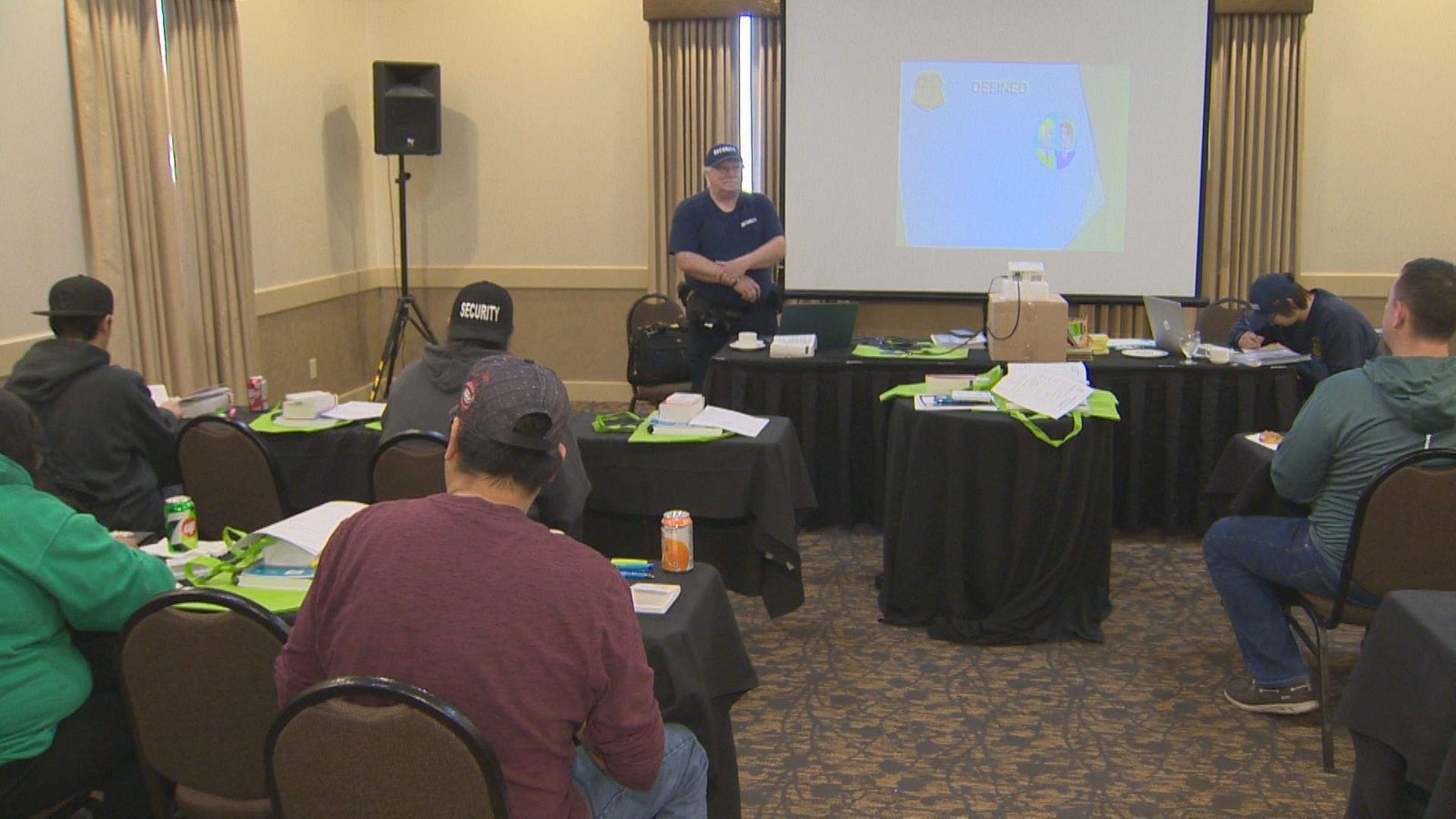
Manitoba is preparing to overhaul its security guard training curriculum, with the provincial government signalling that a new program will roll out in the early new year. The planned changes come amid growing calls from industry professionals and community advocates who say the current 40-hour classroom model no longer reflects the challenges security guards face on the job.
A Training Model Under Pressure
Under the existing system, aspiring security guards must complete 40 hours of classroom instruction before writing a provincially mandated licensing exam. Physical defense training and handcuffing techniques are available after licensing, but most workplaces do not require them. All conflict resolution taught during the initial course relies entirely on verbal methods.
Stay connected to every major update — subscribe and follow us on the PhoenixQ website and across our social media platforms.
Peter de Beer, an instructor with de Beer Consulting & Security Inc., has spent 25 years in the security industry and roughly a decade delivering training sessions. He believes the current model is no longer adequate. “It’s a lot different over the past 30 years, and the things that people have to face,” he said. “Security is facing more and more all the time.”
De Beer argues that guards who lack hands-on training are more likely to respond poorly in dangerous situations. “If they don’t know how to defend themselves, they are going to go overboard because of fear,” he explained. “With proper training, you’re going to learn different things on how to deal with people, how to subdue them, and how to take them into custody in a much safer manner.”
The current training manual does emphasize communication and de-escalation as the first response. However, it permits the use of force only in specific circumstances, such as when supporting a police officer or preventing serious injury or death.
Calls for Cultural and Hands-On Training
Indigenous Community Advocate Vivian Ketchum also supports updating the curriculum. She points to rising drug activity and violence as key reasons the profession has become more demanding. “There’s more drug activity, there’s more violence,” she said.
Impact Security brought Ketchum on as an ambassador at a downtown Winnipeg Dollarama following an incident in March that resulted in a security guard facing charges. She says the situation at the store has improved significantly since her involvement. Ketchum now hopes cultural awareness training becomes a formal part of any updated security guard course.
“The small amount of training from my life story has changed their attitudes and how they see us,” she said. “Just imagine if we had this Indigenous training implemented in the security guard course — it would be a change maker.”
Industry Groups Push for Ongoing Recertification
Currently, security guards must renew their license annually by submitting an application and paying a fee. There is no requirement to retake any training or complete further education as part of that renewal.
The Retail Council of Canada (RCC) has been consulting with the province on how to strengthen the training framework. Rue Rodrigues, the RCC’s Loss Prevention and Risk Management Executive Advisor, says ongoing recertification must be part of any reform. “Practice is very important — police officers are required to annually certify for certain things,” he said.
Rodrigues also stressed that skills can deteriorate when guards go long periods without encountering certain situations. “A guard may not encounter a certain situation in five or six months,” he said. “However, when the situation presents itself, you need to be ready.” The RCC supports adding both cultural training and hands-on conflict education to the updated program, alongside stronger recertification requirements.
Province Commits to New Curriculum
Manitoba’s provincial government recently confirmed that a new security guard training curriculum is in development. Officials pointed to the early new year as the expected timeline for its rollout. The announcement follows sustained pressure from trainers, community advocates and retail industry groups who say the current program leaves guards underprepared for modern security challenges.
For professionals like de Beer and advocates like Ketchum, the overhaul represents a long-overdue shift. Both argue that better training ultimately leads to safer outcomes — for guards, for the public and for the communities they serve.