English

































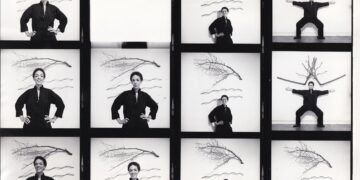







Maren Hassinger has spent decades navigating rejection, reinvention, and resourcefulness. Now, a major retrospective at the Berkeley Art Museum and Pacific Film Archive (BAMPFA) brings her remarkable career into full view, celebrating a sculptor who turned every obstacle into creative opportunity.
From Dance to Sculpture
Hassinger originally wanted to study dance. However, Bennington College’s dance department rejected her in the 1960s. A perceptive teacher redirected her toward sculpture instead. “My love of motion,” she writes in the exhibition catalog, carried her naturally from one discipline to the other. Critic Clement Greenberg attended her senior thesis critique. She remembers him as having “the gift of gab, but was a bit of a bully.”
Stay connected to every major update — subscribe and follow us on the PhoenixQ website and across our social media platforms.
Graduate school at UCLA brought further challenges. The sculpture program was almost entirely male. Not a single woman was enrolled, as Hassinger recalls it. So she moved into fiber arts and made it work on her own terms. “Truthfully,” she admits in the catalog, “I was just trying to get a degree so I could teach and make art.” Impatient with the loom, she instead gathered materials from the world around her. She discovered a heavy, oil-stained hemp rope at a shipyard. After unraveling its strands, she tied them into large, loose macramé knots. Those knots now greet visitors at BAMPFA.
Industrial Materials and Signature Works
Hassinger went on to combine craft techniques with industrial materials. She became a regular at an LA wire shop, which eventually featured her on the cover of their trade magazine. She began incorporating elevator cables into her sculptures, producing some of her best-known works. Leaning (1980) groups frayed cable bundles into roughly two dozen bouquets. Only the central arrangement stands firm. The rest lean freely in every direction.
Her 1972 graduate work River — a 2,000-pound rope-chain — posed a storage problem she couldn’t solve at the time. She let it go, then finally remade it in 2011 for an acquisition by the Studio Museum. After school, she focused on sculptures that could be coiled and stored compactly. It was a practical response to the realities of limited space and resources.
Community, Collaboration, and Resilience
Hassinger rarely worked in isolation. “Working alone is so antisocial,” she quips in the catalog. Artist Senga Nengudi first encountered Hassinger’s work in 1975 and sought her out immediately. They became close friends. Together with David Hammons, Nengudi helped connect Hassinger to Linda Goode-Bryant’s gallery, Just Above Midtown. When her collective of Black LA artists, known as Studio Z, lacked exhibition opportunities, they invented their own. At the 1982 opening of “Afro-American Abstractions,” Hassinger and her peers called the Los Angeles Municipal Art Gallery and cheerfully accepted a performance invitation that had never been extended.
Her video work Birthright (2005) adds a deeply personal dimension to the retrospective. In it, Hassinger interviews her uncle about their family history, uncovering painful stories of abandonment, lynching, and inherited silence. “My legacy was to feel unloved,” she concludes in the video. Yet the exhibition continues. Right beside Birthright, the curators placed Love (2008/2026), where pink plastic bags filled with breath and love notes cover the walls entirely. It is a striking and deliberate contrast. Throughout the show, Hassinger transforms heavy history into something that feels, against all odds, light.