English














































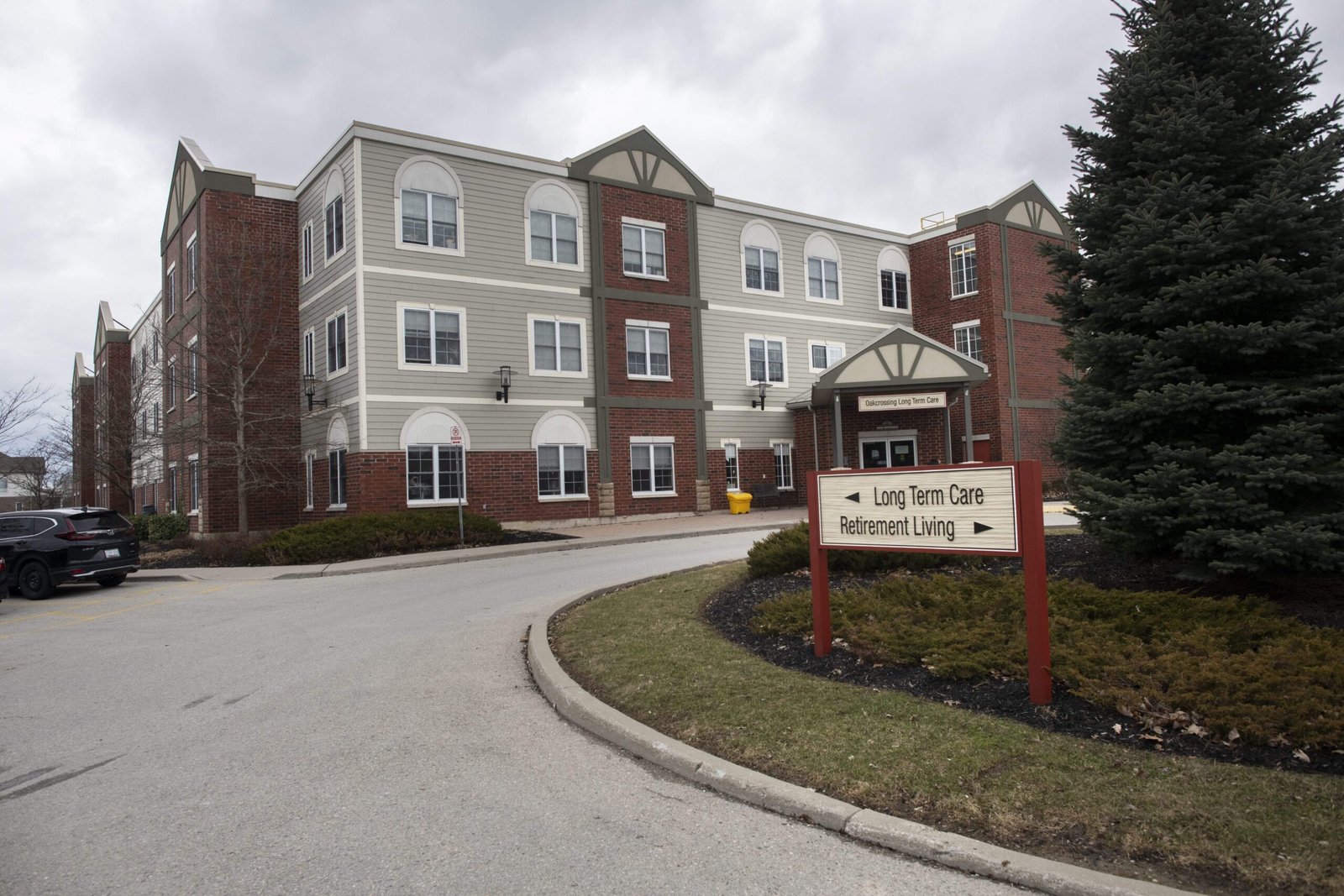
Ontario’s long-term care sector is under growing financial strain, with new data showing a sharp rise in the number of homes receiving emergency government bailouts. Internal records obtained through freedom of information laws reveal that Ontario’s “homes in distress” fund has paid out tens of millions of dollars in recent years, raising serious concerns about the sector’s long-term sustainability.
Emergency Bailouts Rising Year After Year
In 2021-22, the Ford government spent just $2.4 million bailing out long-term care homes. That year, one non-profit and three for-profit homes received funds, with for-profit homes averaging $350,000 each.
Stay connected to every major update — subscribe and follow us on the PhoenixQ website and across our social media platforms.
However, the figures climbed sharply in the years that followed. In 2022-23, total emergency spending jumped to $9.7 million. In 2023-24, four non-profit homes split the same $9.7 million amount. Then, in 2024-25, six homes received a combined $17.2 million. In the current 2025-26 fiscal year, four non-profit homes required $10.9 million in short-term support.
The largest single bailout payments also grew steadily over this period. The biggest single payment in 2021-22 was $1.3 million. By 2022-23, that figure reached $6 million. It climbed to $6.6 million in 2023-24, then $7 million in 2024-25, before settling at $6.3 million in 2025-26.
Over the past five years, non-profit homes received the vast majority of this emergency funding. For-profit long-term care companies received roughly $2.2 million in total public bailout money across the same period.
How the Emergency Fund Works
Ontario Health assesses the immediate financial risks when a home faces acute or unforeseen cash flow problems. In exceptional circumstances, the Ministry of Long-Term Care can then approve a one-time payment to help restore financial stability.
A ministry spokesperson emphasized the scale of the government’s broader investment in the sector. “Our government continues to make record investments into the long-term care sector, including over $9 billion allocated this year alone,” the spokesperson said. The statement also noted a Level of Care funding increase of over $139.4 million this year, on top of more than $2 billion invested annually to support healthcare workers.
“While individual long-term care homes are responsible for their day-to-day operations including their financial accounting, the Ministry provides the sector with many tools and resources to support them as they provide care to residents,” the spokesperson added.
Advocates Warn of a Deeper Crisis
Laura Tamblyn-Watts, CEO of seniors advocacy group CanAge, said the rising bailout figures point to a sector in serious need of additional support. “These numbers are clearly a red flag for many people,” she said.
She argued the emergency payments are only a visible sign of a much larger problem. “It is really an aging population and people living longer in long-term care homes with high, high degrees of frailty — the kinds of frailty we’ve never seen before,” she said. “What we’re seeing is the tip of an iceberg.”
Tamblyn-Watts also noted that the Ford government appears to favour supporting non-profit homes over for-profit ones. She suggested this reflects the stricter regulatory requirements that non-profit operators face. “The for-profit homes often have the ability to charge for extra types of services,” she said. “There have been clear indicators that they’re looking to support the non-profit sector more.”
Meanwhile, Lisa Levin, CEO of AdvantAge Ontario — which says it represents 89 per cent of Ontario’s non-profit long-term care homes — cautioned that the raw numbers do not capture the full picture. “What we do know is that the vast majority of long-term care homes that have ceased operating entirely in recent years have been for-profit homes,” she said in a statement.
Pressure Mounts as Population Ages
The growing demand for long-term care beds adds urgency to the financial challenges facing the sector. Ontario’s population is aging rapidly, and residents entering care today often arrive with far greater health needs than in previous decades.
As a result, the ability of homes to remain financially viable and continue operating is increasingly critical. Every closure removes beds that the province needs. Advocates say emergency bailouts, while necessary in the short term, are not a substitute for sustainable, long-term funding solutions.
The data makes clear that the number of homes reaching a financial breaking point is growing. Without structural changes to how long-term care is funded, experts warn the situation is likely to worsen as Canada’s aging population continues to grow.