English



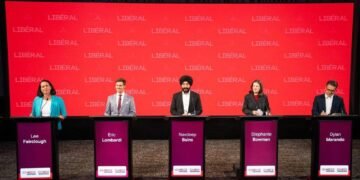























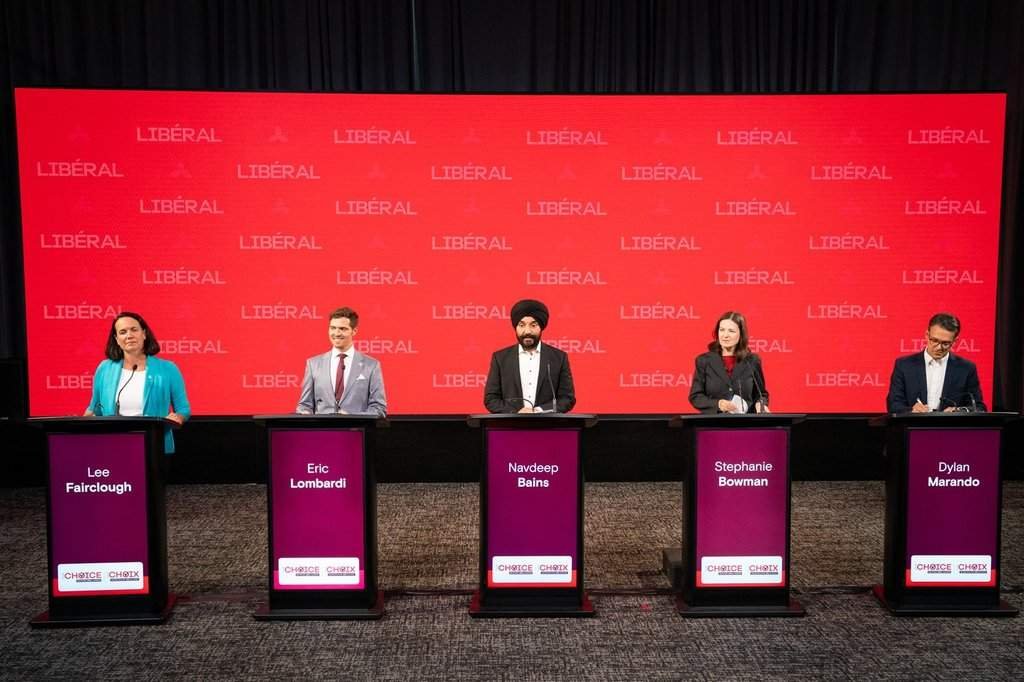
All five candidates vying to lead the Ontario Liberal Party into the next provincial election remain largely unknown to the general public, according to a new poll. The survey highlights a significant recognition gap that could shape the outcome of the leadership race and the party’s broader political fortunes.
Candidates Struggle with Low Name Recognition
The Liaison Strategies poll surveyed 1,600 Ontario residents and found that even the race’s frontrunner faces a recognition problem. Former federal cabinet minister Navdeep Bains, widely considered the leading candidate, was unfamiliar to 52 per cent of respondents. The other four contenders fared even worse.
Stay connected to every major update — subscribe and follow us on the PhoenixQ website and across our social media platforms.
Roughly 75 per cent of those surveyed said they did not recognize MPPs Stephanie Bowman or Lee Fairclough. Meanwhile, between 82 and 85 per cent were unfamiliar with Eric Lombardi and Dylan Marando. The five candidates have eight weeks to persuade Ontario Liberal delegates to support their bids.
The contenders have already been working to raise their profiles. They have introduced policy platforms and visited 124 provincial ridings to meet Liberal supporters. However, the poll results suggest those efforts have yet to reach the broader electorate.
David Valentin of Liaison Strategies warned that the low recognition figures carry real political risk. “With such low name recognition, these candidates face a serious challenge getting their own message across before the PCs define them,” he said. Valentin added that the party does not have unlimited time to build public awareness. “The risk of being defined by their opponents outweighs any benefit of starting with a relatively blank slate,” he said.
Party Insiders Remain Cautiously Optimistic
Despite the challenging numbers, Liberal insiders expressed confidence in the field. Speaking without attribution, one party source acknowledged the uphill battle but pointed to the candidates’ qualities. “We don’t have big titans with massive name recognition,” the source said, adding that the candidates have “substance, potential, ideas, skill and sensibility.”
Insiders also noted that low name recognition does not necessarily predict failure. They pointed to former Premier Dalton McGuinty as a key example. “Dalton McGuinty was one of the most successful premiers in Ontario history and he was a little-known, dark horse during most of the leadership race,” a Liberal source said. “Name recognition is not a prediction of future success.”
At the same time, insiders acknowledged that previous Liberal leader Bonnie Crombie entered her race as a well-known figure in Mississauga yet still faced a difficult electoral outcome. Similarly, Steven Del Duca’s tenure showed that name recognition alone does not guarantee results.
Support Shifts After Candidate Introductions
The poll also tested what happens when voters learn more about the candidates. After respondents received a short biography of each contender, their preferences shifted noticeably.
Among the general pool of voters, Fairclough led with 23 per cent support. Bains followed at 20 per cent, Bowman received 13 per cent, Lombardi earned 10 per cent, and Marando received six per cent. However, among self-identified Liberal supporters, Bains emerged as the clear frontrunner with 32 per cent. Fairclough placed second at 26 per cent, and Bowman came third at 15 per cent.
The results suggest that voter familiarity could significantly change the competitive landscape as the race progresses.
PC Party Leads as Liberals Sit in Second Place
The same poll also captured the current state of Ontario’s broader political landscape. Premier Doug Ford’s Progressive Conservatives lead with 40 per cent support. The Liberals sit in second place at 34 per cent, while the NDP has edged up to 21 per cent.
Valentin noted that the PC party’s financial resources pose an additional threat. He warned that the Conservatives could quickly deploy negative advertising against the new Liberal leader as soon as the race concludes. “They have room to build support, but they do not have unlimited time,” he said.
Ontario Liberal Party members will vote online between November 9 and 20. The new leader will be announced on November 21.