English




















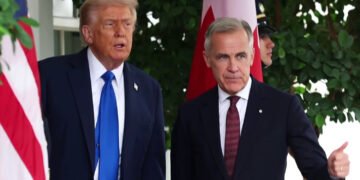




















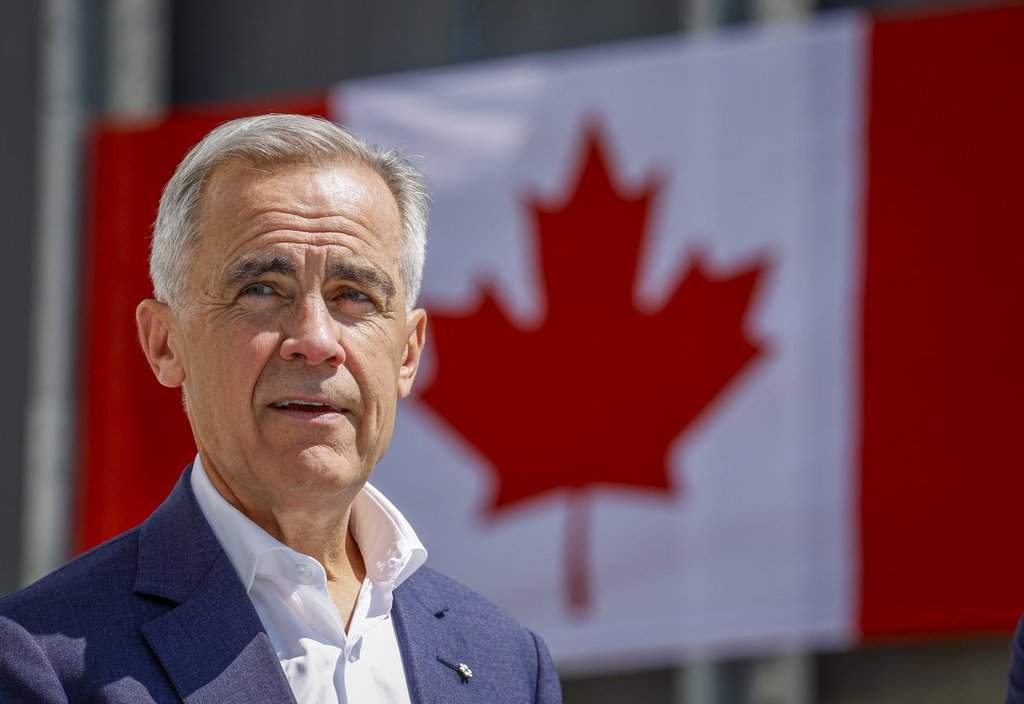
Prime Minister Mark Carney will host Canada’s first-ever national investment summit in Toronto on September 14 and 15, bringing together hundreds of global and domestic investors managing trillions of dollars in assets. The event aims to tackle what experts describe as Canada’s long-standing economic weakness — a persistent shortfall in business investment that has slowed productivity and economic growth for decades.
Premiers and Cabinet Ministers Join the Push
The summit will take place at a downtown Toronto hotel. Carney, federal cabinet ministers, provincial premiers and Canadian business leaders will all attend. Each will arrive with lists of major projects ready to pitch to potential investors.
Stay connected to every major update — subscribe and follow us on the PhoenixQ website and across our social media platforms.
Alberta Premier Danielle Smith plans to present 34 proposed projects. Saskatchewan Premier Scott Moe intends to promote his province’s energy, critical minerals, defence and agriculture sectors. Meanwhile, New Brunswick Premier Susan Holt will highlight several projects, including a port expansion, a data centre in Lorneville and the Mactaquac lifetime achievement project — a rehabilitation initiative for a major power plant.
The Prime Minister’s Office is co-organizing the summit alongside the Canada Pension Plan Investment Board and Public Sector Pension Investments, two of Canada’s largest asset managers.
Carney’s $1 Trillion Investment Goal
The summit reflects the capital-focused economic agenda Carney outlined when he first took office 18 months ago. Since then, he has shifted federal policy and the federal budget framework toward critical infrastructure and large-scale projects. His stated goal is to “catalyze” $1 trillion in Canadian investments over five years — an ambition experts describe as ambitious.
Mahmood Nanji, a fellow at the Ivey School of Business at Western University, said Canada has suffered from a well-documented lack of business investment for much of the past decade. He linked this directly to weak productivity and sluggish economic growth.
“This has been a bit of Canada’s Achilles heel over the last couple of decades,” Nanji said. “And this is why I think Prime Minister Carney, upon being elected, this was his big bet on rebuilding the Canadian economy.”
Critics have long pointed to regulatory burdens and lengthy, uncertain project approval timelines as key reasons investors have looked elsewhere. The Conservative Party, for example, attributes the investment shortfall to what it calls “anti-development laws” and policies such as the industrial carbon price.
How Global Investors View Canada
The CPP Investment Board’s Insights division published a report on Monday. It surveyed 65 of the world’s largest asset managers on their views of Canada as an investment destination.
The energy sector ranked as Canada’s most globally attractive area for investment. However, it also carried the sharpest perceived risks. Surveyed investors cited fears of policy reversals, regulatory fragmentation and concerns about scale and liquidity.
Canada ranked well on openness to capital and progress on the energy transition. It also placed second only to Singapore on policy stability and predictability. Nearly 70 percent of investors ranked predictability as extremely important or essential when deciding where to invest.
Jeremy Kronick, president and CEO of the C.D. Howe Institute, said Carney has taken meaningful steps to signal that Canada is open for business since taking office in March 2025. He pointed to the major projects office and the One Canadian Economy Act as examples of efforts to streamline approvals for nation-building projects.
“I think there’s been enough done on the change in tone. I think regulatory processes are harder to change,” Kronick said. He also noted that interprovincial trade barriers remain an unresolved challenge that could still create uncertainty around otherwise viable projects.
Foreign Investment Rising Despite Trade War Pressures
There are already signs that international capital is taking a renewed interest in Canada. Statistics Canada reported that foreign direct investment reached $96.8 billion in 2025 — the highest level since 2007.
BMO chief economist Doug Porter noted that most of this inflow has come through mergers and acquisitions rather than greenfield investments. Summit organizers are hoping to attract the kind of new-project capital that can get developments off the ground from scratch.
Porter said the figures are particularly encouraging given the ongoing Canada-U.S. trade war. He noted that, under normal circumstances, he would have expected investment inflows to decline in response to President Donald Trump’s aggressive tariff agenda, which puts access to the U.S. market at risk.
All experts consulted said the tariff dispute will feature prominently in summit discussions. However, they suggested it may not deter investors significantly. Many of the projects on the summit’s agenda — including ports, pipelines and critical mineral extraction — are oriented toward non-U.S. markets.
“Some of the investors might be a little bit jittery about this relationship with the United States,” Nanji said. “But if some of these projects are going to be exporting goods to other markets, that may not necessarily factor into their decision.”
Political opinion has also shifted in ways that could help major projects gain public support. A July Angus Reid poll showed broad support for a new pipeline from Alberta to the British Columbia coast. Nanji cautioned, however, that officials will need to ensure Indigenous stakeholders are engaged before making firm commitments to investors.
Speaking to reporters at the Liberal cabinet retreat in Banff on Thursday, Carney framed his pitch around Canada’s value as a reliable global supplier. “Canada is about so much more than being next to the United States,” he said. “We have what the world wants.”