English













































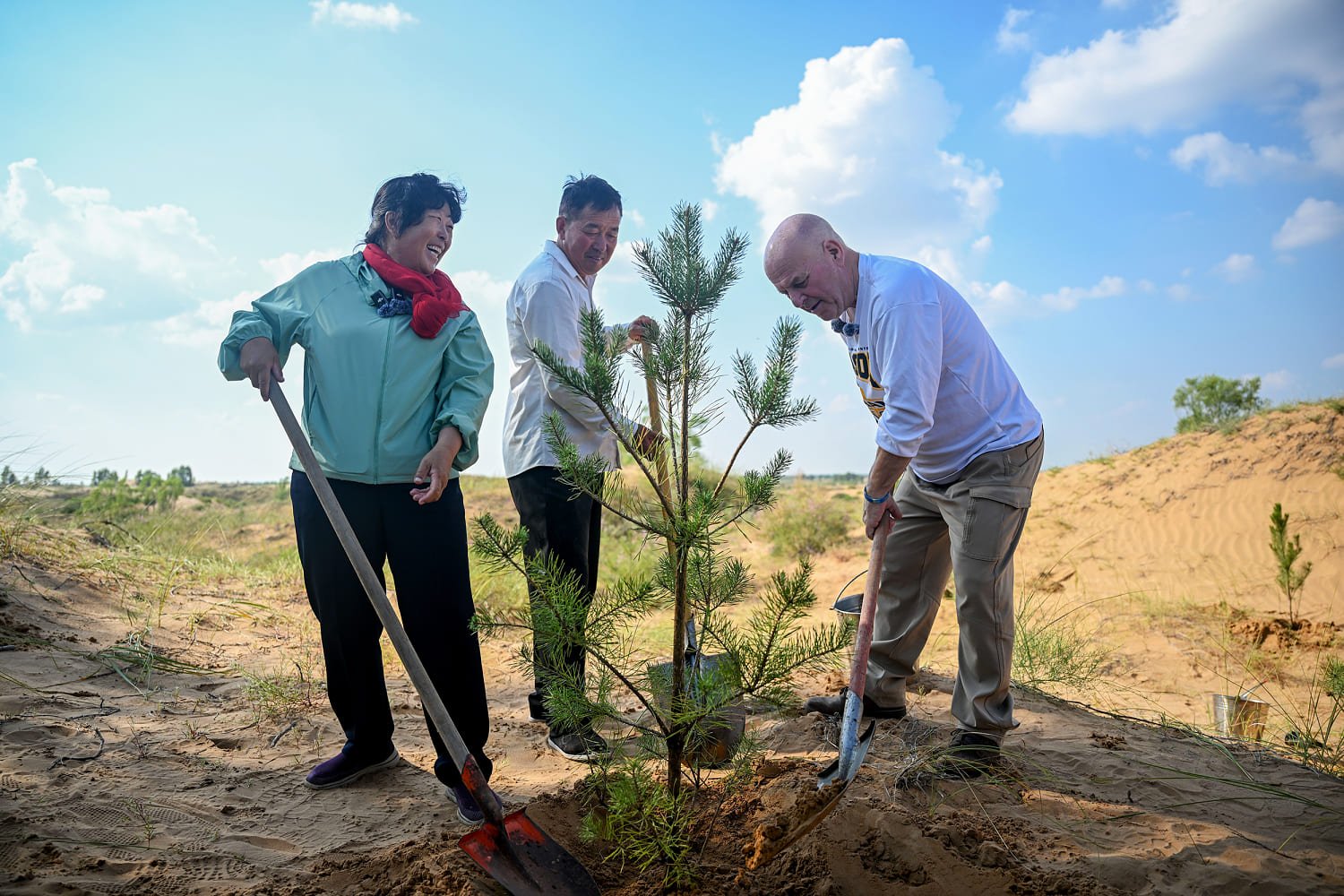
An American teacher’s $5,000 personal donation helped transform a stretch of desert in northern China into green land — but the broader campaign behind that effort tells a more complicated story. Experts say China’s Great Green Wall initiative has produced real results in some areas while raising serious concerns in others.
A Campaign with Mixed Results
Judith Shapiro, a professor at American University who teaches in the department of environment, development and health, described the Great Green Wall as a “great initiative in principle.” However, she noted that the Chinese government tends to favor top-down, technocratic approaches to environmental problems. Officials focus more on meeting targets than on the quality of outcomes.
Stay connected to every major update — subscribe and follow us on the PhoenixQ website and across our social media platforms.
Shapiro also pointed to a significant social cost. The initiative has reduced open land available for nomadic herding. She called this loss “a serious blow to some ethnic minority nationalities.”
In the program’s early years, planners planted fast-growing but water-hungry trees such as poplars. Those trees depleted underground water tables. More recently, authorities have shifted to planting more suitable and biodiverse species. Despite the early missteps, Shapiro acknowledged that the government has done a good job promoting the idea that trees benefit society.
Climate Disasters Underscore the Stakes
Days after American teacher Ron Sakolsky met with local resident Yin in China’s arid north, a major disaster struck more than 2,000 miles away. A devastating flood hit the Nepal-China border region on August 26. Experts linked the disaster to warming temperatures in the Himalayas.
More than 1,400 people died, and thousands more remain missing across Nepal and China’s Tibet region. At a news conference in Beijing on August 31, Sakolsky spoke about the tragedy. “I am very, very sad for the people in Nepal and people in China,” he said. He added that the experience deepened his understanding of human responsibility toward the natural world.
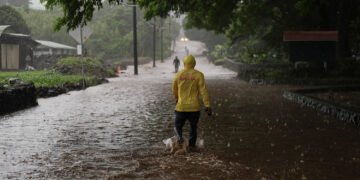
The Tibet flood was not an isolated event. In early July, flooding triggered by Tropical Storm Maysak killed at least 159 people in China’s southern Guangxi region. Then, on September 5, a mudslide in Jiangxi province killed at least 16 people. Torrential rain linked to Typhoon Saudel caused that disaster. Researchers confirmed last year that climate change is making such storms across Asia more frequent and more severe.
China’s Climate Goals and Global Leadership
China has pledged to reach peak carbon emissions before 2030 and achieve carbon neutrality by 2060. According to a recent analysis by the Centre for Research on Energy and Clean Air, published for Carbon Brief, China’s carbon emissions have been flat or falling since 2024. The country is on track to record a second consecutive annual decline in 2026.
Meanwhile, China is positioning itself to fill a gap in global climate leadership. The United States, historically the world’s largest carbon emitter, withdrew from the Paris climate agreement during President Trump’s first days back in office. Critics argue that China’s own climate targets remain too cautious. They say the current goals will prevent China from meeting its Paris Agreement pledge to cut emissions by 65 percent between 2005 and 2030.
Although coal emissions in China are still rising, the broader trend shows some progress. However, analysts noted that Trump and Chinese President Xi Jinping were not expected to hold any meaningful climate discussions at their summit this week. As a result, the gap in coordinated global climate action remains wide.