English










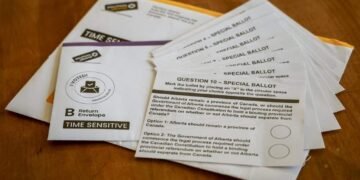


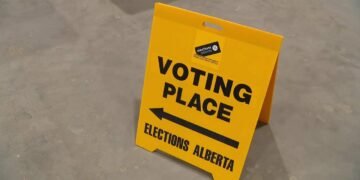































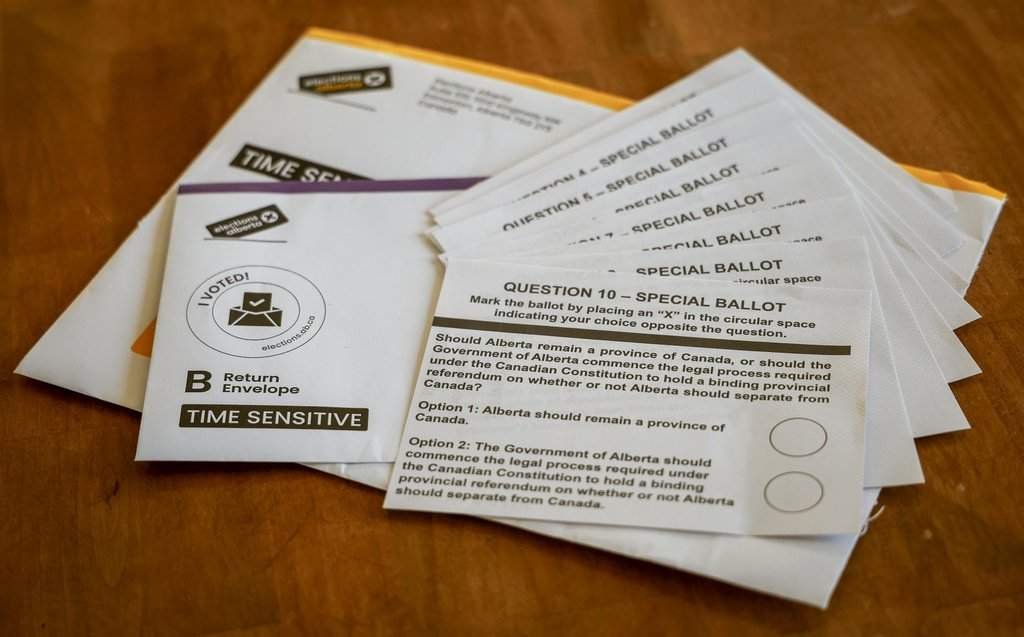
Alberta voters will face ten referendum questions on October 19, covering topics ranging from immigration policy and provincial social services to sweeping constitutional reforms and the province’s future within Canada. Premier Danielle Smith put forward all ten questions, framing them as a way to address Alberta’s long-standing grievances with Ottawa and strengthen the province’s position within Confederation.
Immigration and Social Services
The first four questions focus on immigration control and access to publicly funded programs. Question 1 asks whether Alberta should take greater control over immigration, with the goal of reducing newcomer numbers to below one percent of the population — roughly 50,000 people per year. Smith has pointed to Quebec’s immigration accord with Ottawa as a model. Critics, however, note that Alberta ran a nationwide advertising campaign in recent years actively encouraging population growth.
Stay connected to every major update — subscribe and follow us on the PhoenixQ website and across our social media platforms.
Question 2 asks whether only Canadian citizens, permanent residents and individuals holding Alberta-approved immigration status should qualify for provincially funded health care, education and social services. The government claims temporary residents cost the province more than $1 billion annually in such services. Critics dispute those figures and argue the government is ignoring the economic contributions temporary residents make to Alberta. Notably, the government has not yet defined what “Alberta-approved immigration status” would mean, saying it will determine that only after the vote.
Question 3 asks whether non-permanent residents should live in Alberta for at least 12 months before accessing provincial social support programs. Temporary workers already cannot access some programs, such as Assured Income for the Severely Handicapped. The Canadian Bar Association’s Alberta chapter has warned this measure could conflict with the Canada Health Act or the equality provisions of the Canadian Charter of Rights and Freedoms.
Question 4 asks whether non-permanent residents should pay a fee or premium to use the provincial health care and education systems. Smith told Calgary business leaders on September 22 that a health premium could reach as much as $1,900. Education leaders have publicly opposed restricting school access, arguing it contradicts internationally recognized children’s rights.
Voting Rules and Constitutional Reform
Question 5 asks whether voters should provide proof of citizenship — such as a passport, birth certificate or citizenship card — to cast a ballot in provincial elections. Voting is already limited to Canadian citizens, and both Elections Canada and Elections Alberta have reported very few cases of ineligible voting. Smith says the measure would strengthen election integrity. However, critics argue it would slow down voting lines and risk introducing racial or ethnic bias at polling stations.
Questions 6 through 9 all propose constitutional amendments. Question 6 asks whether provincial governments, rather than the federal government, should appoint judges to provincial King’s Bench and Appeal courts. Question 7 asks whether Alberta should work with other provinces to abolish the unelected federal Senate. Abolishing the Senate would require unanimous approval from all provinces, as well as ratification by both the Senate and the House of Commons — a significantly higher bar than most constitutional changes.
Question 8 asks whether provinces should be able to opt out of federal programs that overlap with provincial jurisdiction — such as health care, education and social services — without losing the associated federal funding. Currently, Ottawa uses its spending power to attach conditions to provincial funding, with the Canada Health Act serving as a prominent example. Question 9 asks whether provincial laws should take priority over federal laws in areas of shared or provincial jurisdiction when the two conflict. Both questions would require approval from the Senate, the House of Commons and at least seven provinces representing more than half of Canada’s population.
The Separation Question
Question 10 is the most consequential of all. It asks Albertans whether the province should remain part of Canada, or whether the government should begin the legal process required under the Constitution to hold a binding referendum on separation. Supporters of independence argue that leaving Confederation would free Alberta from federal taxation and regulation, unlocking economic growth. Federalists counter that separation would harm businesses and leave landlocked Alberta burdened with debt and the enormous cost of replacing federal services.
Smith has described her nine other questions on immigration and constitutional reform as a political compromise. Together, she argues, they could address Alberta’s grievances, increase the province’s leverage with Ottawa and ultimately make the case for remaining within Canada on better terms. The October 19 vote will give Albertans a direct say on all ten proposals.