English
















































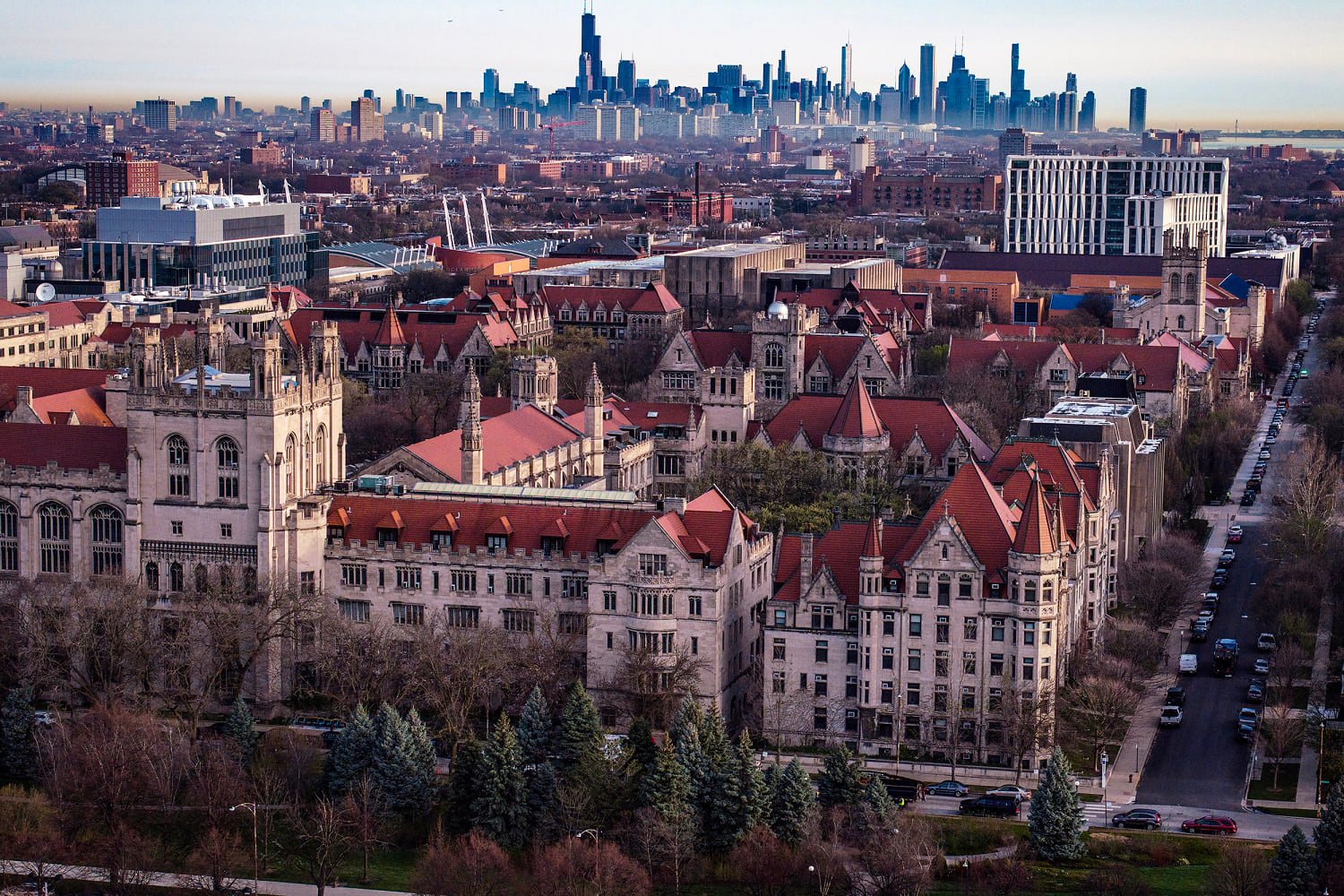
A 19-year-old woman has filed a lawsuit against the Alpha Delta Phi fraternity, alleging she was sexually assaulted at the organization’s house near the University of Chicago during a party on February 7. The woman, identified in court documents as Jane Doe, filed the suit in Cook County Circuit Court. The defendants named in the case are Alpha Delta Phi Inc. and the Chicago Society of Alpha Delta Phi.
“The grief that this has imposed upon me is indescribable,” Doe told NBC News. “It is the first thing I think about whenever I wake up every day and the last thing I think about whenever I fall asleep.”
Stay connected to every major update — subscribe and follow us on the PhoenixQ website and across our social media platforms.
What the Lawsuit Alleges
According to the lawsuit, Doe attended the party with several friends. She is not a student at the University of Chicago. She said she learned about the event on Instagram and had visited the fraternity house before.
Doe said she was dancing with friends when a fraternity member approached her and offered her a shot. After taking it, she immediately felt unsteady and lightheaded. She said she had consumed only two drinks over roughly two hours before taking the shot. She described experiencing the “spins” and feeling as though her “vision was underwater.”
“I know myself, and that was not the amount with how intoxicated I felt after the shot that I took with him,” she said. “I’ve never felt like that before.” She added that she watched the fraternity member pour the drink and noticed nothing unusual.
The fraternity member then directed Doe to a secluded bedroom on a different floor of the house. The lawsuit states she expressed feeling unsteady, but he ignored her. He then made what the lawsuit describes as “unwanted and nonconsensual sexual advances.” According to the filing, she “lost all physical and verbal ability to refuse” his alleged advances.
“I remember backing onto the bed because I knew what was about to happen, but I just — I didn’t feel like I was strong enough to get out,” she told NBC News.
Although her verbal ability was severely limited, Doe managed to ask the fraternity member to wear a condom. He refused. The lawsuit states he then penetrated her without her consent. Afterward, he left her alone and unconscious in the room. The lawsuit further alleges that other fraternity members initially blocked her friend from going upstairs to find her.
Discovery and Aftermath
Her friend eventually found Doe unconscious and helped her leave the house. Doe said she faintly remembered her shirt being on backward when she came to, but could not recall how she had gotten dressed. She struggled to speak and walk as friends helped her out of the building. That night, she slept at a friend’s dormitory room.
The following morning, Doe discovered bloodstains in her underwear. She went to Illinois Masonic Hospital, where she also reported the incident to the Chicago Police Department. She told police she believed her drink had been laced with a substance. At the hospital, she received a sexual assault evidence collection kit. Chicago police confirmed that a 19-year-old reported a sexual assault at the fraternity house and sought treatment at the hospital on February 8.
Days later, the University of Chicago Police Department contacted Doe. She said officers spoke with her by phone for about 30 minutes but have not been in touch since. The university police department also declined to provide her with records related to her case without a subpoena, according to the lawsuit. A city police spokesperson confirmed the department was investigating the incident but did not address the university police department’s role in the case.
Institutional Responses
The University of Chicago does not officially recognize fraternities as student organizations. In a statement, university spokesperson Gerald McSwiggan said the allegations were “very disturbing” to the campus community. The university added that it was “prepared to help the Chicago Police Department” with its investigation and expressed its commitment to “addressing and preventing incidents of sexual assault.”
Alpha Delta Phi’s national organization said it was aware of the allegations and had suspended the member involved. “The conduct described is deeply troubling and inconsistent with our values,” the organization said in a statement. It added that it would cooperate with law enforcement as appropriate. The fraternity’s Chicago chapter directed all media inquiries to the national organization.
Doe’s attorney, Mike Grieco of Gould Grieco & Hensley, said the lawsuit also aims to “ensure that this doesn’t happen again, and to help reform” university policies. Doe seeks a jury trial and damages exceeding $200,000, plus costs.
Broader Context on Campus
The lawsuit arrives amid growing national attention to sexual misconduct at college fraternities. Just weeks earlier, a former Cornell University student filed a lawsuit claiming she was gang-raped at a fraternity party, sparking widespread outrage. Moreover, just days before Doe’s filing, another woman reported a sexual assault at a different fraternity near the University of Chicago. That incident involved the Alpha Epsilon Pi fraternity house, located just off campus. The woman in that case was 21 years old. Chicago police said no arrests have been made in either case.
Doe said she hopes her decision to speak out encourages others to do the same. “At the end of the day, what happened to me is not unique, and it’s not rare,” she said. “It happens way more than people realize. There are so many other survivors out there who suffer in silence.”