English






































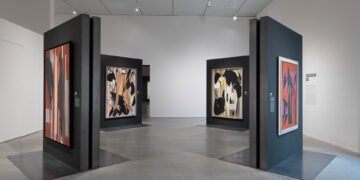








A long-overdue retrospective dedicated to French painter Eva Gonzalès is now on view at the Petit Palais in Paris, offering the most comprehensive reassessment of her work in decades. The exhibition, titled “Eva Gonzalès (1847–1883): A Free-Spirited Artist’s Journey,” brings together more than 70 works and runs until January. For years, Gonzalès has been remembered primarily as Édouard Manet’s only formal pupil. This show makes a compelling case that she deserves recognition entirely on her own terms.
A Delayed Exhibition That Gained From Waiting
The retrospective was originally planned for 2020 as part of the Normandie Impressionniste festival, organized by the Château-Musée de Dieppe. The pandemic forced its postponement. The Petit Palais eventually took up the project, and cocurator Stéphanie Cantarutti believes the delay ultimately worked in the exhibition’s favor.
Stay connected to every major update — subscribe and follow us on the PhoenixQ website and across our social media platforms.
Several key works became available that would not have been included earlier. Manet’s Portrait of Eva Gonzalès (1870) from the National Gallery and Gonzalès’s Une loge aux Italiens (ca. 1874) from the Musée d’Orsay are both on display. The curatorial team also tracked down Le Moineau (ca. 1865–70), a delicate pastel portrait of a young girl with a sparrow, after its whereabouts had been unknown for decades. “In the end, time worked in our favor,” Cantarutti told ARTnews.
The exhibition also brought new scholarly discoveries. Researchers corrected Gonzalès’s birth year from 1849 to 1847 after a closer examination of her birth certificate. “What tipped us off was the way the date was written on the birth certificate,” Cantarutti explained. In addition, several paintings received new titles and revised dates. La Fenêtre (1869–70), for example, was renamed Le Catéchisme, while La Psyché was redated from 1869–70 to 1868–69.
Not an Impressionist: Challenging a Long-Standing Label
Since critic Camille Laurent Mauclair linked Gonzalès to Impressionism in 1904, her work has frequently been viewed through that lens. A 1993 exhibition at the Musée Marmottan Monet in Paris reinforced this association by presenting her alongside Mary Cassatt and Berthe Morisot. The Petit Palais show takes a firmly different position.
Cantarutti is direct on this point. “I am personally opposed to this affiliation,” she said. “I fought to ensure that the term ‘Impressionism’ would not appear in any communication materials. The exhibition in no way presents her as an Impressionist.” Conservator Marianne Mathieu supports this view, noting that Gonzalès never participated in any of the Impressionist exhibitions. Instead, like Manet, she focused on establishing herself at the Salon.
Morisot, by contrast, turned away from the Salon and joined the cooperative group that became known as the Impressionists, even against Manet’s advice. Mathieu noted that Morisot grew further from Manet’s influence after he substantially retouched one of her paintings in 1870. Gonzalès, however, embraced his guidance. “Morisot sought to emancipate herself from the very idea of artistic affiliation, even if that meant becoming part of an emerging avant-garde,” Mathieu said. “Gonzalès, by contrast, boldly claimed her allegiance to Manet, who was a controversial figure at the time.”
Despite their different paths, the two artists shared much in common. Both came from cultivated bourgeois families, used their sisters as models, kept their maiden names after marriage, and maintained close friendships with Manet.
Career, Connections, and a Complex Allegiance
Gonzalès began her formal training under Charles Chaplin, who did not believe a single woman should run her own studio. She left his studio in 1868. The following year, after meeting Manet at the salon of painter Alfred Stevens, she became his pupil.
Her early career involved a notable ambiguity about her artistic roots. At the 1870 Salon, she registered as Chaplin’s pupil rather than Manet’s. Yet her selected painting, Enfant de troupe (1869–70), clearly drew on Manet’s Le Fifre (1866). The work depicted a young boy in military uniform holding a bugle against a dark, neutral background. The French State acquired it, making it the only work of hers to enter a public collection during her lifetime. Her father, prominent writer Emmanuel Gonzalès, likely helped secure that acquisition through his connections.
Meanwhile, Manet exhibited his large-scale Portrait d’Eva Gonzalès at the same 1870 Salon. A family friend, novelist and journalist Armand Lapointe, publicly criticized the portrait and reproached Gonzalès for sitting for it. Then, in 1874, the first year she registered at the Salon as Manet’s pupil, the jury rejected her submission, Une loge aux Italiens.
Critic Jean-Marie Tasset has written vividly about the energy beneath her seemingly quiet subjects. “Behind her intimate scenes and landscapes lies a fierce energy, a blazing fire that reveals itself as soon as Eva sets her brush to canvas,” he wrote. “All the dark magic of the blue note.” Under Manet’s influence, her style grew increasingly spontaneous. However, she died at 36, leaving the full extent of her abilities unknown.
Legacy, Absence, and a Path Toward Recognition
Visitors to the Petit Palais follow a broadly chronological path through Gonzalès’s career. Thematic sections explore her relationship with her husband, engraver Henri Guérard, and their time together in Normandy. Guérard collaborated with Manet, Paul Gachet, Camille Pissarro, and Paul Cézanne, among others. The couple married in 1879 and remained together until Gonzalès’s death in 1883.
After her death, Guérard remarried her sister Jeanne. Cantarutti noted that Gonzalès may have anticipated this in Une loge aux Italiens, where the man and woman seated in the theater box are, in fact, Guérard and Jeanne. “There is material for a great movie scenario, for sure,” Cantarutti said. “We, however, chose to stick to the facts.”
The exhibition’s final section examines her late works and their growing boldness. Miss et Bébé (1877–78) shows a nanny watching over a young girl. “We can see the evolution from the porcelain-like finish of compositions in the style of Chaplin toward a more energetic touch,” Cantarutti said. Works held in the United States reveal increasingly bold colors and greater freedom in her brushwork. Pommes d’Api, owned by the Minneapolis Institute of Art and too fragile to travel to Paris, uses vivid reds and yellows to convey the sharpness of the fruit.
Despite her success during her lifetime, Gonzalès largely disappeared from mainstream art history after her death. Her son, Jean-Raimond Guérard, worked to preserve her legacy, but he did so largely alone. In contrast, Berthe Morisot’s daughter Julie Manet had the support of figures such as Stéphane Mallarmé, Claude Monet, and Edgar Degas, as well as her husband Ernest Rouart, all of whom helped elevate Morisot’s reputation.
Furthermore, Gonzalès remains underrepresented in French national museums. The Musée d’Orsay holds La Matinée rose, a pastel acquired by the French state in 1885. More than 135 years passed before the Petit Palais purchased the oil painting La Servante or À la barrière (ca. 1865–70) in 2021. Most of her works remain in private collections, scattered across France and abroad.
Cantarutti hopes the Eva Gonzalès retrospective marks the beginning of wider recognition. “What struck me was that she was interesting in her own right,” she said. “With more than a hundred works, including roughly two-thirds by her, we have never been so close to recreating the scale of the 1885 retrospective. It is a chance for the public to discover what a remarkable artist she was — and I think people will be pleasantly surprised.”