English



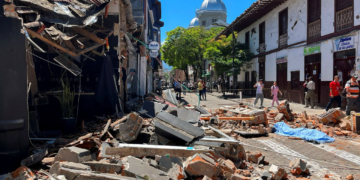
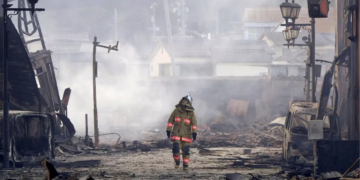







































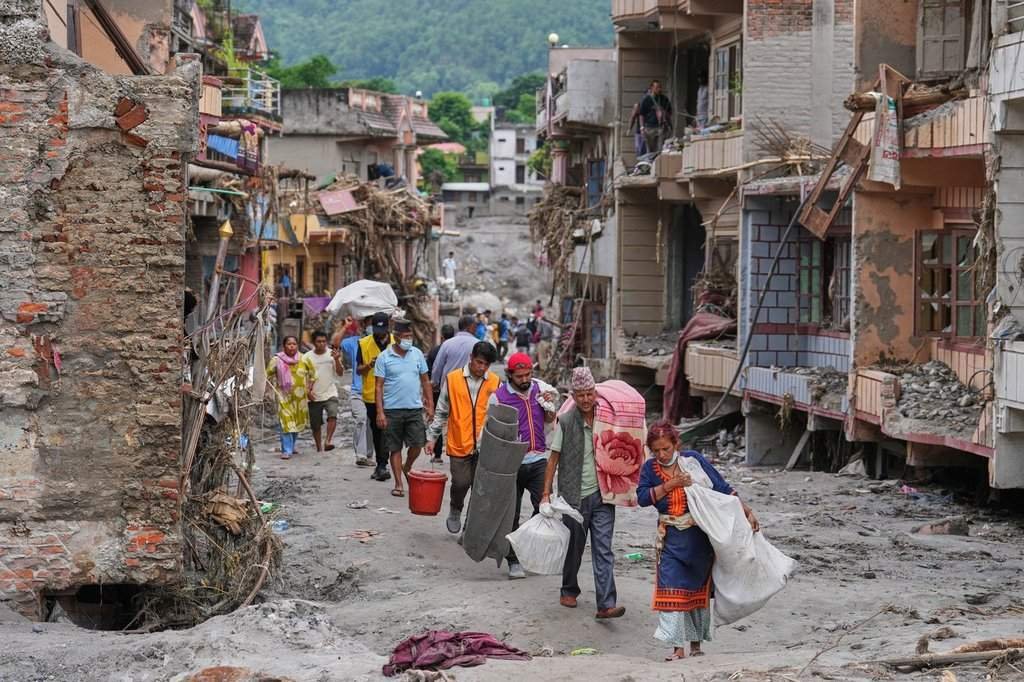
Rescue teams in Nepal entered their fourth consecutive day of operations on Saturday, still pulling survivors from communities devastated by catastrophic flash floods along the Nepal-China border. The combined death toll across Nepal and Tibet climbed to 676, with nearly 3,000 people reported missing. Nepal’s disaster agency confirmed 669 deaths and 2,426 missing on the Nepali side alone, while Chinese authorities reported seven deaths and more than 550 unaccounted for. More than 3,700 people have been rescued in Nepal so far.
Helicopters Deliver Aid and Evacuate Survivors
In Nuwakot, one of the hardest-hit Nepali districts, military helicopters ferried in emergency supplies including clothes, instant noodles, crackers and rice. Other helicopters returned from flood-affected areas carrying survivors to safety.
Stay connected to every major update — subscribe and follow us on the PhoenixQ website and across our social media platforms.
Soldiers carefully helped an elderly man off one aircraft, while another carried an older woman on his back to a nearby medical tent. Most survivors arrived with nothing beyond the clothes they wore. Soldiers also carried several babies evacuated from the nearby community of Trishuli.
As evacuees continued to leave Trishuli, some residents made their way back to assess the destruction. One boy walked out carrying muddy sandals salvaged from his home. A woman named Shoba Shretha returned specifically to find Sweetie, the dog she had been forced to leave behind when the floods struck. She sat on the ground feeding the dog water from a bottle. Shortly after, relief coordinators cleared villagers, reporters and volunteers from the village entrance as excavation equipment moved in to dig through the debris.
Families Gather at Kathmandu Hospital in Search of News
In the capital Kathmandu, relatives and friends gathered outside the main government hospital from early morning, desperately seeking information about missing loved ones. Many moved back and forth between the help desk and the hospital notice board, clutching photographs and scanning lists of injured patients.
Dil Maya Lama stood weeping outside the help desk, searching for her 26-year-old brother, a driver for a hydropower company in Rasuwa district. She had traveled approximately 130 kilometers from Ramechhap to be there. “I came here with the hope that I might find him,” she said. “There is no information about him.”
Nelza Moktan was also at the hospital, looking for her cousin who worked as a driver in the same district. “I feel hopeless. It has already been four days,” she said. Families covered hospital walls with posters displaying photographs, names and contact numbers in a desperate appeal for any information.
Desperate Search for the Missing Continues at Relief Centers
In Nuwakot, military personnel posted sheets of paper listing dozens of missing people on a wall at a local relief center. Families crowded around the lists, some taking photographs, others wiping away tears as they searched through the names.
Rajesh Kumar Ram searched the lists for his son’s name, crying as he spoke. “I’m hopeful, by chance, that my son is somewhere,” he said. “Maybe they find him stuck somewhere. I’m waiting for that moment only.”
Priti Kharel stood outside army barracks holding a poster with a photograph of her brother, Milan Kharel, an engineering geologist employed at Doosan Enerbility. His family has not heard from him since the floods hit. Kharel believes her brother may be among those trapped inside a tunnel at a hydropower construction site, where rescuers have already pulled some people to safety. “We want the government to rescue him as soon as possible,” she said.
Terrain and Tunnel Rescues Pose Major Challenges
Search and rescue operations continued at multiple sites in Nepal and China’s Tibet region, including the Upper Trishuli-1 Hydropower Project in Rasuwa district and the heavily damaged Gyirong border crossing on the Chinese side. Nepali Army spokesperson Brigadier General Raja Ram Basnet confirmed that rescue efforts at the hydropower site would press on, with authorities believing more than 100 people remain trapped in a tunnel filled with thick mud.
Rescue teams had also been monitoring a new glacial lake that formed high in the Himalayas following the initial floods on Wednesday. Monitoring data from China’s Ministry of Water Resources showed by late Friday that the lake had significantly reduced in size, with the water level dropping 10 meters from its peak on Thursday morning, according to Chinese state broadcaster CCTV.
At a press briefing on Saturday, Nepalese Foreign Minister Shisir Khanal described the terrain as a major obstacle. “This is currently our national priority,” he told reporters, adding that steep mountains and narrow gorges make operations extremely difficult. Khanal said Nepal has requested specialized support from neighboring countries, including tunnel rescue teams, survivor-detection technology, rapid forensic and DNA analysis, and morgue refrigerators. An 11-member tunnel rescue reconnaissance team from India has already deployed, and a similar team from China is expected to arrive shortly.
Nepal has received more than 57 metric tons of relief supplies from India, with additional aid coming from China, Japan, Australia and other nations. Khanal said the government will continue to seek further international support as needs assessments progress. Hundreds of those still missing are foreign nationals who were in the region to work, trek or undertake a pilgrimage to a sacred peak in the Himalayas.