English











































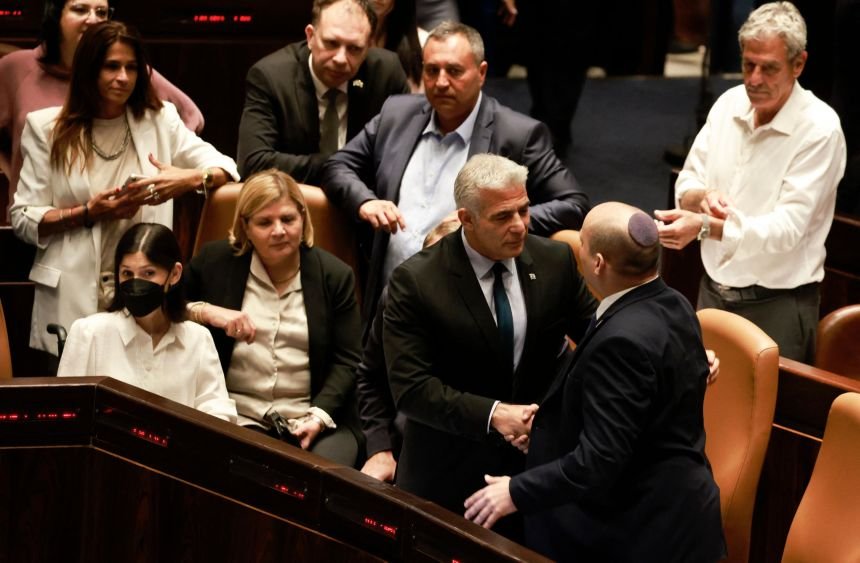
Israeli Prime Minister-designate Gadi Eisenkot and outgoing Prime Minister Benjamin Netanyahu clashed publicly on Saturday over a proposed national unity government. Netanyahu urged Eisenkot to abandon his minority government plan and join forces. However, Eisenkot rejected the appeal as a political maneuver.
Netanyahu Calls for Unity
Netanyahu said Thursday’s meeting with Eisenkot reinforced his belief that unity was essential for Israel’s security. He argued that a joint government could permanently eliminate the Iranian threat. Additionally, he said coalition partners must recognize Israel as a state for the Jewish people.
Stay connected to every major update — subscribe and follow us on the PhoenixQ website and across our social media platforms.
Meanwhile, Netanyahu described Eisenkot’s proposed national emergency government as weak and dangerous. Under the plan, Eisenkot’s 48 lawmakers would support the government, while Netanyahu’s 46 supporters would oppose it. The remaining 26 lawmakers, representing Arab and ultra-Orthodox parties, could abstain. Consequently, the government could win approval without an absolute majority in the 120-seat Knesset.
Netanyahu also called for direct talks without preconditions. He urged both sides to set aside disagreements and reach an agreement on Israel’s security and future.
Eisenkot Rejects the Appeal
In response, Eisenkot accused Netanyahu of political tricks and said he knew he had lost the election. The former army chief also questioned the timing of Netanyahu’s appeal, noting that negotiations were already underway. Furthermore, he accused Netanyahu of promoting division while publicly calling for unity.
Eisenkot received the mandate to form a government on Sunday. He has 28 days to complete the task, with a possible 14-day extension. However, coalition negotiations are likely to prove difficult.
During the campaign, Netanyahu sought to discredit Arab-Israeli parties, which secured a record number of seats. His unity proposal would instead bring together major Jewish parties from the center and right. Arab parties would remain outside that coalition.
Conditions for Joining the Government
Meanwhile, Eisenkot has expressed openness to including members of Netanyahu’s Likud party. He would also consider Finance Minister Bezalel Smotrich’s Religious Zionism party, provided its commitment to unity is sincere. However, a coalition involving Netanyahu himself remains unlikely.
On Friday, Eisenkot condemned Netanyahu’s campaign against Arab parties as racist. The following day, he repeated his demand for a break with extremists. Specifically, he identified supporters of far-right minister Itamar Ben Gvir.
Dispute Over the Knesset Speaker
Another disagreement concerns the upcoming election for Knesset speaker. Netanyahu ally Amir Ohana currently holds the position. However, the opposition has nominated Matan Kahana, a former army officer who ranked fifth on Eisenkot’s electoral list.
According to Eisenkot, Likud and its allies must support Kahana if they sincerely want a partnership. He also urged them to allow the democratic process to proceed normally.