English









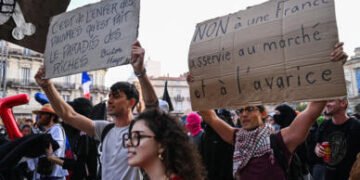





























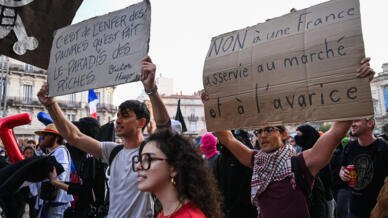
France braced for major nationwide strikes on Thursday as hundreds of thousands of demonstrators took to the streets and public sector workers walked off the job. The action marks a fresh test for President Emmanuel Macron, whose government has faced weeks of social unrest just five months before a presidential election.
Trade unions, including the left-wing CGT, called the strikes alongside student groups. Together, they demanded government action to support households struggling with rising living costs, deteriorating public services and worsening conditions in schools.
Stay connected to every major update — subscribe and follow us on the PhoenixQ website and across our social media platforms.
Massive Turnout Expected Across France
The inter-union coalition forecast between 500,000 and 700,000 protesters outside Paris and between 40,000 and 80,000 in the capital. Meanwhile, the French education ministry confirmed that around 17.5% of public primary school teachers planned to strike on Thursday.
Students also joined the mobilisation. Irma de Banville, a 19-year-old student in Paris, told Reuters that fear was holding some people back. “We’re trying to keep mobilising as much as possible. Some people aren’t doing so because they’re afraid. A lot of people are afraid of police violence,” she said. The French government defended police tactics but stated that any abuses would be investigated.
Security Forces on High Alert After October Violence
Authorities deployed around 70,000 police officers nationwide ahead of the protests. The decision followed riots and looting on October 17 that caught security forces off guard, leaving damaged shops and public buildings across the country.
Government spokeswoman Maud Bregeon addressed the situation after Wednesday’s cabinet meeting. “We are extremely vigilant because it is out of the question to relive October 17,” she said. On Wednesday, Macron also convened a defence and security meeting, highlighting how seriously his administration views the growing unrest.
Legal Disputes and Concerns Over Civil Liberties
A Paris court approved an alternative protest route on Wednesday evening. Police had proposed the route between Place de la République and Place de la Nation after strike organisers contested the original plan.
Beyond economic grievances, Thursday’s protests also focused on civil liberties. Several organisations, including the Magistrates’ Union, the French Lawyers’ Union and the Human Rights League, denounced what they called an “authoritarian shift” by the government. They also filed a complaint at France’s top court over alleged restrictions on the freedom to demonstrate. The concerns followed clashes between protesters and law enforcement, particularly during the October 17 demonstrations.
A Broader Challenge for Macron
What began as student anger over school conditions and limited opportunities for young people has since grown into a wider challenge to Macron’s leadership. The movement now encompasses concerns about living costs, public services and democratic freedoms.
With a presidential election approaching in five months, the nationwide strikes place additional pressure on Macron’s government to respond. So far, the unrest represents some of the most serious civil disorder France has experienced in years.