English






































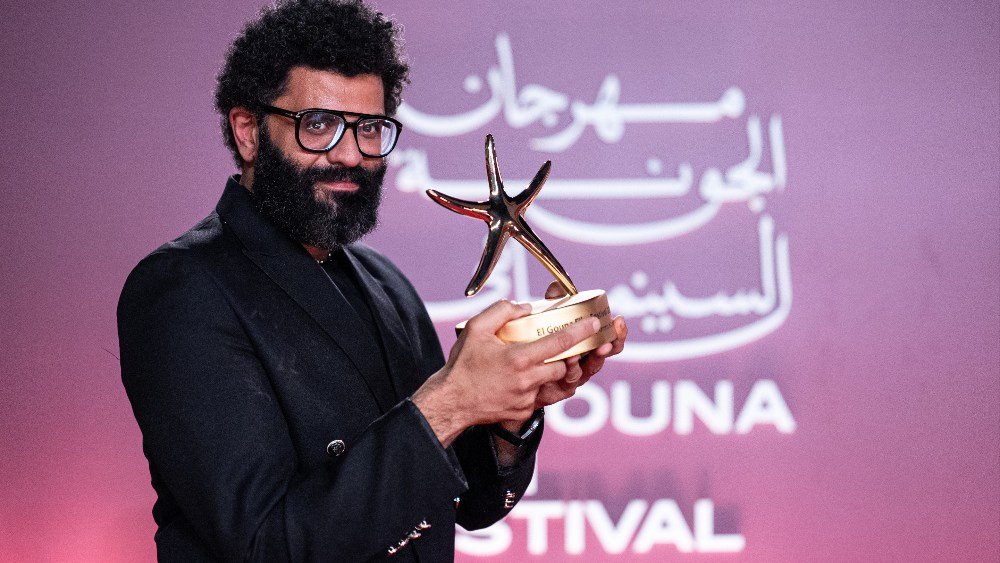
Egypt’s El Gouna Film Festival concluded its ninth edition on Friday after nine days of screenings, industry events and a closing ceremony that distributed its top awards across the Middle East and beyond. The festival once again demonstrated the growing strength of Arab cinema on an international stage.
Awards Spread Across the Region
Mohammed Hammad’s psychological drama Safe Exit took home the Golden Star for best narrative feature. The film follows a young Coptic security guard in Cairo as he confronts trauma linked to religious violence. Ahmed Hassouna’s Citizen Osama, which portrays a Gaza photojournalist balancing family life with work during wartime, won both the Golden Star for documentary and best Arab documentary.
Stay connected to every major update — subscribe and follow us on the PhoenixQ website and across our social media platforms.
Anders Davidsen’s Stolen Memories claimed the Golden Star for best short film. The story centers on an 18-year-old who discovers childhood photographs and begins questioning his past. Rakan Mayasi’s Bekaa Valley-set Yesterday the Eye Didn’t Sleep earned the best Arab narrative prize. Meanwhile, Marie Rose Ousta’s One Day Born, about an 11-year-old boy living under the constant threat of warplanes in Lebanon, won best Arab short.
Jordan’s Rakeen Saad won best actress for her role in Zaid Abu Hamdan’s Boomah. Jovan Ginić took best actor for Miroslav Terzić’s 3 Weeks After.
CineGouna Grows Into a Central Industry Hub
Beyond the competition screenings, the festival’s industry platform CineGouna continued to expand its influence. El Gouna co-founder and executive director Amr Mansi told Variety ahead of the festival that he wants “the industry to be our hero.” The ninth edition delivered on that goal.
More than 320 projects applied to CineGouna Funding this year. Organizers selected 19 projects and distributed more than $350,000 across 40 awards. Participants also held more than 140 one-on-one meetings with companies, institutions and international festivals.
CineGouna now covers four main areas: Funding, Forum, Market and Emerge. Forum offers panels, masterclasses and industry discussions. Market connects filmmakers with companies and institutions. Emerge supports young and emerging talent. This year also introduced Egyptian Voices, a development program for Egyptian filmmakers, alongside an inaugural Series Lab focused on Arab television projects.
Arab Television Faces a Development Gap
The launch of the Series Lab drew attention to a wider challenge facing Arab television. Talent is plentiful, but opportunities to develop and sell new shows remain limited. Veteran Egyptian screenwriter and producer Mariam Naoum, who led the six-week lab, told Variety there are “great, great talents” in the region. However, she noted there are only “three or four platforms,” forcing creators to compete for very few outlets.
Producer and screenwriter Haitham Dabbour similarly observed that fewer platforms make buyers more cautious. Director Mariam Abou Ouf warned that the industry is “approaching a deadlock.” Six projects participated in the inaugural lab, pitching their series and meeting potential partners with the aim of moving closer to production.
Support for Displaced Filmmakers and Creative Freedom at Home
War and displacement continue to shape Arab filmmaking. They affect not only the stories reaching screens but also the careers of the filmmakers behind them. El Gouna responded by launching Safe Harbour MENA, a new initiative developed with the International Film Festival Rotterdam and the International Emerging Film Talent Association. The program brought four displaced filmmakers into a structured course of training, project development and industry networking.
Rather than simply offering filmmakers a platform to share stories about displacement, the initiative focused on giving them the professional connections needed to keep working. The double win for Citizen Osama underlined the stakes involved. Director Ahmed Hassouna, whose film won two awards at El Gouna, remains in Gaza.
Back in Egypt, Safe Exit‘s top prize arrived during a broader conversation about creative freedom in the Egyptian film industry. Producer Mohammad Mashish pointed to a younger generation with “more freedom than before” and audiences increasingly exposed to international cinema. He also argued, however, that the industry needs more time for development and screenwriting.
Producer-distributor Ziad Srouji offered a sharper summary of the challenge: “Specificity travels, generic does not.” Documentary filmmaker Muhammad Mustapha, whose film Big Boys Don’t Cry premiered at El Gouna, also called for models that reduce financial risk while giving filmmakers greater room for artistic ambition. Egyptian filmmakers are increasingly looking outward while seeking the space to make work rooted firmly at home.
Finally, one of the festival’s most locally significant initiatives will unfold after its guests have departed. Cinema on Wheels will take three short films from this year’s lineup on a free screening tour through Hurghada, Minya, Qena, Luxor and Aswan before concluding in Cairo. Each stop will include discussions with local audiences. Artistic director Andrew Mohsen explained that the festival is “always exploring ways to increase the reach of El Gouna Film Festival beyond just its duration and the town of El Gouna.” As Mansi put it: “Cinema on Wheels is our way of connecting El Gouna to the rest of the country.”