English



















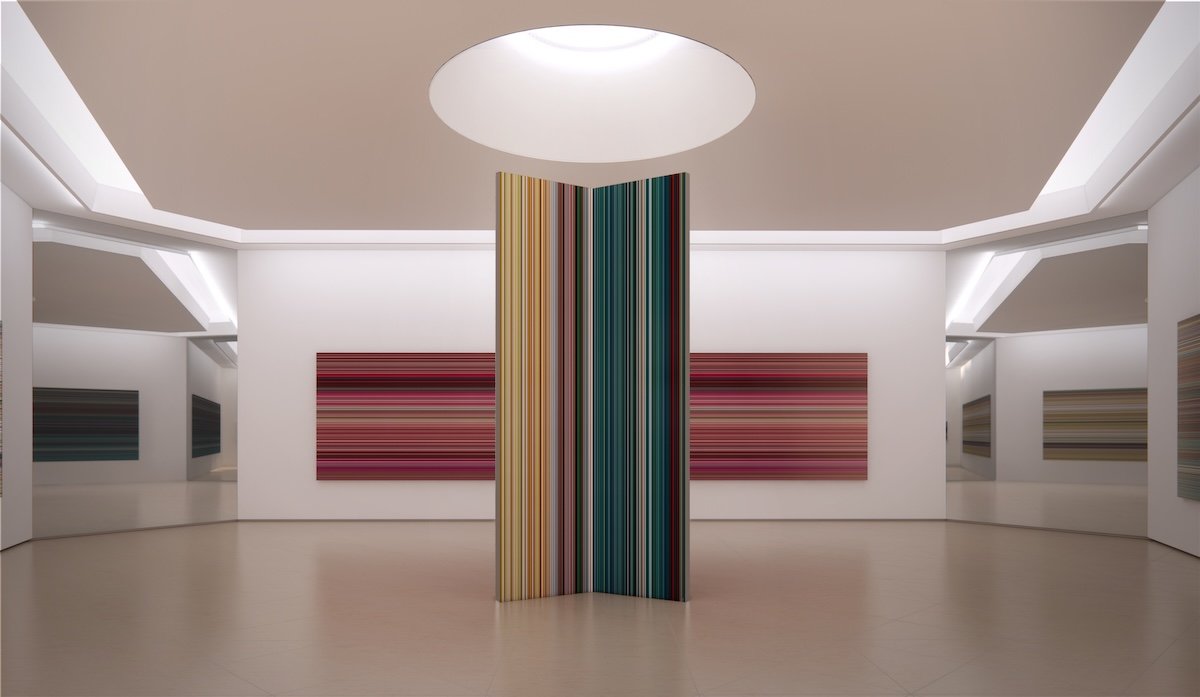
Qatar Museums has announced more than 120 artists for the inaugural edition of Rubaiya Qatar, a new quadrennial art event opening across multiple venues in Doha on November 21. Presented in collaboration with ALRIWAQ Arts + Architecture, the event marks a significant addition to the international contemporary art calendar. Rather than functioning as a single exhibition, Rubaiya Qatar spans three separate shows at three institutions, alongside a public art programme.
A New Model for International Art Events
Sheikha Alanood Al Thani, the quadrennial’s director, described the launch as a defining moment for contemporary art in the region. “Foregrounding non-Western perspectives, fostering ambitious new commissions and embedding deep ecological and historical research into its curatorial core, Rubaiya Qatar offers a fresh paradigm for international exhibitions of contemporary art,” she said.
Stay connected to every major update — subscribe and follow us on the PhoenixQ website and across our social media platforms.
The event runs through April 30 and takes place at ALRIWAQ Arts + Architecture, the Museum of Islamic Art, Katara QM Gallery, and Mathaf: Arab Museum of Modern Art. Each venue hosts a distinct exhibition with its own curatorial team and thematic focus.
Lead Exhibition: Unruly Waters
The centrepiece of Rubaiya Qatar is “Unruly Waters,” named after a book by historian Sunil Amrith. Four curators lead the project: Tom Eccles, executive director of the Center for Curatorial Studies and the Hessel Museum of Art at Bard College; Ruba Katrib, chief curator and director of curatorial affairs at MoMA PS1; Shabbir Hussain Mustafa, chief curator at the Singapore Art Museum; and Mark Rappolt, editor-in-chief of ArtReview.
The exhibition runs primarily at ALRIWAQ Arts + Architecture, with additional works on view at the Museum of Islamic Art and MIA Park. Around 54 artists and collectives will participate, with 30 presenting new commissions. Participating artists include Lawrence Abu Hamdan, Farah Al Qasimi, Meriem Bennani, Cao Fei, Nicholas Galanin, Shilpa Gupta, Saodat Ismailova, Ayoung Kim, Oscar Murillo, New Red Order, Selma Selman, and Wael Shawky.
The four curators described the exhibition as planetary in scope. “The artists it presents trace trade winds, monsoon rhythms, ocean currents, and digital communication networks—from ancient sea routes to the World Wide Web—to redefine ‘globalism’ through ecology and human movement,” they said. They added that the show pays particular attention to Qatar’s place in past, present, and future global connections.
Companion Exhibitions Across Doha
A second exhibition, “Our Common Currents,” opens on November 22 at Katara QM Gallery. Lina Patmali, Rubaiya Qatar’s acting head of curatorial affairs, curates the show. It responds directly to themes in “Unruly Waters” and features 12 artists, four of whom present new commissions.
“In Our Common Currents, the artists featured explore how interconnected we are with the natural world,” Patmali said. “With a starting point being Qatar, the artworks presented have created connections with different geographical contexts.”
Meanwhile, Mathaf: Arab Museum of Modern Art presents “Seething Sea,” also opening November 22. Qatar Museums curator and Mathaf cofounder Wadha Al-Aqeedi leads the project, with assistant curator Loulwah Kutbi. The exhibition takes its name from a line in the Qur’an and draws on Mathaf’s collections. It features around 53 artists and collectives and more than 80 works. All participating artists have ties to the Middle East, including Hassan Sharif, Dia Azzawi, Sophia Al-Maria, Charles Hossein-Zenderoudi, and Monira Al Qadiri.
Al-Aqeedi connected the show to the Gulf’s deep relationship with the sea. “For millennia, the people of the Gulf lived from the sea and understood it through faith and folklore,” she said. “What visitors will find is a reminder of all the sea has given, and a warning of impending doom.”
Public Art and Broader Vision
In addition to the three exhibitions, Rubaiya Qatar includes at least seven public art installations across the city. These feature Rirkrit Tiravanija’s untitled 2025 (no bread no ashes), which debuted at MIA Park last year. Also included is a work by Ibrahim Mahama created for the forthcoming Art Mill Museum and a mural by Minerva Cuevas at the National Museum of Qatar metro station. Further public works come from Jitish Kallat, Lubna Chowdhary, Shaikha Hala Al Khalifa, and Nazgol Ansarinia.
Sheikha Reem Al Thani, deputy CEO of ALRIWAQ Arts + Architecture, Public Art, and Rubaiya Qatar, outlined the broader ambition behind the event. “Rubaiya Qatar creates opportunities for lasting collaboration and artistic innovation while reinforcing Qatar’s role as a place where ideas, perspectives and cultural practices converge,” she said. She described the quadrennial as an investment in cultural production, international exchange, and the relationships that will shape future generations of artists, thinkers, and audiences.
All three exhibitions and the public art programme run through April 30, 2026.