English












































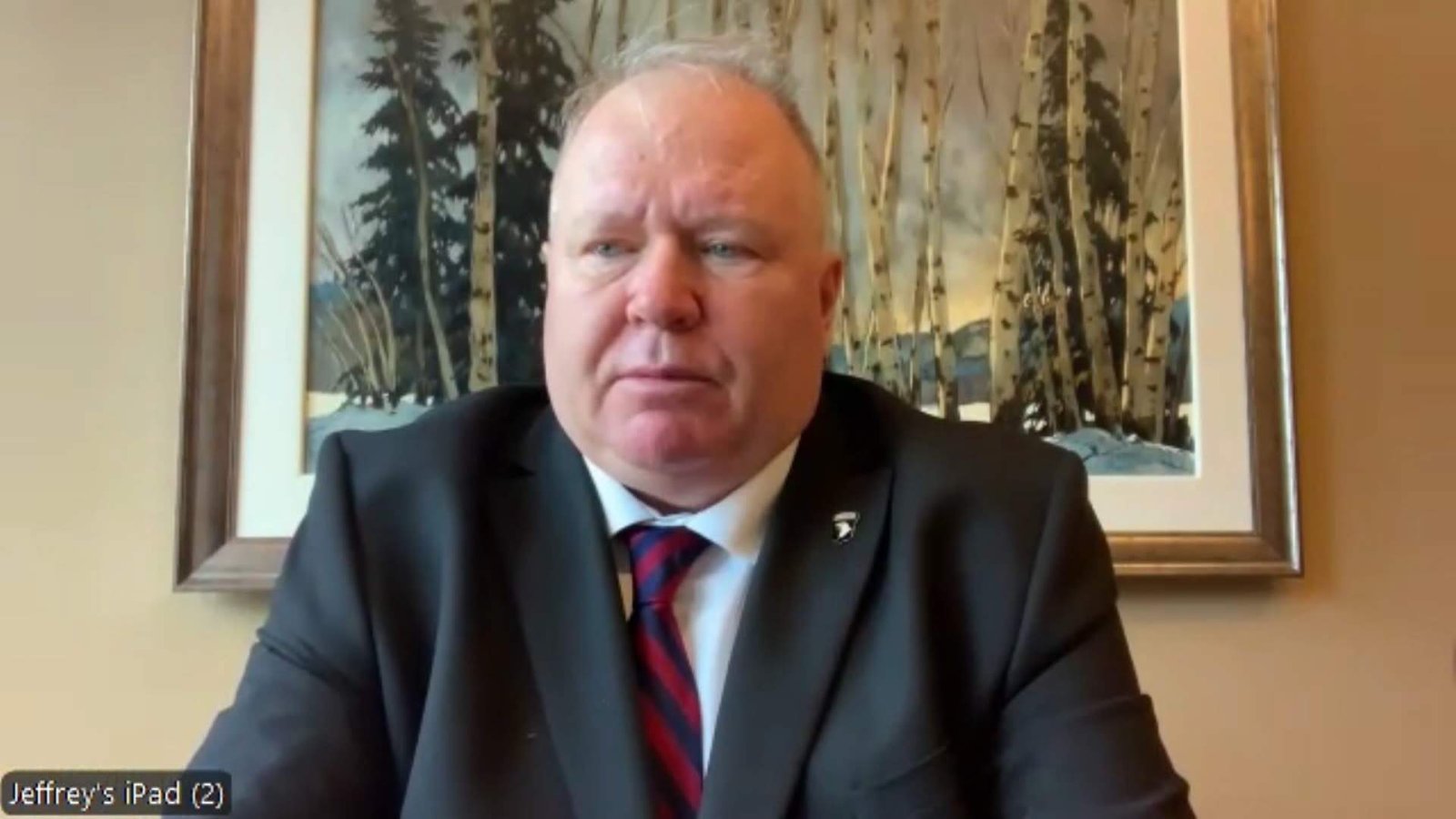
Two American litigation funders have launched a $112.56 million lawsuit against Alberta separatist lawyer Jeffrey Rath and his professional corporation, RathPC. The funders allege Rath made false and misleading representations to keep receiving millions of dollars in financing — even after one of the First Nations he represented had fired him.
The lawsuit was filed Thursday by Delaware-based Diriba Investments and Western Springs Investments. None of the allegations have been proven in court. Rath has not yet filed a statement of defence. When Global News contacted him, he replied: “Please stop bothering me.”
Stay connected to every major update — subscribe and follow us on the PhoenixQ website and across our social media platforms.
Lenders Allege Years of Concealment
According to the lawsuit, the lenders signed a contract with RathPC in December 2018. They agreed to advance up to $25 million in five payments to finance lawsuits filed by the Thunderchild and Moosomin First Nations of Saskatchewan against the federal government.
Rath received an initial $10 million in 2018. Three further payments of $3.75 million each followed between 2021 and 2023. However, the lenders withheld a fifth payment of $3.75 million after Rath allegedly failed to obtain specialized life insurance.
The funders allege that Thunderchild fired Rath in September 2019. Despite this, they claim Rath did not disclose the termination to them until November 2024. In addition, they allege he concealed Law Society of Alberta disciplinary proceedings in which he admitted misconduct related to his work for Thunderchild after his dismissal. The Law Society ordered him to pay $10,000 in costs.
The investors say they would not have continued advancing money had they known Rath had been fired. They accuse him of making representations “knowing them to be false, or recklessly, without regard for their truth or falsity.”
The contract entitled the lenders to annual returns of between 25 and 35 per cent, compounded annually, plus five per cent of net proceeds. The lawsuit does not explain how the lenders calculated the $112.56 million total they now claim is owed.
A Growing Web of Legal Actions
The lawsuit against Rath and RathPC adds to a rapidly expanding set of legal disputes. Sturgeon Lake Cree Nation and Tallcree First Nation are separately suing Rath over millions of dollars allegedly withdrawn without consent from settlement trusts he administered.
The Tallcree case triggered much of the current legal turmoil. In 2017, RathPC collected an $11.5 million contingency fee after Tallcree settled a $57.6 million claim with Ottawa. The firm then became trustee of the settlement funds, which included money held for minors.
A judge later ruled Rath’s fee unreasonable and ordered $8.5 million returned to the trust. Tallcree alleges RathPC then withdrew the same amount from the trust instead of distributing it to beneficiaries. Meanwhile, Sturgeon Lake alleges roughly $12 million in disputed fees and withdrawals from its trust. Tallcree puts its disputed amount at approximately $6 million.
Rath denied misappropriating any funds. He said he obtained legal advice before setting an annual administration fee of three per cent of the trusts’ declining balances. “No funds were misappropriated from the Trust by myself or any lawyer or staff at Rath & Company or RathPC,” he stated in court records.
In July, a court froze Rath and RathPC’s assets under an interim Mareva injunction and appointed an investigative receiver to trace the disputed funds. The American lenders have since applied to have the receiver also act on their behalf.
The receiver later alleged that the $8.5 million refund to Tallcree was partly funded using $11.5 million transferred from the Sturgeon Lake Cree Nation Trust. On September 4, Tallcree escalated its case further, seeking a $15 million judgment and broader powers for the receiver. That application is scheduled for hearing on October 29 and 30.
Judge Rejects Rath’s Bid to Access Frozen Funds
The same day the lenders filed their lawsuit, Justice Lorena Harris rejected Rath’s application to release nearly $800,000 in frozen funds. Rath said he needed the money for legal fees and personal expenses, including almost $280,000 in horse-racing bills.
Harris found Rath had not provided a full and transparent accounting of his assets, despite a court order requiring him to do so. “I have no confidence that the Rath Applicants’ disclosure is complete, transparent or reliable,” she wrote.
Tallcree opposed the release, arguing the $3 million held by Rath’s former lawyers could be traced to the disputed $8.5 million refund. Banking records show both sums passed through the same RathPC account. That account had earlier used the refund to purchase $8 million in bullion and issue a $500,000 draft to Rath. Eight months later, the same account sent $3 million to his former lawyers.
Harris concluded the requested expenses were not “ordinary, necessary living expenses.” She also noted Rath had not listed his horses in his court-ordered disclosure of worldwide assets.
During cross-examination on September 17, Tallcree lawyer Matthew Sammon challenged Rath’s financial disclosures. Sammon alleged that Rath’s disclosure omitted three boats, a numbered company that recently received $2.92 million from RathPC, and at least four Royal Bank of Canada accounts. RathPC’s disclosure identified none of its bank or investment accounts.
The receiver has since identified at least 31 accounts held by Rath and RathPC across nine financial institutions, according to its second report filed September 14. Rath denied deliberately concealing assets, saying the omissions were mistakes.
Horse Racing Expenses Draw Scrutiny
Rath’s horse-racing activities drew significant attention during the court proceedings. Under repeated questioning, he said he did not know exactly how many horses he owned. He eventually estimated “more than 10 and less than 30.” He described horse racing as a hobby rather than a business and said he omitted the horses from his asset disclosure because he considered them “liabilities.”
However, according to Equibase — the official database for Thoroughbred racing in North America — horses listed under Rath’s owner profile have earned nearly $500,000 in Quarter Horse and Thoroughbred races since 2021. Those figures represent gross race earnings before expenses.
Furthermore, banking records presented in court included a $54,192 RathPC cheque to a prominent Alberta horse trainer and a $117,401 payment to Keeneland Thoroughbred Sales. Rath confirmed both were horse-related expenses. An email from his own court materials showed his accounting manager telling staff on September 1: “We are no longer allowed to pay any of Jeff’s personal horse related expenses.”
Rath rejected any suggestion that First Nations trust money funded his horse racing. When asked how horse expenses appeared in his firm’s books, he said: “You would have to ask my accountant.”
In an affidavit supporting his application for frozen funds, Rath said the Mareva injunction and receivership placed the future of his law firm “at serious risk.” He said two lawyers had resigned and the orders jeopardized efforts to recover $90 million in outstanding fees. The American lenders now claim those same fees may fall under their financing agreement.
After other law firms took over the Thunderchild and Moosomin cases and secured large settlements, Rath sued both First Nations for nearly $60 million in contingency fees he claims he is owed. Both nations deny his allegations. The American lenders claim their contract gives them the right to step in and recover any money from those claims — directing proceeds to themselves rather than to Rath.
Despite the mounting litigation, Rath continues to actively advocate for Alberta independence on social media. He has filed four separate appeals challenging the trustee removal, the asset freeze, the receivership and the receiver’s access to his firm’s records.