English








































A new poll shows that California’s proposed one-time wealth tax on billionaires has the support of nearly half of likely voters, but the measure has not yet reached majority backing ahead of November’s ballot. The survey, released Wednesday by NBCUniversal Local/Telemundo Station Group, found that 48% of likely voters would vote “yes” on the proposal, while 38% would vote “no.” Another 14% remain undecided.
The 10-point gap between supporters and opponents falls outside the poll’s margin of error of plus or minus 4 percentage points. A companion survey of Hispanic likely voters produced nearly identical results. Among that group, 50% said they would vote “yes,” 40% said “no,” and 10% were undecided. Both surveys ran from September 21 to 24.
Stay connected to every major update — subscribe and follow us on the PhoenixQ website and across our social media platforms.
What the Billionaire Tax Proposal Would Do
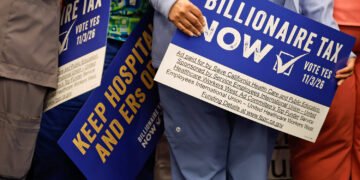
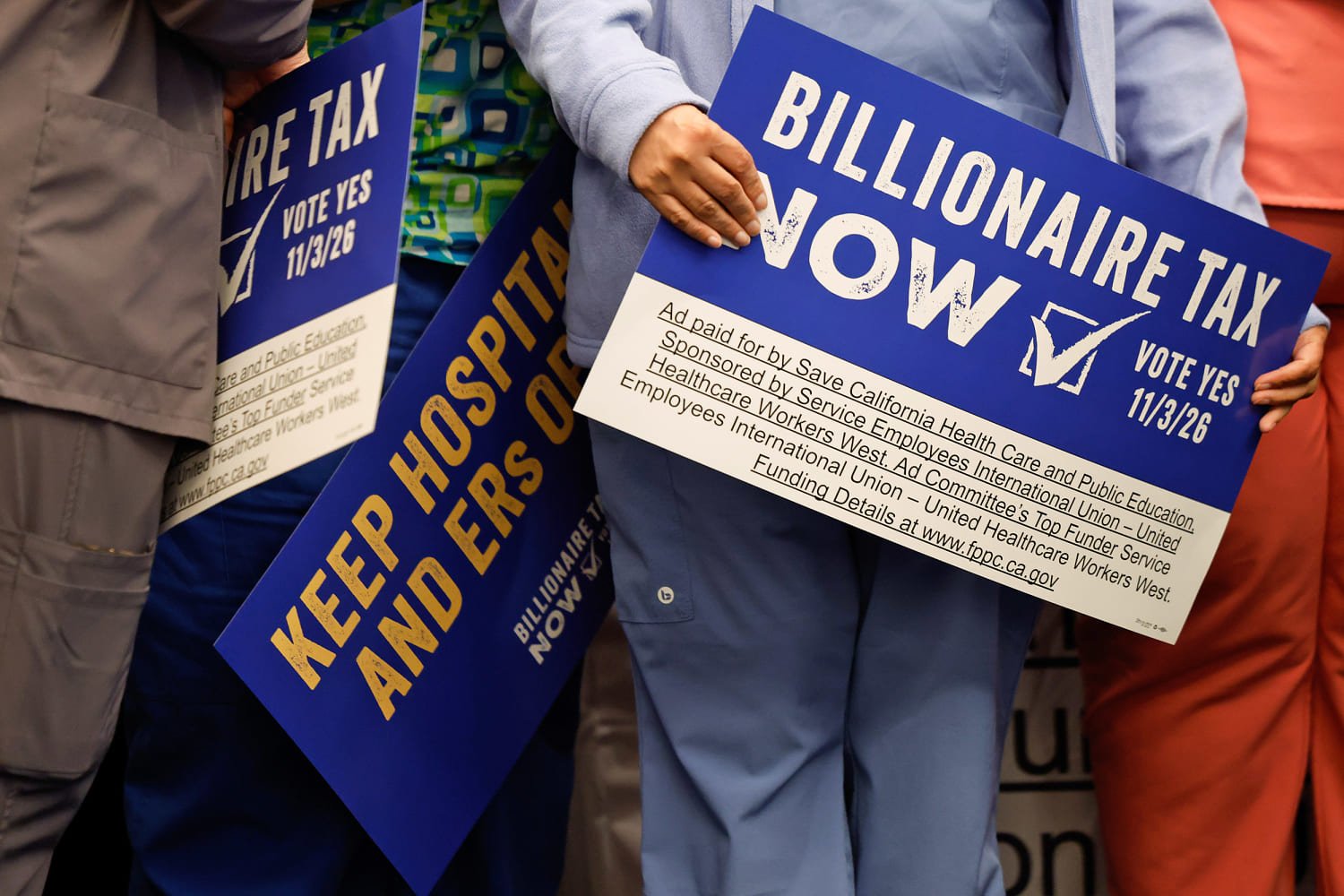
The measure appears on the November ballot as Proposition 40. It would impose a one-time 5% tax on the assets of Californians whose net worth exceeds $1.1 billion. A smaller tax would also apply to individuals worth between $1 billion and $1.1 billion. Both taxes would apply retroactively to anyone living in California as of January 1, 2026.
Under the proposal, the state would direct 90% of the new revenue toward healthcare. The remaining 10% would go to education and food assistance programs. The Service Employees International Union-United Healthcare Workers West, a major California healthcare workers union, has led the campaign behind the measure.
The proposal arrives at a time of growing public frustration with extreme wealth inequality. In an earlier national NBC News poll, raising taxes on billionaires ranked as the most popular candidate attribute out of 15 options tested. Meanwhile, progressive candidates across the country who have championed higher taxes on the wealthy have seen notable electoral success in recent months.
California Democrats Divided Over the Measure
The ballot measure has split California’s Democratic leadership. Prominent supporters include Representative Ro Khanna, a potential 2028 presidential candidate, and billionaire activist Tom Steyer, who previously ran unsuccessfully for governor. Both argue the tax would help reduce income inequality and offset state budget shortfalls caused by Medicaid cuts in President Donald Trump’s legislation.
However, Governor Gavin Newsom and Xavier Becerra, the Democratic candidate running to succeed him, oppose the measure. They warn it could push wealthy investors and technology leaders out of California. Many other unions and Democratic groups have also raised objections. Their concern centers on the revenue distribution, arguing that public education and food assistance would benefit far less than healthcare under the current plan.
In addition, some Democratic critics have joined Republicans in warning that a wealth tax could destabilize California’s revenue base if the ultra-wealthy choose to leave the state. Despite those warnings, the poll found that most California voters are not particularly concerned about that outcome. A total of 59% said they were either “not” or “not too” concerned about wealthy residents departing. Among Hispanic voters, 62% shared that view.
The situation in California contrasts with challenges elsewhere. In New York City, a judge recently paused Mayor Zohran Mamdani’s effort to tax high-value second homes, citing problems with how his administration put the plan into effect.
Newsom’s Approval and the 2028 Presidential Question
The poll also revealed that California voters are nearly evenly split on Newsom’s job performance. Forty-five percent approved, while 46% disapproved, and 9% were unsure. Hispanic voters viewed him more favorably, with 54% approving and 38% disapproving.
Despite his mixed approval numbers, Newsom draws strong support from Democrats as a potential 2028 presidential candidate. Among Democratic respondents, 66% said they would be inclined to vote for him as the party’s presidential nominee. Only 15% said no, and 19% were unsure.
Voter ID Measure and Economic Priorities
Another November ballot measure, Proposition 39, would require in-person voters to show a government-issued ID. Mail-in voters would need to provide the last four digits of a designated ID used during registration. Among likely voters, 49% support the measure, 42% oppose it, and 9% are undecided. Among Hispanic voters, 55% said they would vote “yes,” 38% said “no,” and 7% were undecided.
On broader economic concerns, cost of living and the economy dominated voter priorities. Twenty-five percent of respondents identified “cost of living and inflation” as the most important issue, while 23% cited “economy and jobs.” Immigration and enforcement came third at 15%, followed by healthcare at 11% and foreign policy and the Iran conflict at 10%. No other issue reached above 5%.
When asked about their personal financial situation compared to four years ago, 42% said it was about the same, 36% said it was worse, and 22% said it had improved. Meanwhile, 64% of respondents in California disapproved of President Trump’s job performance, while 31% approved. On the conflict with Iran, 67% said it was having a “great” deal of impact on the U.S. economy, and another 16% said it was having “some” impact.