English
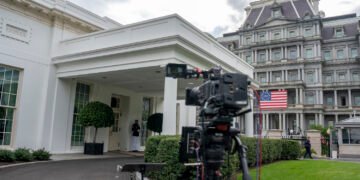

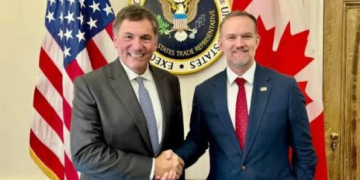





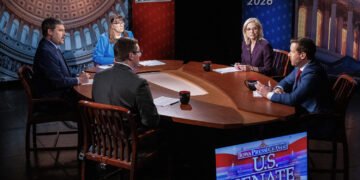
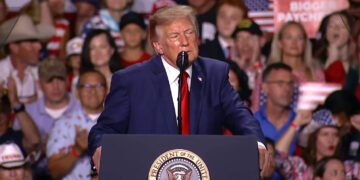


























The Democratic National Committee has filed a federal lawsuit against the Trump administration over a series of taxpayer-funded advertisements that present President Donald Trump in a positive light. The DNC argues the ads violate multiple federal laws governing government spending and propaganda. The lawsuit targets the White House, the Department of Homeland Security, and the Office of Management and Budget as defendants.
Legal Grounds Behind the DNC Lawsuit
The DNC bases its case on several federal statutes. One measure Trump himself signed into law this year prohibits using congressionally appropriated funds for publicity or propaganda purposes inside the United States without prior congressional authorization. The lawsuit also cites the Anti-Deficiency Act, which bars spending government money that Congress has not appropriated, and the Purpose Statute, which limits taxpayer funds to specific uses approved by Congress.
Stay connected to every major update — subscribe and follow us on the PhoenixQ website and across our social media platforms.
The DNC argues the administration’s use of public money for what it calls “campaign-style advertisements” gave Republican candidates an unfair advantage. It claims the spending deprived Democrats of a fair electoral process by supplementing Republican resources with public funds. Democratic candidates, the DNC contends, now face an electoral disadvantage as a result.
Separately, the watchdog organization Common Cause filed its own lawsuit making similar legal arguments. The group also alleges the administration violated federal appropriations statutes. Omar Noureldin, Common Cause’s senior vice president of policy and litigation, told NBC News the group filed suit “because we want to make sure that no president, regardless of party, can hijack public funds to fund political self-promotion without congressional approval.”
Trump Pledges to Stop Using Government Funds
The ads launched last month and quickly drew criticism from lawmakers on both sides of the aisle. Many questioned their legality. On Monday, Trump announced on Truth Social that he would stop using government funds for the campaign and that he and his political action committee, MAGA Inc., would cover future costs instead.
However, Trump did not say whether the government would receive reimbursement for the ads that had already aired. The White House declined to clarify whether ads that continued running after his announcement were paid for before or after he made his pledge. A person familiar with the ad buy told NBC News the government-funded placements would end this week, after which outside groups would take over payments.
Millions in Taxpayer Money Already Spent
NBC News previously reported that a $20 million contract went to a Maryland firm to run the ad campaign. Political ad-tracking firm AdImpact estimated that at least $10 million had already been spent to air the ads through Monday. The funding came from money originally intended for Customs and Border Protection, a division of the Department of Homeland Security. NBC News also reported that CBP leadership had no involvement in the decision to run the ads.
Noureldin warned that not all of the $20 million had been spent. “They will continue to run ads paid for by taxpayer dollars,” he said, “and so we think we need to stop that now, and not another dollar of taxpayer dollars should be spent on these ads.”
DNC Chair Ken Martin also condemned the administration’s use of public funds. “Americans deserve better than to have their hard-earned tax dollars used for Trump’s illegal schemes,” he said in a statement Wednesday.
White House and Regulators Defend the Ads
The White House responded to the lawsuits by directing NBC News to Trump’s Truth Social post. Neither DHS nor the Office of Management and Budget immediately responded to requests for comment. The White House has previously defended the ads by describing them as “clearly not political” and saying they were about “reminding Americans to love their country.” Officials also pointed to other administrations’ use of public safety announcements as precedent.
Federal Communications Commission Chair Brendan Carr, a Trump appointee, said last week the ads did not merit FCC review. He argued they were not “anything at all out of the ordinary.” Meanwhile, DNC attorneys asked a federal judge in Washington to declare the administration’s actions unlawful and to block any further use of congressionally appropriated funds to develop or air the ads.