English









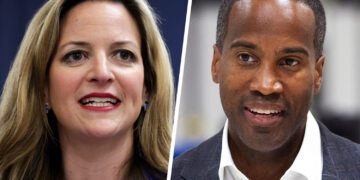






























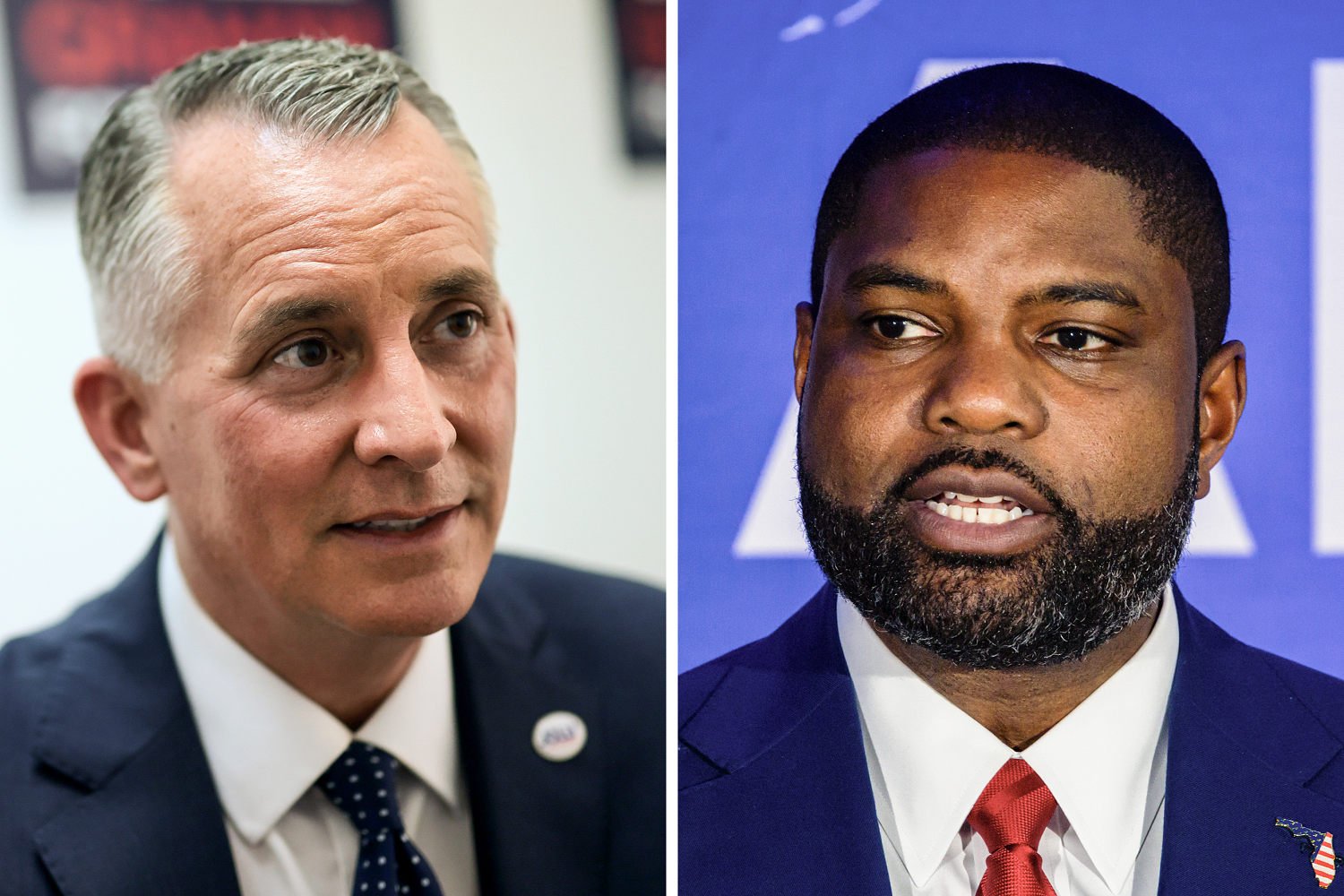
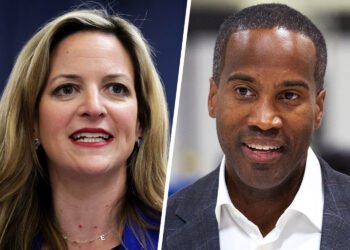
Republicans hold commanding leads in Florida’s two most closely watched 2026 races, according to a new NBC South Florida/Telemundo Station Group poll. Congressman Byron Donalds leads Democrat David Jolly by 7 percentage points in the governor’s race. Meanwhile, Senator Ashley Moody leads Democratic challenger Angie Nixon by 10 points in the Senate contest.
Governor and Senate Race Standings
Donalds, who represents southwest Florida in Congress, stands at 48% compared to Jolly’s 41%. He also holds a significant financial advantage in the race. The 7-point gap falls just inside the poll’s margin of error, but Donalds leads across most of the range of possible outcomes.
Stay connected to every major update — subscribe and follow us on the PhoenixQ website and across our social media platforms.
In the Senate race, Moody sits at 50% while Nixon trails at 40%. Nixon is aligned with the Democratic Socialists of America. She reached the general election after a surprise primary win over Democrat Alexander Vindman in August.
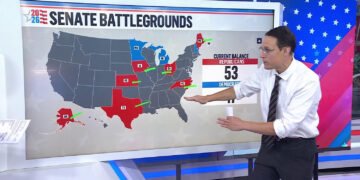
These results arrive as Democrats express broad optimism about the 2026 midterm elections. Public polling has shown the party making inroads in some traditionally Republican states. However, this Florida survey suggests that Democratic momentum has clear limits in certain parts of the country.
Hispanic Voters Show Signs of Shifting
The poll also examined Florida’s influential Hispanic voting bloc, which is heavily concentrated in South Florida. In 2024, Donald Trump carried Hispanic-heavy Miami-Dade County by roughly 11 points. That result marked a dramatic reversal from 2020, when Joe Biden won the county by 7 points.
Now, Florida’s Hispanic voters appear to be moving away from Trump. The community includes large Cuban, Nicaraguan, Honduran and Colombian populations. Even so, Republican candidates still hold leads among this group.
Donalds leads Jolly 48% to 43% among Hispanic voters. Moody leads Nixon 47% to 40% within the same group. Trump’s approval rating, however, tells a different story. Among Florida Hispanic voters, 49% disapprove of his job performance while 45% approve. Among all Florida likely voters, the split is exactly even at 48% approval and 48% disapproval.
Democrats argue that recent special election wins in Florida show the party is already recovering ground with Hispanic voters. They point to Trump’s aggressive immigration enforcement as a key factor driving that shift. Rising prices and the cost of living have also hurt Trump’s standing among Hispanic Floridians.
Suzan DelBene, Democrat of Washington and chair of the Democratic Congressional Campaign Committee, told NBC News last week that Florida legislative races have seen major swings. She also said Trump and Republicans broke a promise on immigration by targeting people beyond the most serious offenders. “To go after the worst of the worst,” she said, was the commitment they failed to keep.
Top Voter Concerns: Costs, Direction and Immigration
Inflation and the cost of living ranked as the top issue for all voters. Thirty percent said it was most likely to influence their vote. Among both the overall sample and Hispanic voters, the direction of the state or country came second at 17%.
For the broader voter pool, immigration enforcement ranked third at 16%. Among Hispanic voters specifically, property taxes came third at 13%, while immigration enforcement ranked fourth at 12%.
Views on immigration cooperation between local, state and federal authorities fell sharply along party lines. Among all voters, 85% of Republicans supported the policy. In contrast, only 18% of Democrats backed it. Among independents, 44% expressed support.
Property Tax Measure Draws Majority Support
Property taxes have also become a central issue in Florida’s midterm landscape. The state Republican Party and term-limited Governor Ron DeSantis support a ballot measure called Amendment 3. The measure would raise property tax exemptions to cover the first $250,000 of a home’s value by 2028. Currently, the exemption cap stands at $50,000.
Overall, 55% of Florida voters support the amendment, while 26% oppose it and 19% remain undecided. Republican support reaches 74%, compared to 36% among Democrats and 43% among independents.
The overall survey questioned 625 registered likely voters. Mason-Dixon Polling and Research Inc. conducted the interviews by telephone from September 28 through October 3. The margin of error is plus or minus 4 percentage points. A separate survey of 400 Hispanic registered voters used the same methods and timeframe, with a margin of error of plus or minus 5 percentage points.