English
















































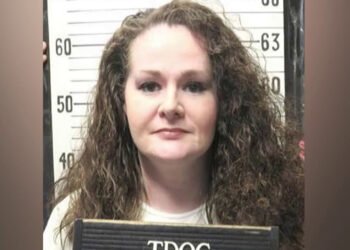
A man who raped a woman in her Ohio home in 1989 avoided a rape charge for more than three decades — not because investigators failed to identify him, but because the law ran out of time. Dana Beatty, now 67, finally learned the identity of her attacker 34 years after the assault. DNA evidence pointed to Frederick Tanzer, a local doctor and, at the time, the husband of her best friend. However, Ohio’s statute of limitations on rape had long expired. Tanzer could not face a rape charge. Instead, authorities found another way to hold him accountable — and Beatty’s case has since become a powerful example in the national debate over statutes of limitations for sexual assault.
A Brutal Attack and Decades of Uncertainty
On August 1, 1989, an intruder broke into Beatty’s home. He pressed a knife to her neck, wrapped her face in tape, tied her to a bed and assaulted her for hours. Beatty reported the crime immediately. Investigators spent years trying to identify the attacker. They even looked at a local police officer as a potential suspect. However, that officer had a solid alibi, and the case went cold.
Stay connected to every major update — subscribe and follow us on the PhoenixQ website and across our social media platforms.
Decades later, advances in DNA technology reopened the investigation. Using genetic genealogy, detectives matched biological evidence recovered from Beatty’s dress to Tanzer. Cincinnati police detective Jeff Smallwood initially believed prosecutors could still pursue a rape charge. Ohio had extended its statute of limitations over the years — from six years in 1989 to 20 years in 1999, then to 25 years in 2015, with an additional five-year extension for DNA evidence.
However, prosecutors discovered a critical problem. Because the original six-year statute of limitations had already expired before the law changed, the DNA extension did not apply. “They say, ‘We made a mistake,'” Smallwood recalled. “‘We are unable to prosecute this case.'” A spokeswoman for the Hamilton County Prosecutor’s Office later said the current attorney leading the office had no involvement in that process and that it was “impossible” to know exactly how the error unfolded.
A Patchwork of Laws Across the Country
Beatty’s situation reflects a broader problem facing sexual assault survivors across the United States. According to data gathered this year by the Rape, Abuse and Incest National Network — known as RAINN — more than 30 states still impose statutes of limitations on the most serious sexual assault charges. NBC News verified and analyzed that data.
The variation between states is striking. Some states set time limits of 10 years or less with few exceptions. Others eliminate time limits entirely under certain circumstances. In Iowa, the statute of limitations for first-degree sexual abuse is 10 years, with a possible three-year extension if DNA evidence comes into play. In Montana, the most serious rape charge carries a five-year limit, with only a one-year DNA extension. Seven other states and Washington, D.C., set limits of 10 years or less and offer no DNA exceptions at all.
In North Dakota, one of the most serious sex crimes carries a seven-year time limit. Authorities can pause that clock only if the accused lives outside the state. Such “tolling” provisions are common and typically apply across all felony crimes.
By contrast, no state imposes a statute of limitations on murder. Most states have also eliminated time limits for sexual crimes involving children, according to RAINN vice president of public policy Stefan Turkheimer.
Experts Call for Reform
Legal experts and victim advocates widely agree that these time limits create serious gaps in justice. Ayesha Bell Hardaway, a former prosecutor and law professor at Case Western Reserve University in Ohio, described the variation across states as alarming. “If you have individuals who are able to perpetrate crimes in the ‘right’ location, where if you get past six years of looking over your shoulder there’s no way you would be held accountable, that is quite alarming,” she said.
Turkheimer argued that survivors should not have to calculate deadlines while dealing with trauma. “They should be able to concentrate on their own healing rather than a race to the courthouse to see whether or not the doors will be locked for them,” he said. “It is an unfair situation that when so many survivors come forward, they find that the time limit for justice has expired.”
Margaret Drew, an associate professor of law at the University of Massachusetts who specializes in gender violence, said it is not unusual for survivors to take years before reporting an assault. She described the “ambivalence” some legislatures show toward rape survivors through these laws. “We now know that sexual assault is a significant, life-changing event for the survivors,” she said. “Why doesn’t everyone just agree to remove the statute of limitations?”
Renee Williams, CEO of the National Center for Victims of Crime, made a similar point about DNA evidence. “I don’t know why most states would not say, if there’s DNA, it blows the statute of limitations out of the water,” she said.
Not everyone agrees that eliminating all deadlines is the right approach. Nathan Rouse, an assistant professor of law at the University of South Carolina, cautioned that statutes of limitations push authorities to act promptly. He noted that investigations and prosecutions have historically been “sluggish, delayed or fully abandoned” for sexual assault victims. “Discarding deadlines altogether is not a way to incentivize timely prosecutions of sexual assault cases,” he said.
A Last-Ditch Plan Leads to a Conviction
After the rape charge fell through, Ohio investigators reached out to federal authorities. They confirmed Tanzer’s DNA matched the evidence from Beatty’s dress using a discarded coffee cup. Authorities also examined whether Tanzer could face charges related to allegations that he had drugged and assaulted his ex-wife. Those charges were also ruled out. At the time of the alleged assaults, Ohio law barred spouses from prosecution for rape. Ohio finally eliminated that spousal rape exemption in 2024.
With few options remaining, investigators devised a plan. They would approach Tanzer not as a suspect, but as a witness. They told him they were investigating a police officer suspected of raping Beatty. They asked whether Tanzer knew anything about the 1989 attack. Federal prosecutor Julie D. Garcia acknowledged the risk. “Everyone has a right to remain silent,” she said. “And he would have been well within his rights to say: ‘I don’t want to talk to you. Close the door.'”
Tanzer chose to talk — and he lied. He told investigators he had no contact with Beatty on August 1, 1989. He said he did not visit her apartment and did not have sex with her. A recording of the interview captured those statements. On December 11, 2024, authorities arrested Tanzer on suspicion of making false statements to a federal agent. He later pleaded guilty and received a 15-year prison sentence. In a separate interview with Dateline, Tanzer admitted to raping Beatty and said he was “working on the why.”
For Beatty, the outcome brought some measure of justice — but not the kind she deserved. “I do not understand why there would even be a statute of limitations,” she told Dateline. “I don’t understand what the value in that is.” She said eliminating such time limits would bring her something she has long been denied. “To me, that would be relief,” she said. “True relief.”
Hardaway, reflecting on the case, called it the “perfect example” of why statutes of limitations should not apply to rape — particularly when the attacker’s identity remains unknown for years. “These types of crimes have an enormous impact on those who are not able to protect themselves,” she said. “To be in a place where there isn’t a recognition of that from the legislatures, I think, is very telling about the priorities of our nation.”
If you or someone you know has been sexually assaulted, call the National Sexual Assault Telephone Hotline at 1-800-656-4673. The hotline is run by RAINN and can connect callers with a local rape crisis center.