English














































A Cornell University student found responsible for attempted sexual exploitation following a 2024 gang rape allegation at a campus fraternity has revealed his account of that night in court documents, saying he saw no signs that the woman was in distress during his brief time in the room where the alleged assault took place.
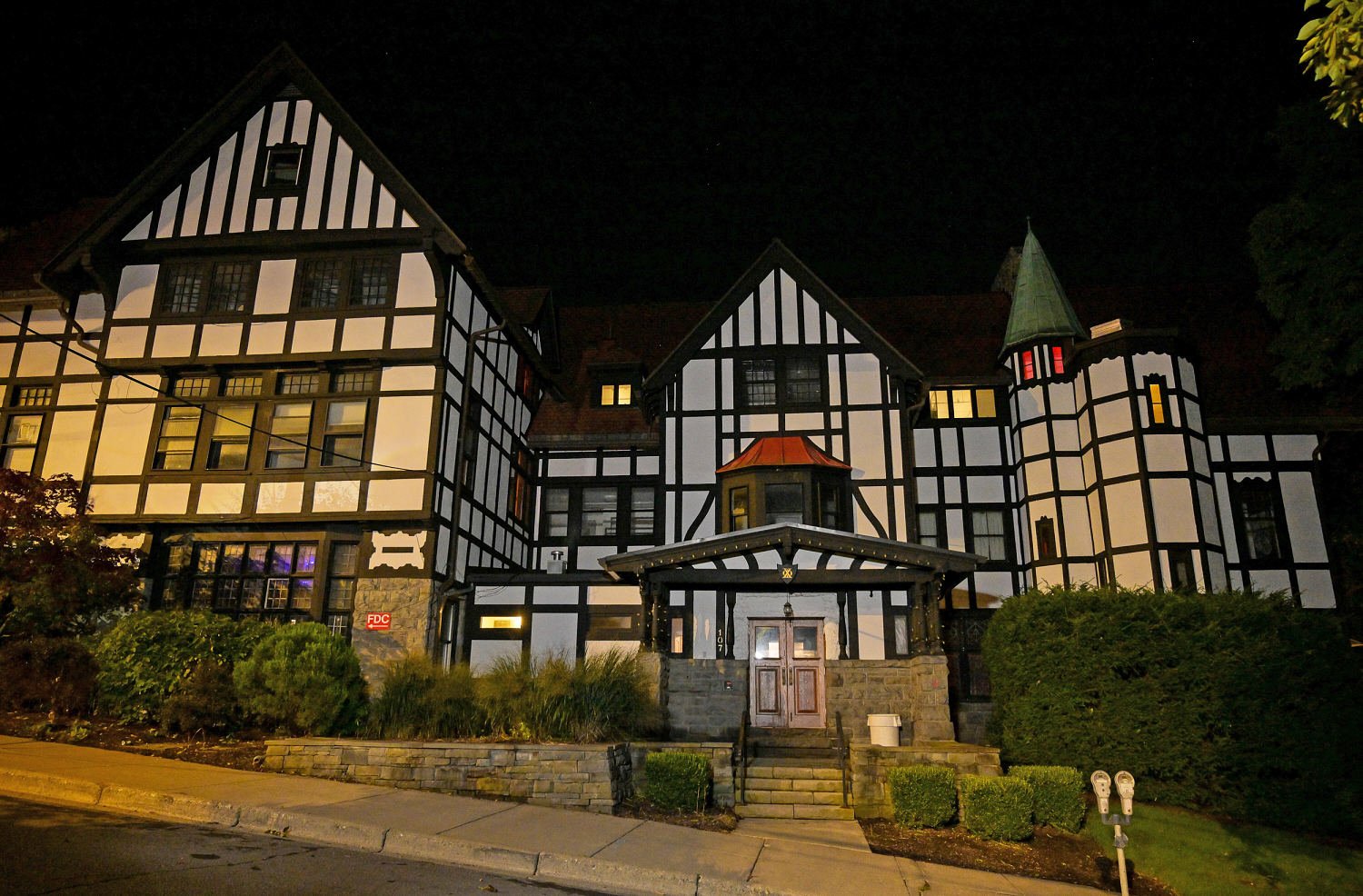
Scott Kretzschmar, now 22, is one of seven Chi Phi fraternity members named in a civil lawsuit filed last month by the woman, identified as Jane Doe. She alleges that what began as a consensual encounter at the fraternity house escalated into hours of nonconsensual sexual activity while she was under the influence of ketamine, marijuana and alcohol.
Stay connected to every major update — subscribe and follow us on the PhoenixQ website and across our social media platforms.
Kretzschmar’s Account of the Night
Kretzschmar filed his version of events in Tompkins County Supreme Court in New York in March. He submitted the documents anonymously as part of a legal challenge to Cornell’s decision to hold him responsible after its Title IX investigation. That challenge ultimately failed.
According to court filings, Kretzschmar told Title IX investigators that he entered the room after seeing a Chi Phi Snapchat group post advertising “free p—-y” upstairs. He said he went in briefly, partly to look for a vape and partly to see what was actually happening. He told investigators he was unsure whether the message “was a joke or what was going on.” He consistently maintained that he never saw Jane Doe naked, never touched her and did not use ketamine that night.
However, Cornell officials noted in their findings that Kretzschmar had spoken to another fraternity member before entering the room and understood that sexual activity was taking place inside. At around 2:30 a.m. on October 20, 2024, he also replied in the Snapchat chat, confirming that a brother’s boast about a girl in the alumni room was “not a bit.” At a May 2025 Title IX hearing, he acknowledged the message was wrong. “I shouldn’t have said it. And it is immature and a stupid text message for sure,” he said, according to his court filings.
The Title IX panel ultimately found that Kretzschmar understood the Snapchat message indicated a sexual situation involving a woman when he chose to enter the room. As a result, the panel held him responsible for attempted sexual exploitation. The panel did not, however, find sufficient evidence that he had used ketamine, after reviewing a follicle drug test he submitted independently.
Jane Doe’s Experience That Night
Jane Doe, who was 20 at the time, gave a six-page statement to Cornell police describing the events of that night. She told police she arrived at the Chi Phi house after drinking heavily and initially entered an upstairs bedroom with two men she considered friends. She said she consumed ketamine for the first time that night and became increasingly impaired, drifting in and out of awareness as fraternity members entered and left the room.
At a Title IX hearing in May, she described her state of mind during the incident. “You look like an operating human being. You don’t look dead or asleep necessarily. So lights are on, but nobody’s home. Your brain is not functioning at its proper level,” she said, as detailed in Kretzschmar’s court filings.
In a striking detail from her police statement, Jane Doe said she deliberately took ketamine a second time because she hoped losing consciousness would provide legal protection. “My thought was that if I passed out and these men had sex with me, then they could be charged with rape,” she told police.
The morning after, one of the defendants drove her home. She later discovered that the night had already become campus gossip. In the days that followed, she exchanged text messages with at least one of the accused fraternity members. Those messages, obtained separately by NBC News, show her shifting between distress over the gossip and attempts to maintain a normal conversation.
“My reputation is destroyed and I’m utterly ashamed,” she texted one fraternity member four days after the alleged assault. In another message, she wrote: “I’m f——g pissed cause this many people shouldn’t know and I feel like I know who some of the rats in the room were.”
Jane Doe’s attorney, Thomas Giuffra, told NBC News that the messages reflect trauma, not consent. “She was numb and in shock at the time,” he said. “She was struggling to accept that somebody that she believed was her friend would violate and dehumanize her. It is common that survivors initially cannot accept what happened to them.”
As the days passed, her tone shifted sharply. In one message to the fraternity member, she wrote: “Y’all aren’t my friends. Y’all are covering your asses.” On November 8, she reported her allegations to campus police. In a final message to the man, she wrote: “I think I’m done talking to you. I know you lied.”
The Snapchat Messages and University Investigation
The university’s Title IX investigation found that a photo of Jane Doe was shared among active Chi Phi members in a Snapchat group on the night of the alleged assault. The court documents do not clarify the nature of the photo. After it was posted, an unknown user replied in the chat: “Are you guys at least naked?”
The Snapchat thread was submitted to campus investigators anonymously. Cornell’s attorneys later described it as “a key exhibit in the resulting student conduct matter” in a July 17 memo filed in Kretzschmar’s case. Giuffra told NBC News that Jane Doe only learned of the messages when another fraternity member, outraged by what his brothers allegedly did, leaked them to her.
The investigation covered seven Chi Phi members and involved more than 30 witnesses and 50 investigative interviews. It concluded with a 12-day internal Title IX proceeding in May 2025. The seven men received varying penalties. Sanctions ranged from writing a reflection paper to expulsion. The Chi Phi chapter was also barred from campus as a result of the allegations.
The case went to the Tompkins County District Attorney’s office, which declined to bring criminal charges. District Attorney Matthew Van Houten defended that decision this week, saying Jane Doe’s statement “described her participation in drug use and sexual conduct as voluntary, conscious, and consensual.” Giuffra revealed on Thursday that Jane Doe completed a rape kit collection weeks after the incident.
Legal Challenges and Sanctions
Kretzschmar did not face expulsion. He graduated from Cornell last year. His sanctions focused on education and reflection. He was required to write a reflection paper on the specific circumstances for which he was found responsible. He also had to draft a detailed proposal for university educational materials covering social media use, sexual harassment and bystander intervention. In addition, he was ordered to have no contact with Jane Doe for the remainder of his time at Cornell and to participate in a study at the Office of Civil Rights.
Despite those outcomes, Kretzschmar and his attorneys challenged the process in state court. They argued, among other things, that Cornell found him responsible for an offense not listed in his original administrative charges. They also argued that one panel member was driving a car and distracted by unrelated tasks during live testimony.
State Supreme Court Justice Mark Masler rejected those arguments. He drew a comparison to criminal proceedings, noting that lesser included charges are common in criminal court. “If a criminal defendant, whose liberty interests are at stake, may be convicted of a lesser included offense with which he or she was not specifically indicted — including an attempt to commit the greater count — then the finding that petitioner was responsible for Attempted Sexual Exploitation cannot be considered to have been arbitrary and capricious,” Masler wrote.
Kretzschmar’s attorney, Jeremy Saland, stressed that his client was not accused of rape and had never been charged with any criminal conduct. “Rape allegations must be taken seriously, and the young woman at the center of this case is entitled to be heard. Nothing in our response is meant to diminish that or her,” Saland said. “However, Scott is not accused of rape and never has been. If Scott had seen Doe in duress, he would have taken action, but he was not present when her alleged victimization occurred.” Saland added that his client “participated in a group chat whose content was ugly and reprehensible, and he regrets it.”
Giuffra, for his part, dismissed Kretzschmar’s state court challenge in a single word. He called it “ridiculous.”
Meanwhile, Kretzschmar himself expressed remorse at the May Title IX hearing — not for participating in the assault, which he denied — but for failing to act. “I was sorry that maybe if it wasn’t consensual and she was victimized, I was sorry for not stopping it,” he said. “I’m sorry I couldn’t tell if she was under the influence… just sorry that I felt like if something actually bad happened, I didn’t stop it.”
Lawyers for two of the seven accused men have denied wrongdoing. The remaining five had not released statements to NBC News at the time of reporting. Cornell University did not respond to requests for comment on several details in the case. Cornell University police also declined to comment on whether investigators had access to the photo when they conducted their November 2024 inquiry into Jane Doe’s claims.