English













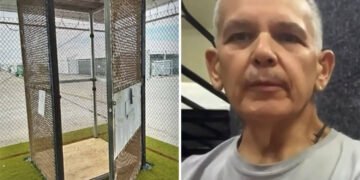































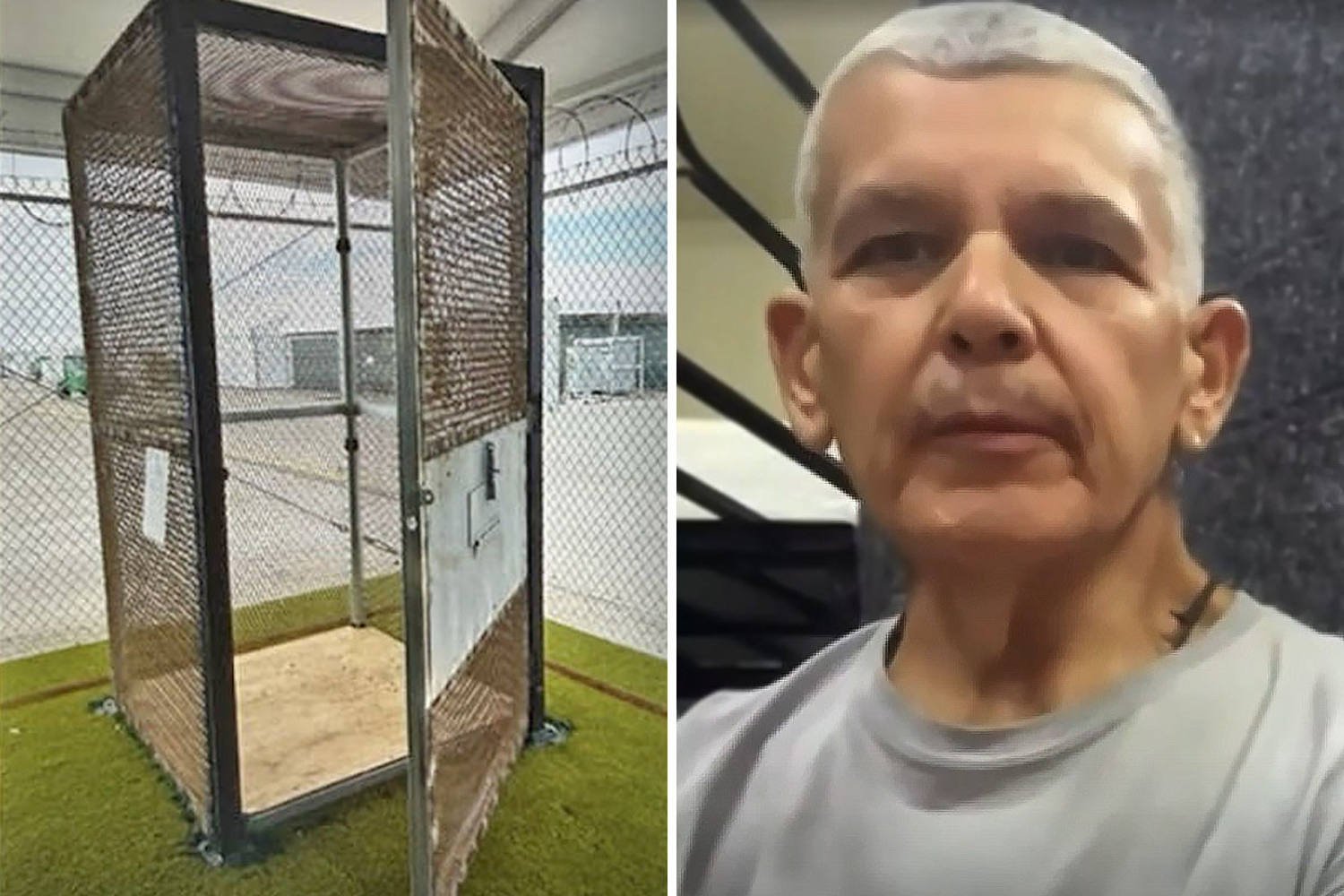
A Cuban-born man deported to Mexico says he spent more than 15 hours locked inside a small metal cage at a now-closed Florida immigration detention facility, describing conditions he called hellish and alleging that guards physically abused him after he prayed aloud for a sick fellow detainee.
Raúl Suárez Herrero, 59, shared his account in interviews with Noticias Telemundo’s “Ahora 360” and NBC News. He described being forced into a cage measuring 7 feet 9 inches high and 4 feet 3 inches square at the Ochopee, Florida facility widely known as “Alligator Alcatraz.” Speaking by phone from Mexico, he said simply: “I feel like I was in hell.”
Stay connected to every major update — subscribe and follow us on the PhoenixQ website and across our social media platforms.
Cage Confinement at Alligator Alcatraz
Suárez said guards pushed him into the cage at around 1 p.m. and did not release him until approximately 5 a.m. the following morning. That amounts to roughly 15 hours inside a space barely larger than a phone booth. The cage sat in an outdoor recreation area, and Suárez said he could not stretch out on the floor.
He also said fear kept him awake throughout the night. “I had to be careful because on the ground there were snakes and you don’t see them,” he said. “You can’t fall asleep because they can come into the cage.” Mosquitoes added to the ordeal, he added, as the facility sits in the middle of Florida swampland.
According to Suárez, the confinement began after he prayed aloud for a young man who suffered an epileptic seizure while detainees waited to be registered at the facility. He said help for the man was taking too long, so he began praying as he had done at his evangelical church before his arrest. He alleged that two guards then forced him to stand, asked where he was from, and dragged him to the cage. He said one guard kicked him so hard in the leg that he feared it was broken. “My leg was so big and black,” he said. He reported receiving no medical treatment afterward.
Government Response and Inspector General Findings
A Department of Homeland Security spokesperson did not directly address Suárez’s specific allegations. However, the spokesperson rejected claims of inhumane conditions at the facility as “categorically false” and denied that any detainees were beaten or abused. DHS stated that the facility provided medical, dental and mental health services, three meals a day reviewed by certified dietitians, clean water, clothing, bedding, hygiene products and phone access.
Meanwhile, a DHS Office of Inspector General report published on September 11 confirmed the use of the small metal cages following an unannounced inspection in January. The report stated: “The use of such restrictive spaces is highly unconventional and does not align with standards for humane treatment.” Detention center records cited in the report showed that 79 people were held in the small cages between July 17, 2025, and January 18, with an average confinement time of 59 minutes and 27 seconds. Facility staff told inspectors that no one spent more than two hours inside and that detainees could leave at any time by request.
Suárez flatly disputed those claims. “Everybody lied,” he said, insisting his confinement was not voluntary and lasted far longer than two hours. In December, Amnesty International also issued a report on the facility based on detainee interviews and its own tour. The organization described the use of the small cages as torture.
The OIG made 10 recommendations, including that authorities discontinue use of the metal enclosures entirely. Although DHS said the inspector general had indicated all recommendations were administratively closed, the OIG stated in its report that the administration did not address those recommendations. The OIG also noted that all detainees at the time of inspection were ICE detainees and that ICE held some degree of oversight authority at the facility.
Background on the Facility and Suárez’s Deportation
Florida Governor Ron DeSantis built Alligator Alcatraz as part of the state’s effort to support President Donald Trump’s immigration enforcement push. A DeSantis spokesman, Alex Lafranconi, dismissed criticism of the cages and described them as confinement areas for “violent criminal aliens who have proven they cannot remain peaceful,” adding that officials would “make them smaller, if we could.” The facility shut down in June.
Suárez originally came to the United States from Cuba at age 12 and lived there for nearly five decades. ICE detained him on July 16, 2025, when he appeared for a routine immigration check-in. A court had ordered his removal from the U.S. in 2000 following a prison sentence tied to a drug charge plea agreement. Because Cuba was not accepting deportees at that time, authorities released him and required annual ICE check-ins. When immigration laws tightened in 1996, making legal residents deportable for certain crimes, Suárez became ineligible to pursue citizenship.
An attorney sought his release from detention. A federal judge gave DHS until late January to remove or release him, then extended the deadline by two weeks. On February 11, the final deadline, DHS deported Suárez to Mexico. The judge then closed the case.
A Life Upended After 47 Years
Before his detention, Suárez had worked as a truck driver since age 17 and built a trucking business alongside his brother, an American citizen who died of Covid in 2021. His mother, who became a U.S. citizen, died about a decade ago. His father died in Cuba when Suárez was just three years old. He said he had no further encounters with law enforcement after his earlier conviction and had been living a stable life, planning to buy a house and maintaining a relationship with a girlfriend.
He said his mother had urged him to obtain citizenship, but he did not act on her advice. “I was pretty young. When you are pretty young, you don’t listen to anybody,” he said. He also said his experience at Alligator Alcatraz left him psychologically “shattered.”
“Forty-seven years. They took me to the U.S. as a 12-year-old, when I was a child,” Suárez said. “I was raised my whole life there. I’m bilingual and everything. I went to school there and everything. And everything happened from one moment to the next. I still can’t absorb what happened.” Now in Mexico, he added: “Life is changed. I don’t know what is going to happen here in Mexico.”